
Rush the Educator
Three Thousand Students, Thirty Years of Lectures
RUSH was the most influential medical teacher in American history. This is not a claim that requires much qualification. From his appointment to the College of Philadelphia's faculty in 1769 until his death in 1813, he trained more than three thousand students — virtually every physician practicing in the early republic had either passed through his lectures or had been trained by someone who did. The physicians who settled the Ohio Valley, the Deep South, and the frontier territories carried Rush's methods, Rush's theories, and Rush's moral commitments into every corner of the new nation.
Rush lectured on everything. The institutes and practice of medicine, the theory and treatment of fever, the diseases of the mind, the influence of climate and social conditions on health, the proper method of studying the science, the moral obligations of the physician as a public servant. His lectures were famous for their confidence, their range, and their opinionated energy. He did not teach medical facts; he taught a way of thinking about illness, society, and the physician's responsibilities that his students found either compelling or infuriating, and sometimes both.
The apparatus of Rush's teaching is documented throughout this collection: the lecture tickets that were the currency of access; the signed diplomas that certified transmission; the lecture texts, published and annotated; the textbooks Rush adopted and the students who pushed back against them. Together they constitute a documentary record of what it meant to receive a medical education in Rush's Philadelphia — the most medically sophisticated city in early America.
His sixteen introductory lectures, published in 1811, two years before his death, are his final systematic statement of his pedagogical philosophy. They are Rush at his most characteristic: confident, prescriptive, morally earnest, urgently aware of his own place in the history of medicine. They are also, implicitly, a defense. Published after the yellow fever controversy had subsided and Rush's methods had been both vindicated and condemned, they offer a Rush who still believes entirely in his project. The physician as moral reformer, as public servant, as educator: this is Rush's self-portrait, delivered at the end of a career.
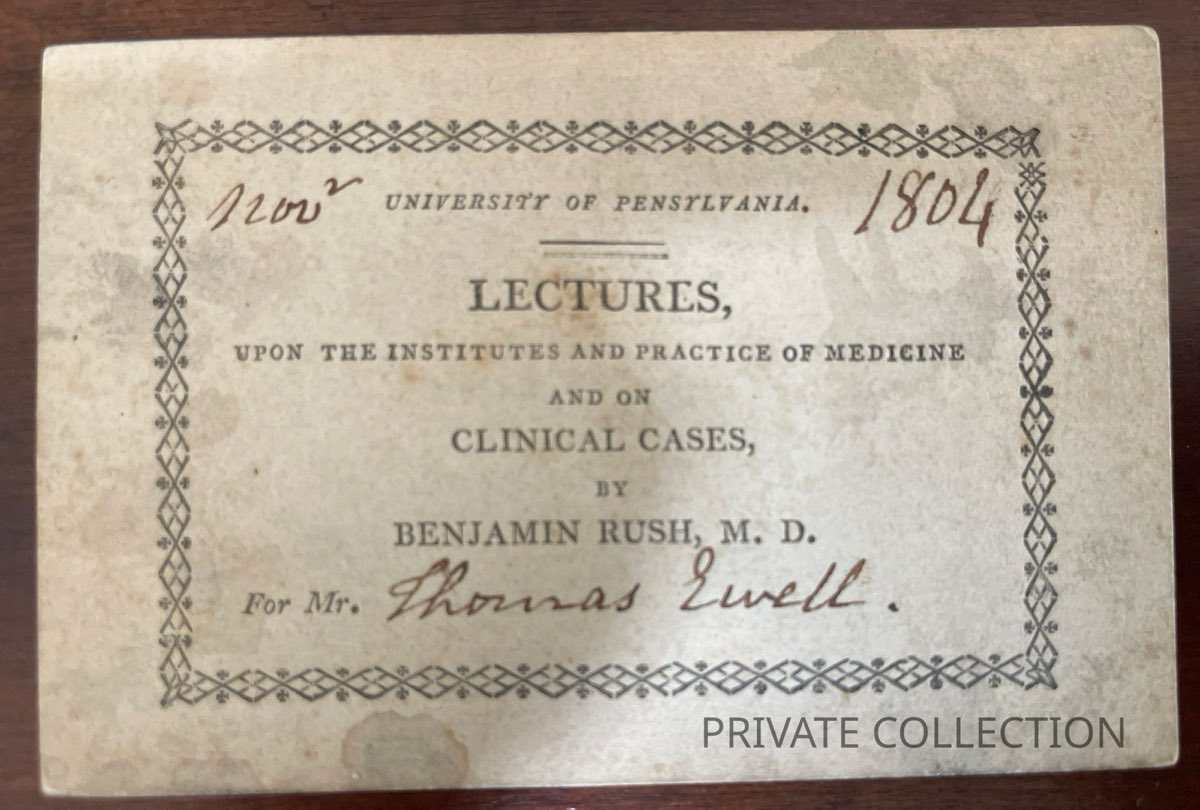
Rush Lecture Ticket, University of Pennsylvania
Lecture tickets were the material currency of early American medical education: physical tokens entitling their holders to attend a course of lectures. Rush charged fees for his lectures, and these tickets are among the most tactile evidence of the transaction at the heart of medical pedagogy — the student's purchase of access to the professor's knowledge. This 1804 ticket dates from the final decade of Rush's teaching career, when his methods were at once most refined and most embattled. The students attending his lectures in 1804 were entering a profession that Rush had done more than any other American to define.
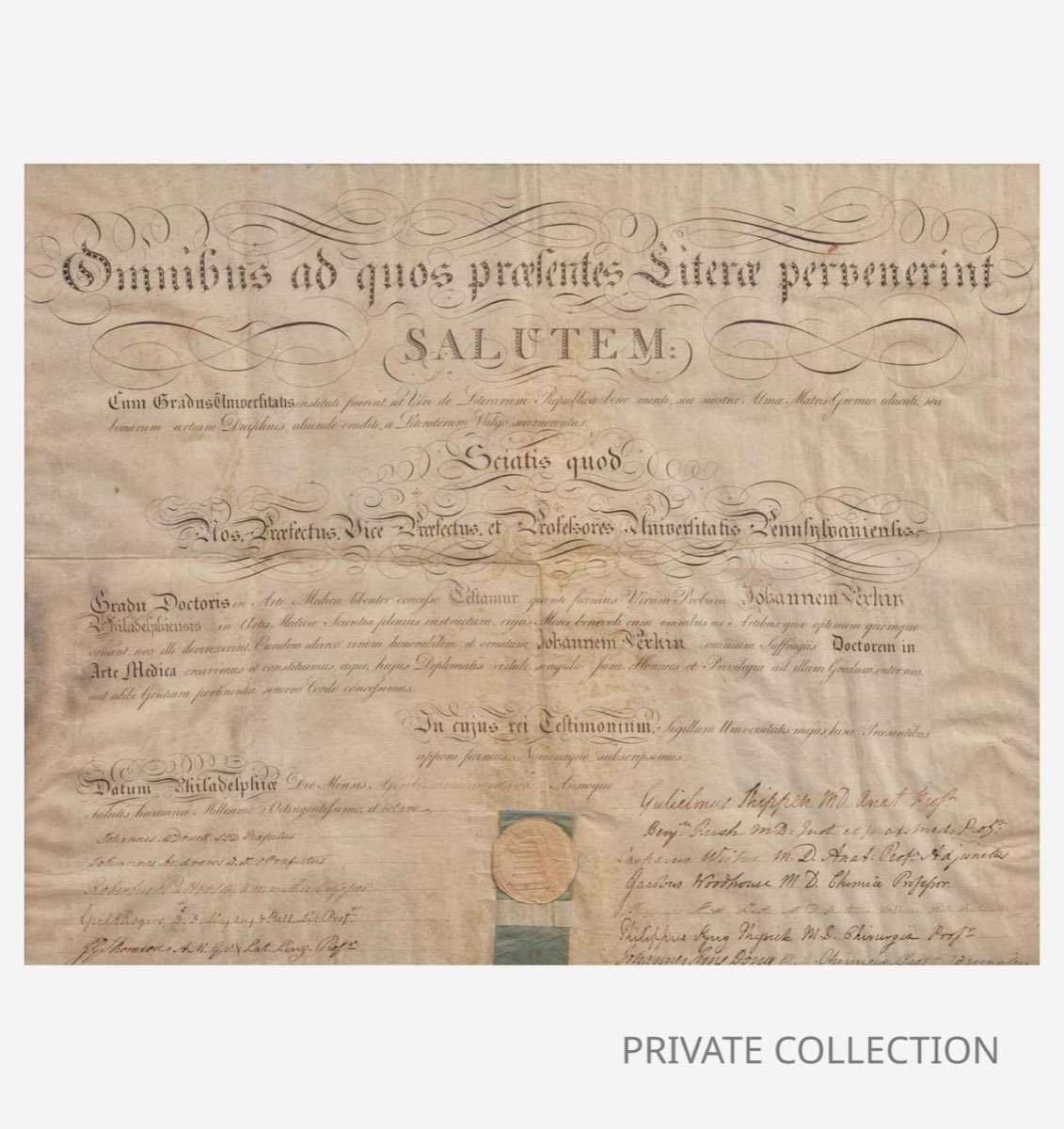
Signed Diploma, University of Pennsylvania
Rush signed thousands of diplomas over his forty-year career. The physicians who received these diplomas practiced from Georgia to Ohio, carrying Rush's therapeutic theories and moral commitments into every corner of the early republic. The diploma is a certificate of transmission: the moment at which Rush's chain of teaching became official, documented, and permanent. The student who received this diploma had passed through Rush's lectures and examinations and was now authorized to practice medicine — effectively, in Rush's name.
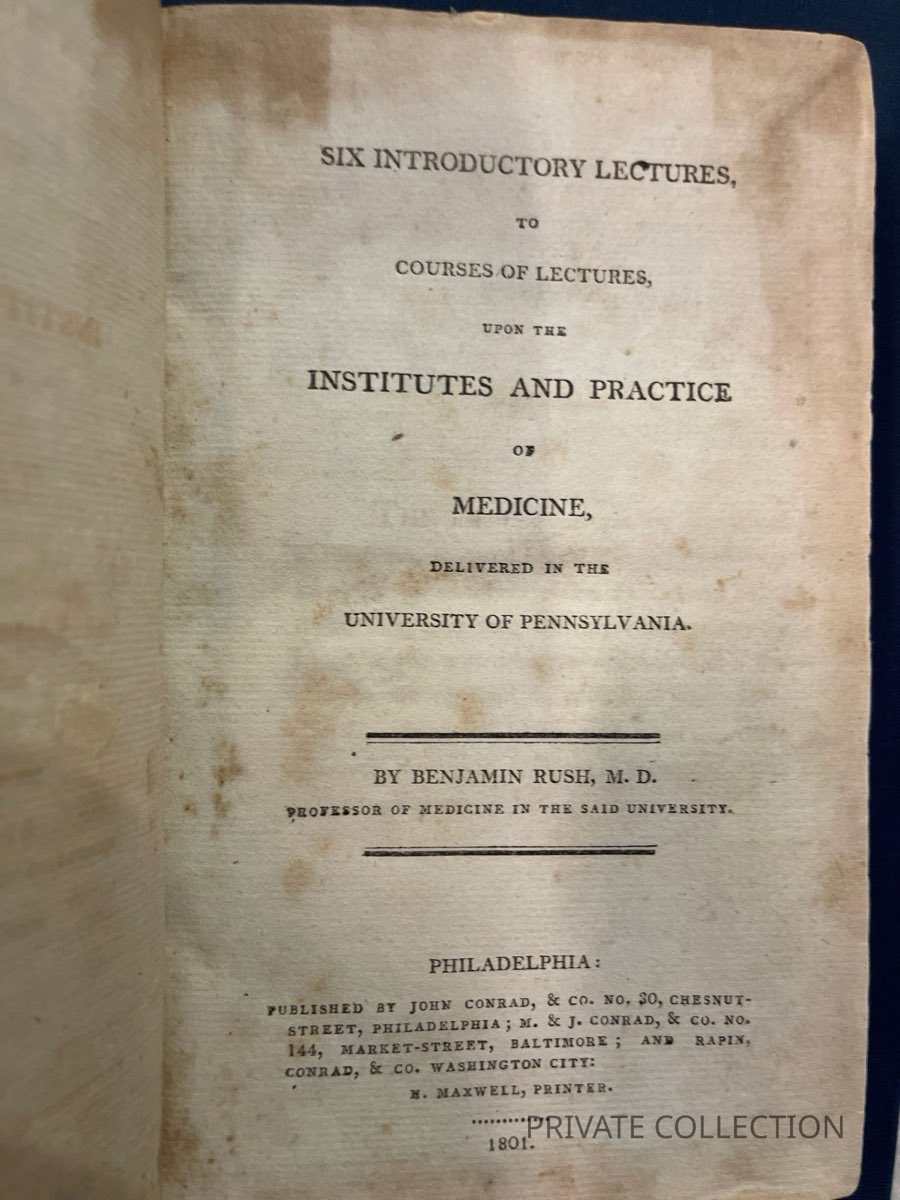
Six Introductory Lectures, with Contemporary Notes
A student's hand running alongside Rush's printed text, annotating, questioning, and occasionally pushing back. Among the most intimate documents of Rush's pedagogy in the collection: the lecturer's voice and the student's response on the same page. The introductory lectures themselves are Rush at his most programmatic: the physician must read widely, observe carefully, think independently, and never defer to European authority simply because it is European. Where the annotations align with Rush's text, they confirm the lectures' persuasive power. Where they push back, they document the independent thinking Rush claimed to be cultivating.
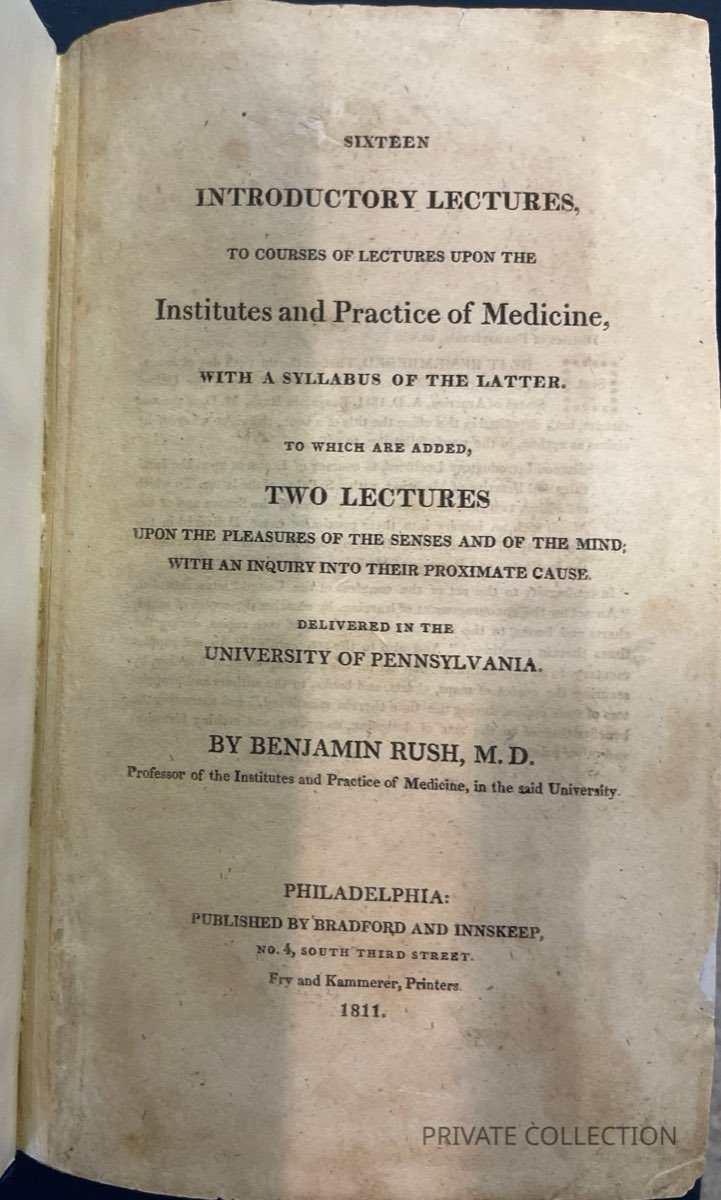
Sixteen Introductory Lectures to Courses of Lectures upon the Practice of Medicine
Rush's final systematic pedagogical statement, published two years before his death. Ranging across the moral and intellectual formation of the physician — how to read, how to observe, how to think about the relationship between medicine and religion, between clinical practice and social reform — the lectures are Rush at his most characteristic. Alyn Brodsky, in his biography Benjamin Rush: Patriot and Physician (2004), calls the Sixteen Lectures "Rush's intellectual testament," and the characterization is apt: it is the physician's self-portrait, drawn at the end of a life lived as an argument.
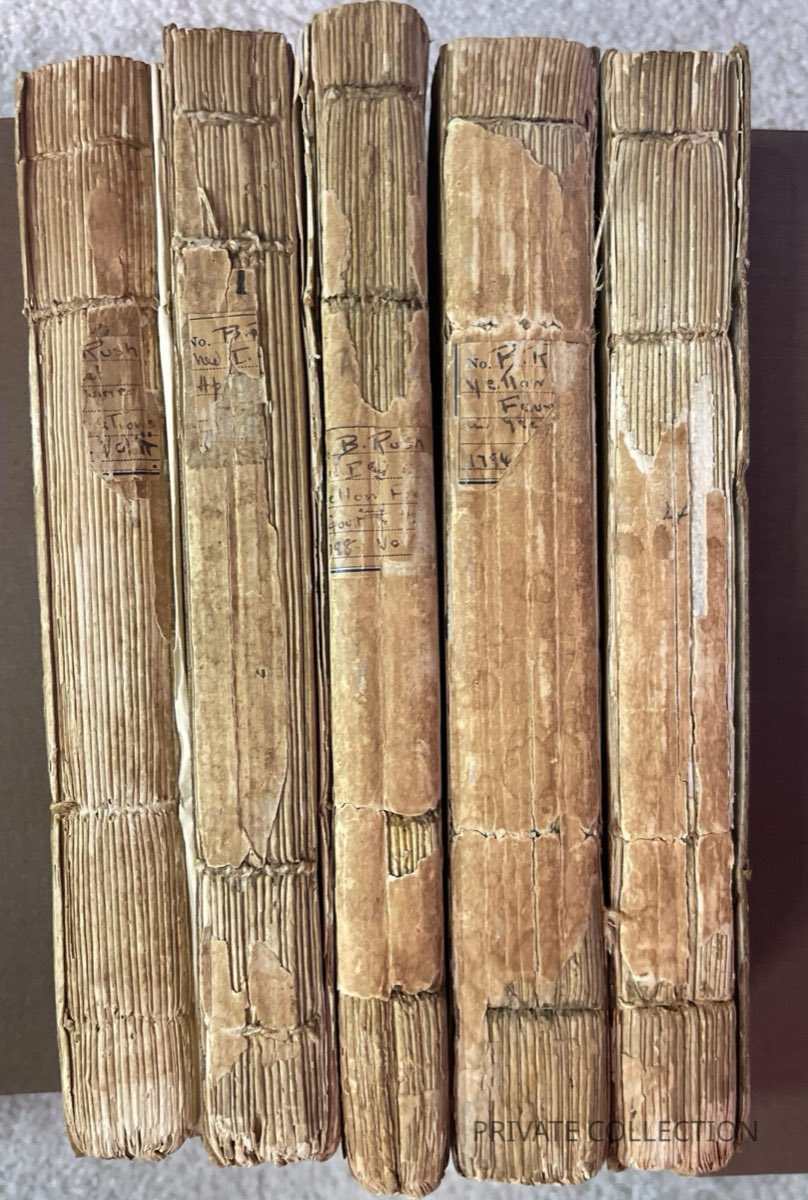
Medical Inquiries and Observations
Rush's major collected medical publication, issued in multiple volumes across his career and constituting the most complete record of his clinical and theoretical work. The Medical Inquiries range from his observations on fever (the theoretical foundation for the yellow fever controversy) through his accounts of specific diseases to his reflections on the relationship between medicine and society. Rush described Garrison and Morton as calling him "the ablest American clinician of his time" — a judgment that the Medical Inquiries both supports and complicates.
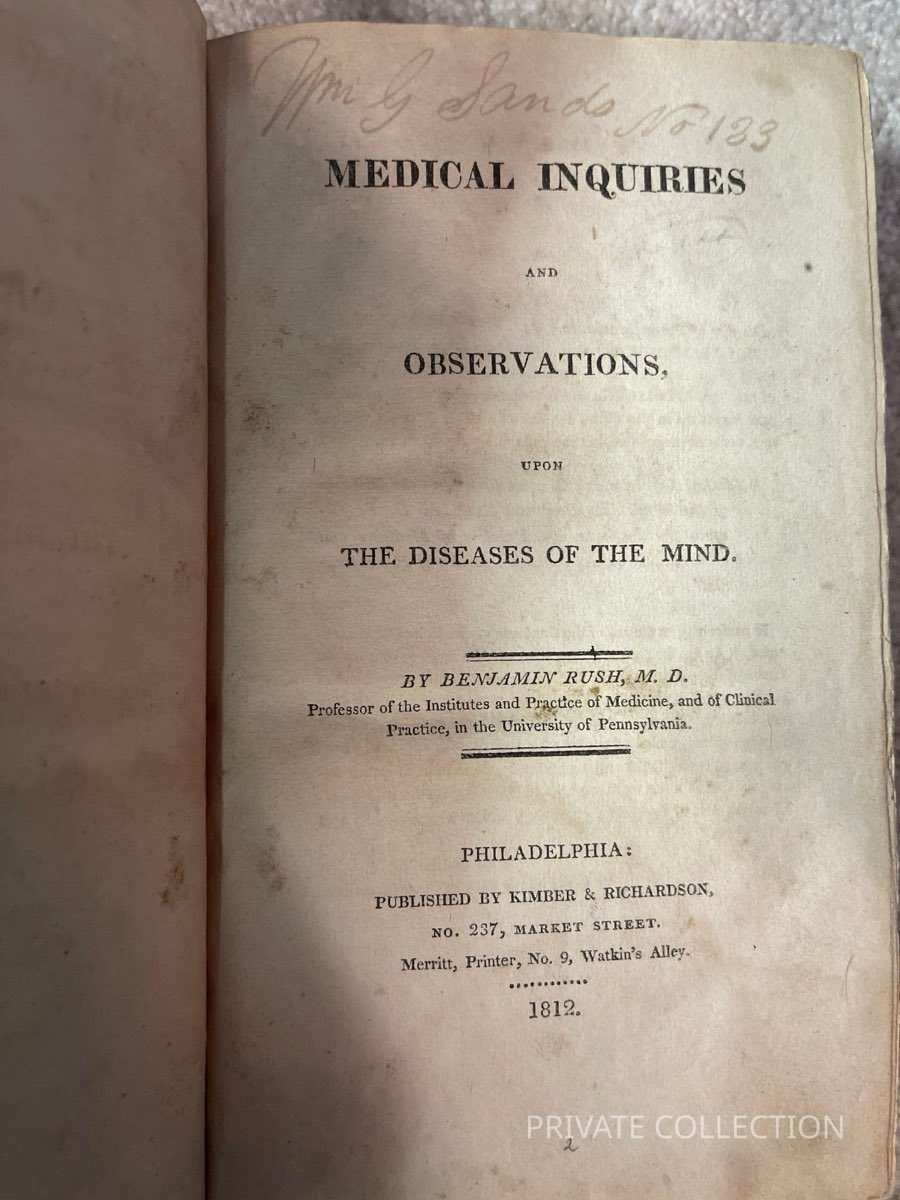
Medical Inquiries and Observations upon Diseases of the Mind
The first systematic American treatise on mental illness and Rush's most enduring medical legacy. Three decades of clinical observation at the Pennsylvania Hospital — of the "maniacs" and "melancholics" in the lower ward — produced this classification of mental disease and its treatment. Rush divided the conditions into "intellectual derangements" (mania, tristimania, amenomania) and "moral or corporeal derangements," arguing that all were ultimately physical conditions rooted in the blood vessels of the brain. The book is both a founding document of American psychiatry and a window into the limits of Rush's medical materialism — the same theoretical framework that generated his yellow fever treatment generated his "tranquilizer chair" for the mentally ill.