![[WHARTON, Samuel]. Plain Facts: Being an Examination into the Rights of the Indian Nations of America](../images/wharton-samuel-plain-facts-being-an-examination-into-the-rights-of-the-indian-na.jpg)
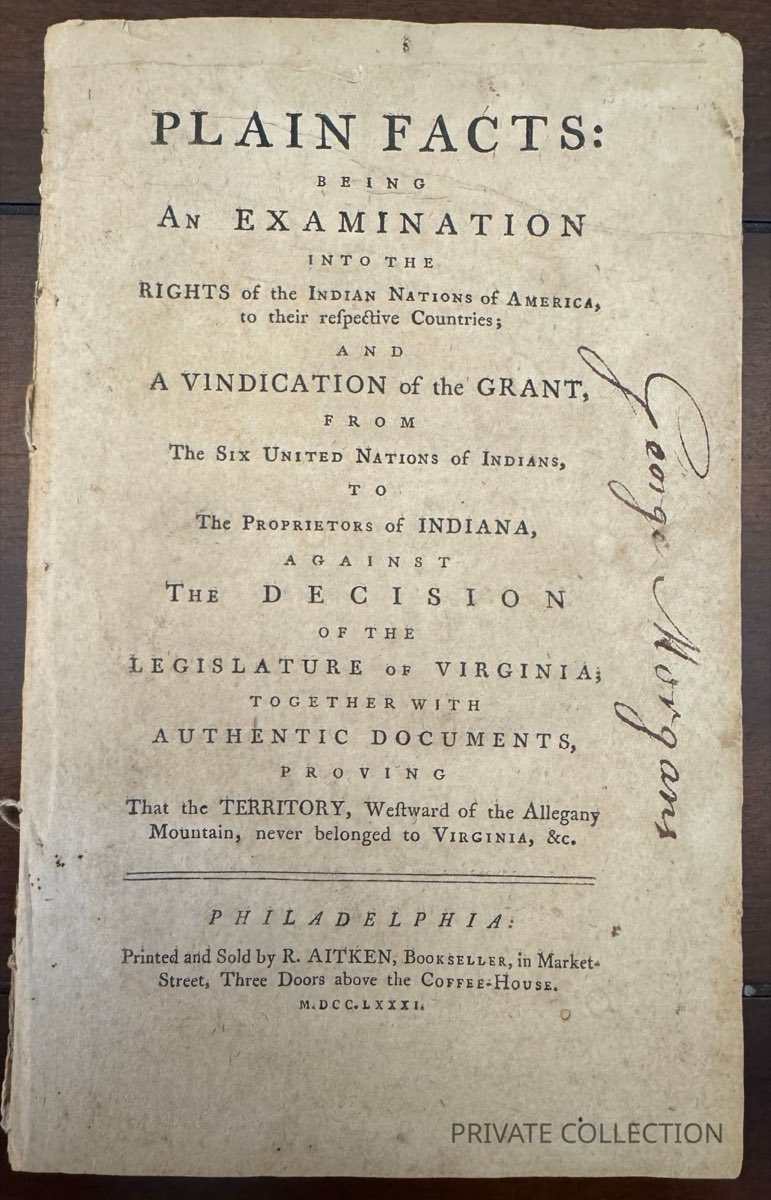
[WHARTON, Samuel]. Plain Facts: Being an Examination into the Rights of the Indian Nations of America
Philadelphia: R. Aitken, 1781.
164, [2]pp. Disbound.
With the signature of George Morgan on the title page along with the signature of Robert Goodloe
Harper on the rear free endpaper.
"...Declared by all to be the ablest treatise on the tenure of the Indian claim to the title of lands occupied by them, ever written" - Field.
The Pamphlet and Its Author:
Plain Facts was prepared by Samuel Wharton, though it has been variously attributed to Anthony Benezet, Benjamin Franklin, and Thomas Paine — the misattribution attested by the artist and archivist P.E. Du Simitière in notebooks preserved at the Library of Congress.
The reason Franklin's name keeps getting attached to it is that he was a genuine partner in the underlying scheme.
The Network: Baynton, Wharton & Morgan:
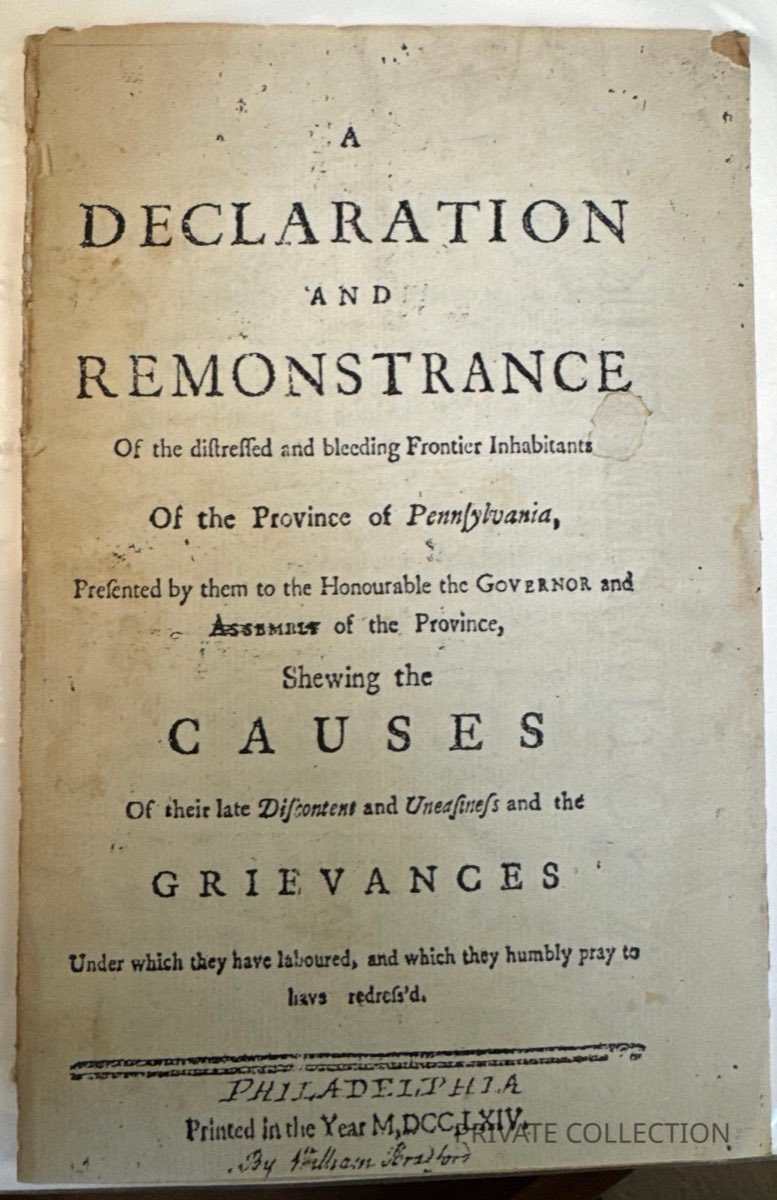
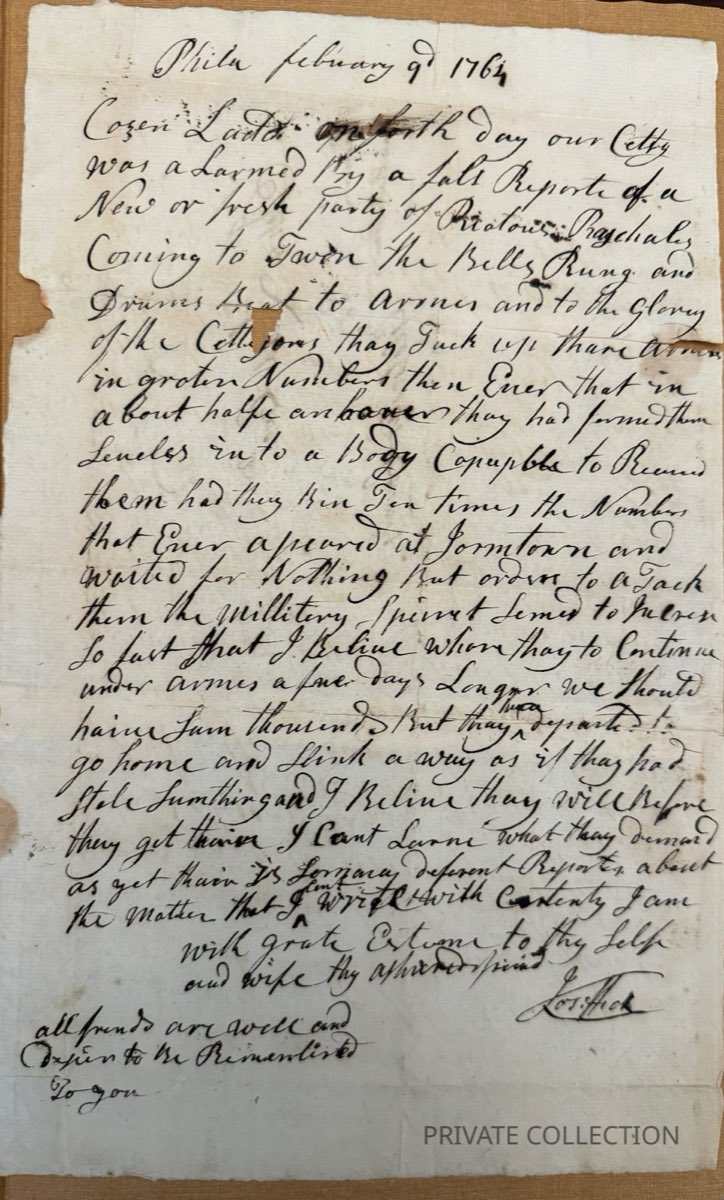
George Morgan enters the story through the firm. In 1763, Baynton and Wharton added George Morgan as a partner, changing the firm's name to Baynton, Wharton and Morgan. The firm speculated in trade west of the Alleghenies, most notably with the Indians. During Pontiac's Uprising in 1763, the firm suffered massive losses.
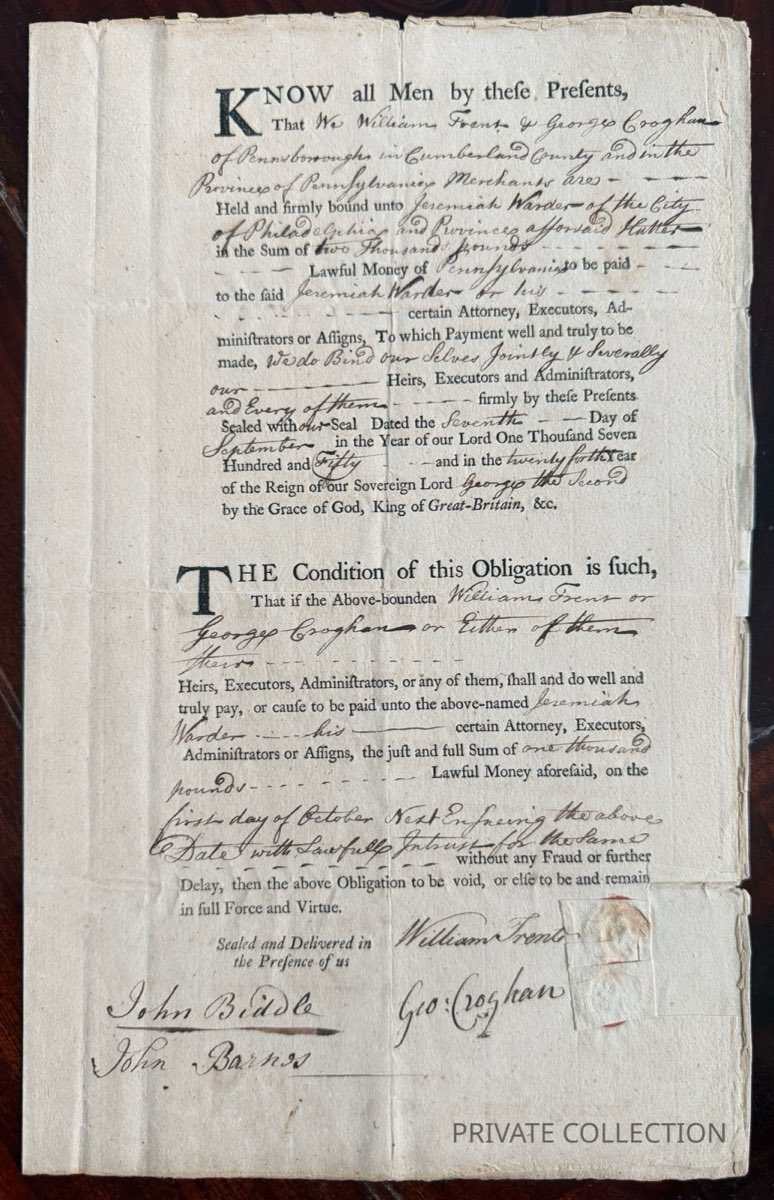
To exploit the post-French-and-Indian-War western trade, Baynton, Wharton & Morgan joined with George Croghan and Benjamin Franklin, who used his influence to pursue necessary licenses for Indian trade and land patents — goals which brought them into direct conflict with settlers in the Cumberland Valley. ________________________________________
The Indiana Company and the Fort Stanwix Grant:
As compensation for their losses during Pontiac's Rebellion, the Iroquois granted the "suffering traders" a tract of land making up about a fourth of modern West Virginia, known as "Indiana."
To validate the claim under English law, Wharton was sent to London by his partners — who by then included Thomas Walpole and Benjamin Franklin — to appear before the Board of Trade. Lord Hillsborough recommended outright rejection of the claim, but Wharton's arguments swayed the Committee and the King in Council approved the claim (the Walpole Grant) on August 14, 1772.
Plain Facts (1781) was essentially the legal and philosophical argument Wharton had been building for years — assembled from precedents in Grotius and other international law sources — asserting that Indian nations had a legitimate right to sell their own land, and that the grant to the Indiana Company was therefore valid against Virginia's competing claim.
________________________________________
Franklin's Role:
Franklin was a named partner in the Walpole Grant and was actively lobbying in London at the same time Wharton was there. One of Wharton's partners, Benjamin Franklin, produced a pamphlet to counter Lord Hillsborough's rejection of the claim, presented to the Lords of the Committee on July 1, 1772. So Franklin was writing his own parallel advocacy documents.
George Morgan's Falling Out:
As the plan developed, Samuel Wharton and Franklin discarded many of the Americans interested in Indiana — most importantly, the omission of Baynton and Morgan seriously split the partnership. Morgan later vowed to contact Samuel strictly on business matters. Morgan ended up being used: the Whartons sent Morgan, by then embittered, to Fort Pitt to open a land office and sell tracts in Indiana.
The Bottom Line
The pamphlet is really a Samuel Wharton document, built on years of legal notes and arguments he made before the Board of Trade. Franklin was orbiting it as a genuine business partner and fellow advocate, not the author. And George Morgan was the junior partner who got squeezed out as the scheme grew more ambitious — a casualty of the very enterprise the pamphlet was meant to vindicate.
For your collection's narrative, this whole web — Croghan, Morgan, the Whartons, Franklin — is centered exactly in the Philadelphia mercantile and Indian affairs world that shaped Franklin's practical political philosophy in the 1760s and 70s.
Rare to the trade. RareBookHub lists one copy sold in 2008, one in 1999, and before that none since 1965.
- Date
- 1781
- References
- Howes W-307. Field 1224. Vail 672. Hildeburn 4133. Sabin 63221. Streeter Sale 1302. The only edition.
- Notes
- George Morgan (February 14, 1743 – March 10, 1810) was a merchant, land speculator, and United States Indian agent during the American Revolutionary War, when he was given the rank of colonel in the Continental Army.[1] He negotiated with Lenape and other Native American tribes in western Pennsylvania to gain their support during the American Revolutionary War. An associate of the Lenape chief White Eyes, Morgan cared for his son George Morgan White Eyes for several years after White Eyes died. George Morgan worked as a clerk for John Bayton and Samuel Wharton at the mercantile firm Bayton & Wharton in Philadelphia. After receiving inheritance, he became a junior partner at Baynton, Wharton & Morgan in 1760.[4] In 1764, he married John Baynton's daughter Mary. Enjoying the patronage of Sir William Johnson, Superintendent of Indian Affairs, the firm started to trade with Illinois Country ceded to Great Britain by France after the end of the French and Indian War, using Fort Pitt Trading Post in present-day Pittsburgh as a forward base.[5] Morgan made frequent business trips to the frontier and developed good relations with Native Americans. Lenape made Morgan a member of their tribe naming him Tamanend in honor of one of their great warriors. George Morgan was made an agent for Indian affairs in the Middle Department in 1776, and commissioned on January 8, 1777, as colonel in the Continental Army during the American Revolutionary War. He was assigned to Fort Pitt to oversee diplomacy with Native Americans in the area: Lenape, Shawnee, and others. The American rebels hoped to gain them as allies, or at least convince them to be neutral and not ally with the British. While there Morgan worked closely with the Lenape chief White Eyes; the two became trusted friends. (Wikipedia)