Philadelphia had no hospital in 1750. The sick who could pay were nursed at home, and the sick who could not were left to the almshouse. Dr. Thomas Bond thought the city could do better, and that year he went about raising money for a hospital that would treat the sick poor free of charge. He got nowhere. The men he asked would not commit until they had heard what Benjamin Franklin thought of it. Once Franklin took up the scheme, the money began to come.
Franklin wrote the petition to the Assembly in January 1751 and met the usual objection, that the benefit would fall on Philadelphia alone. So he proposed a bargain. The Assembly would grant two thousand pounds, on condition that private citizens first raised two thousand of their own. The members who had opposed the grant, thinking they might have the credit of charity without the expense, let it pass. Franklin wrote in his Autobiography: “I do not remember any of my political manoeuvres, the success of which gave me at the time more pleasure, or wherein, after thinking of it, I more easily excused myself for having made some use of cunning.”
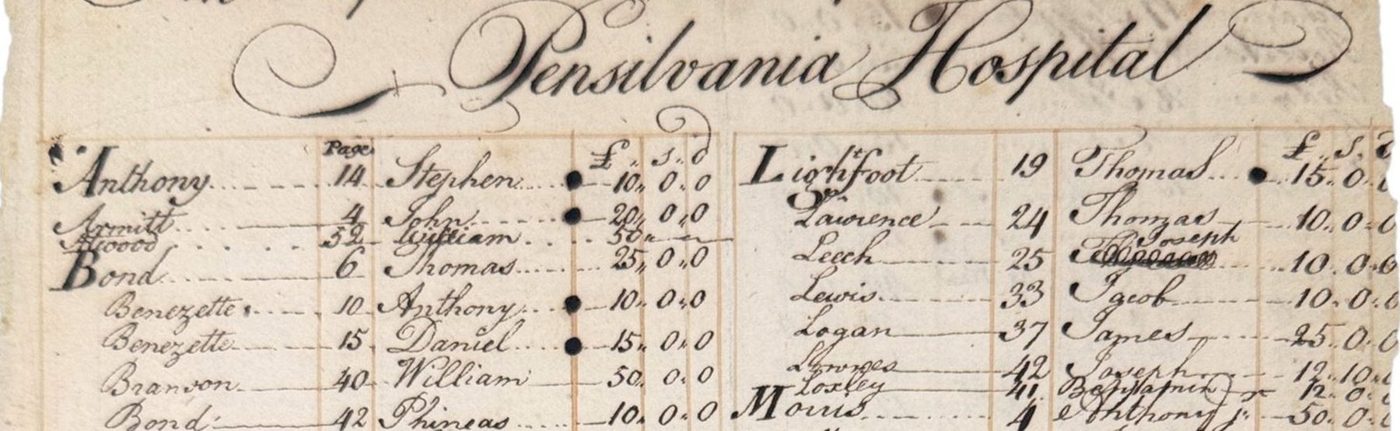
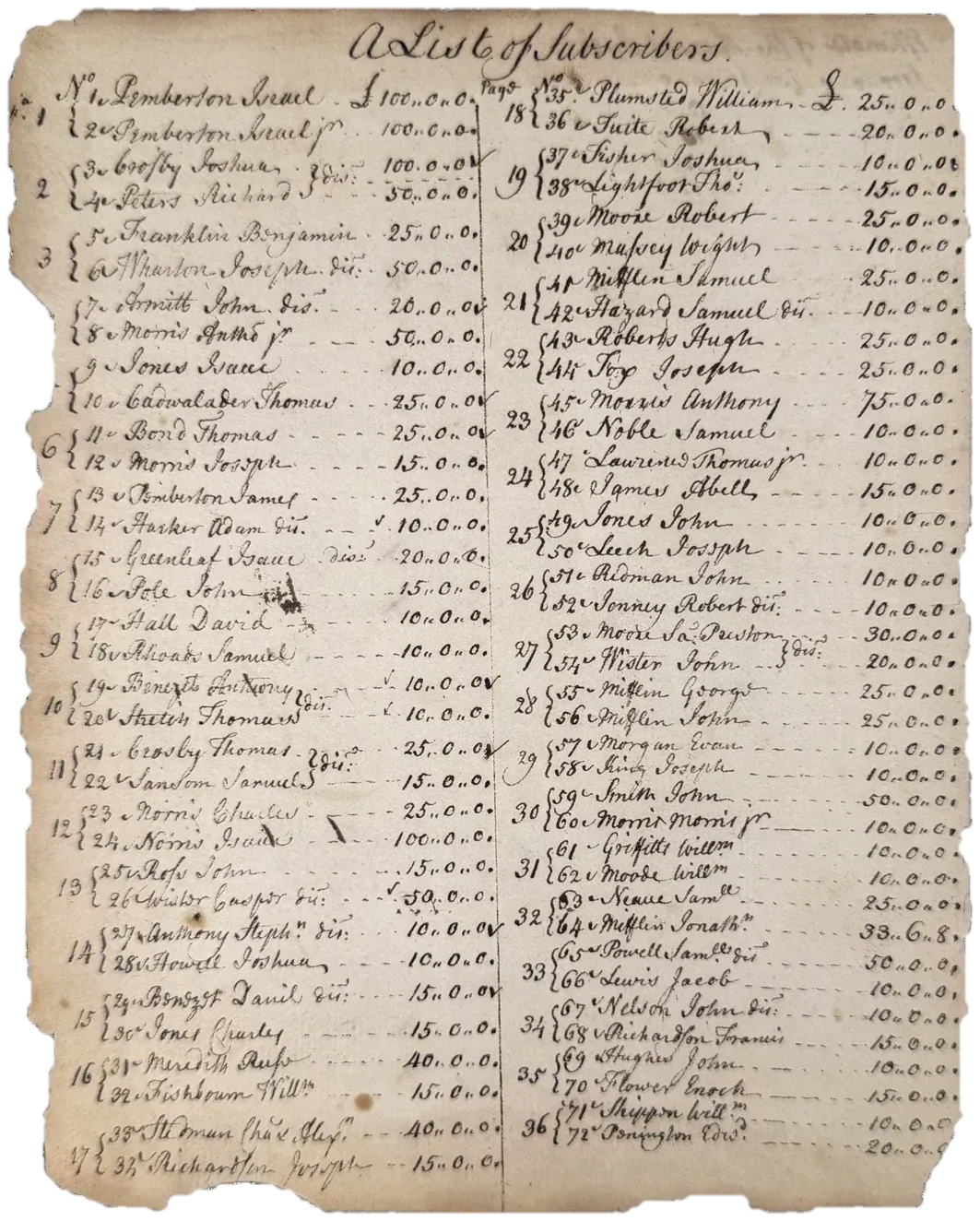
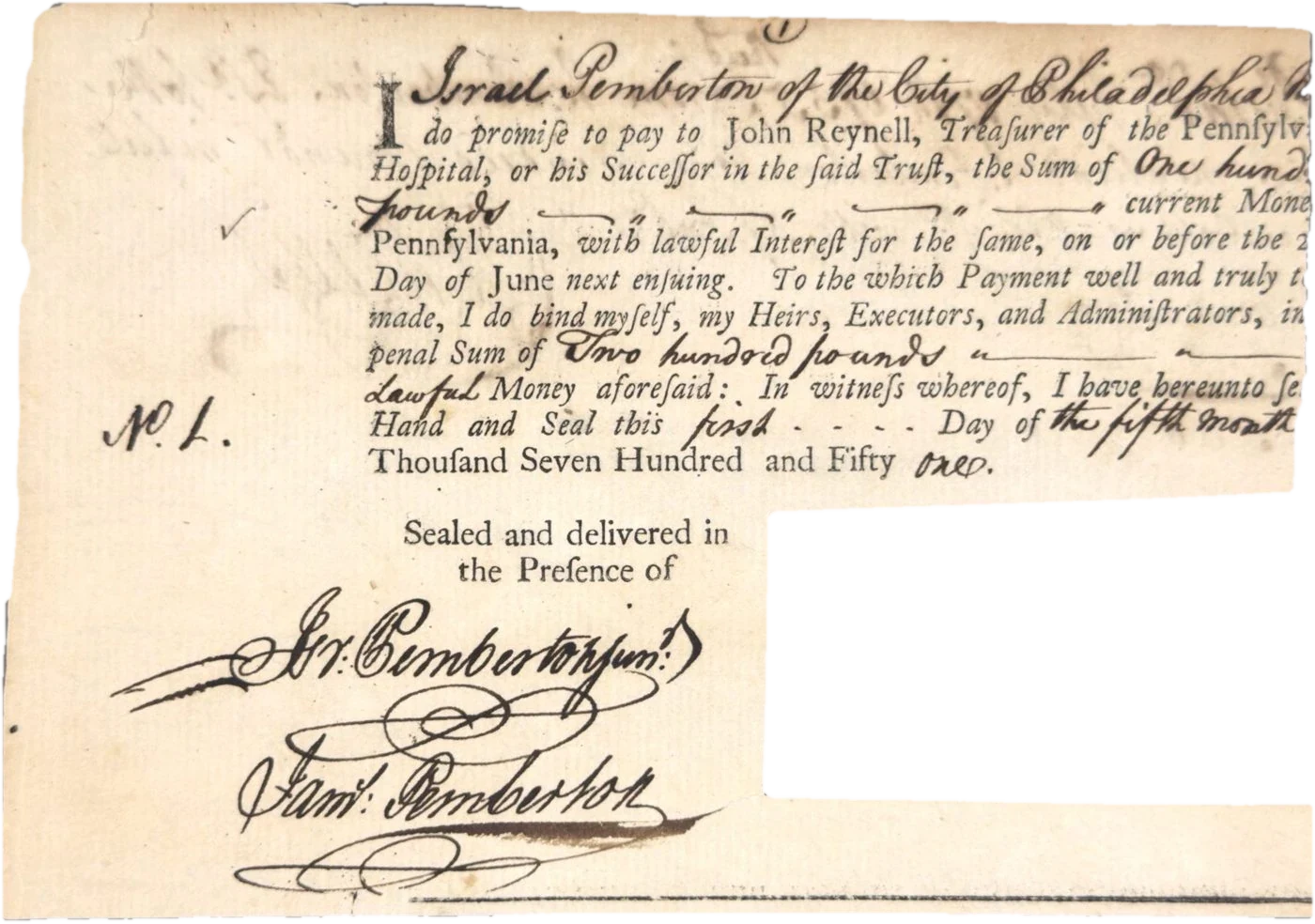
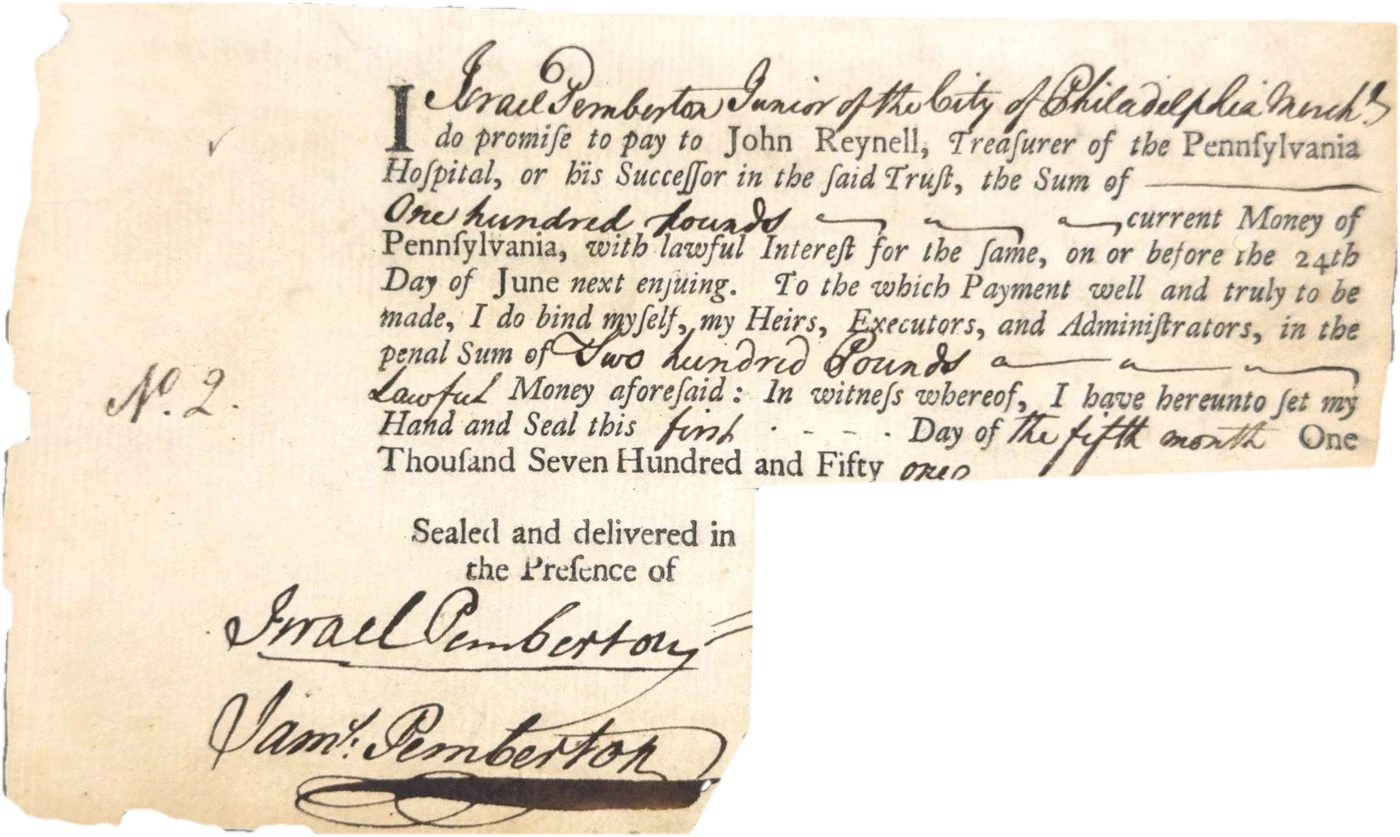
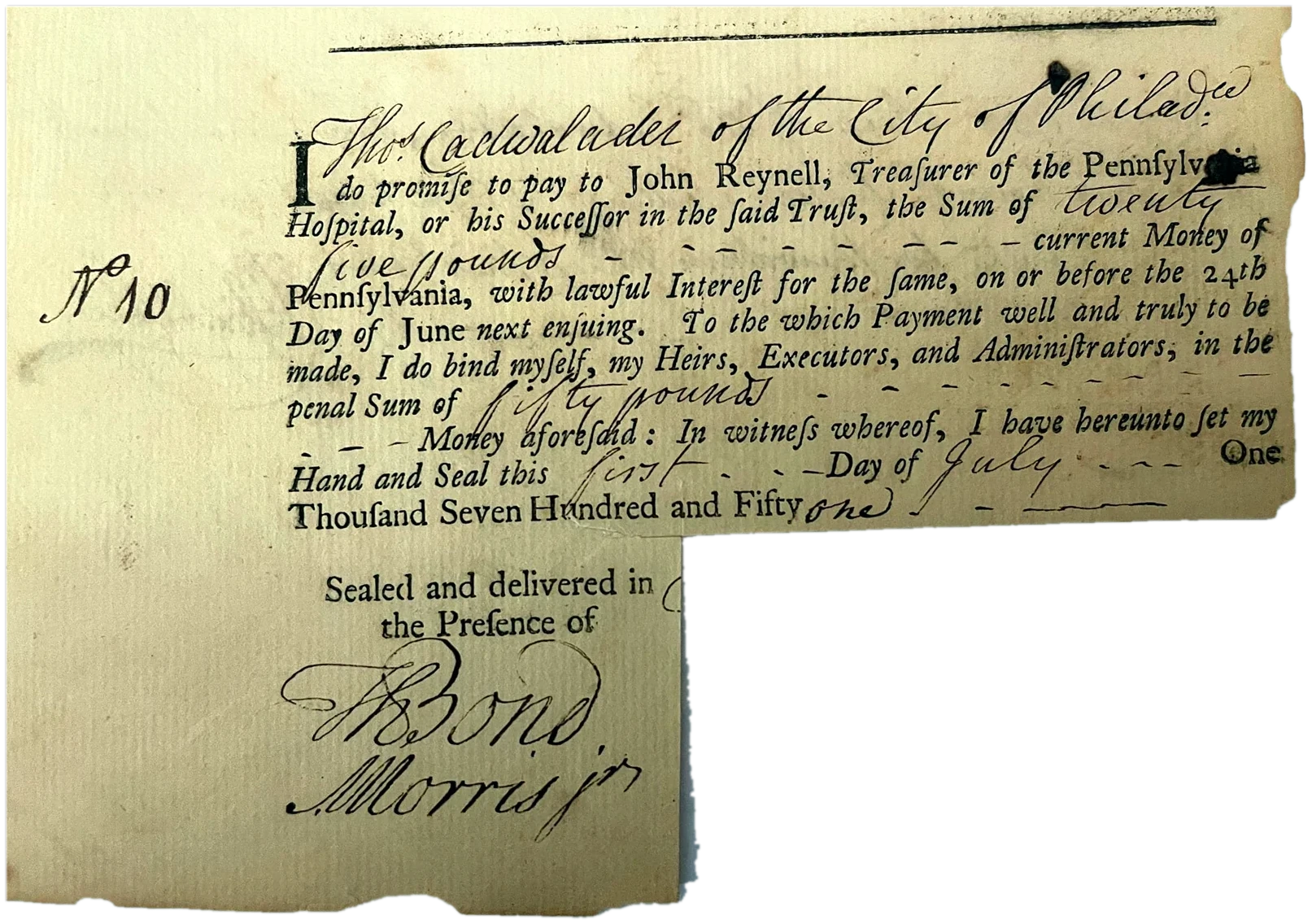
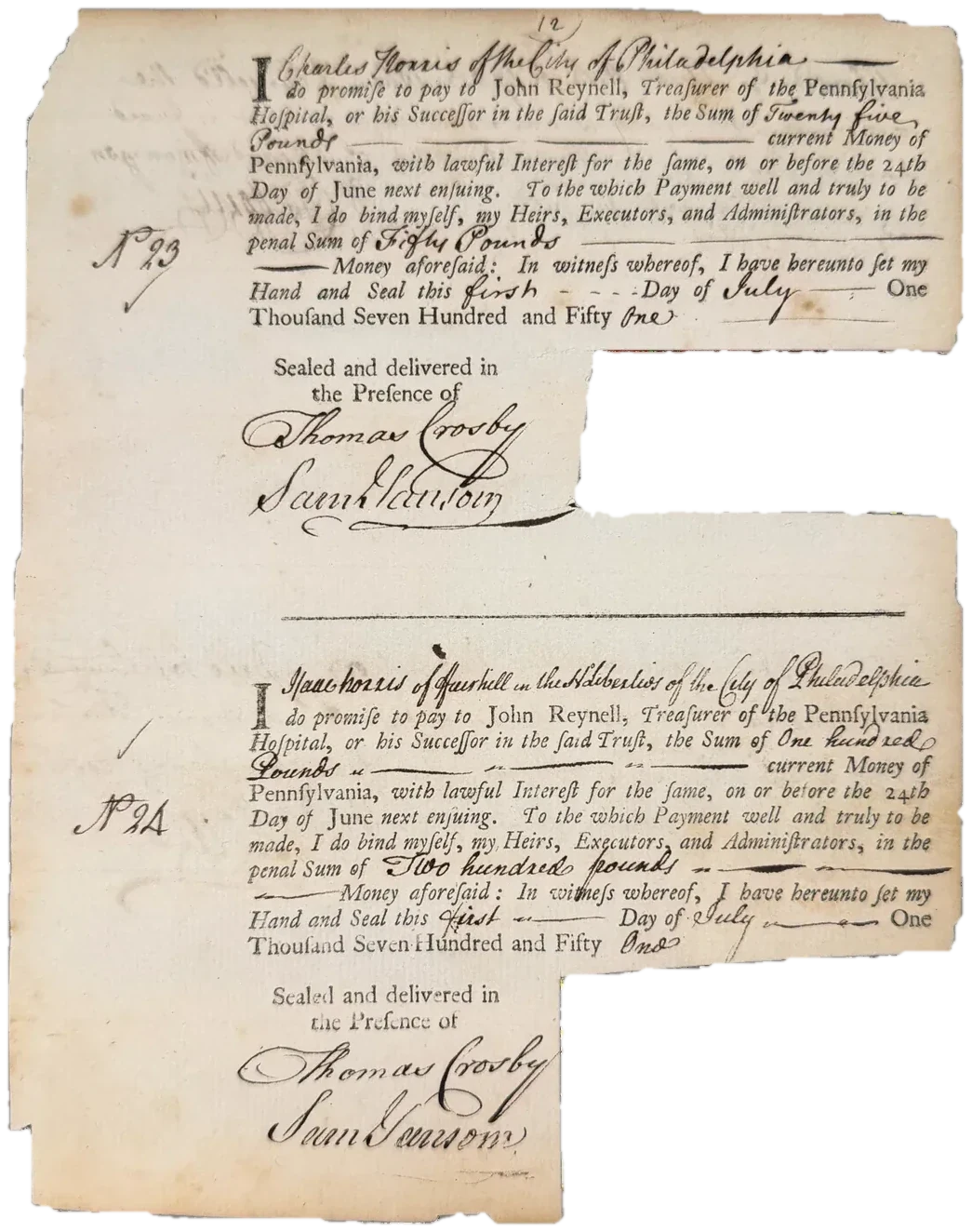
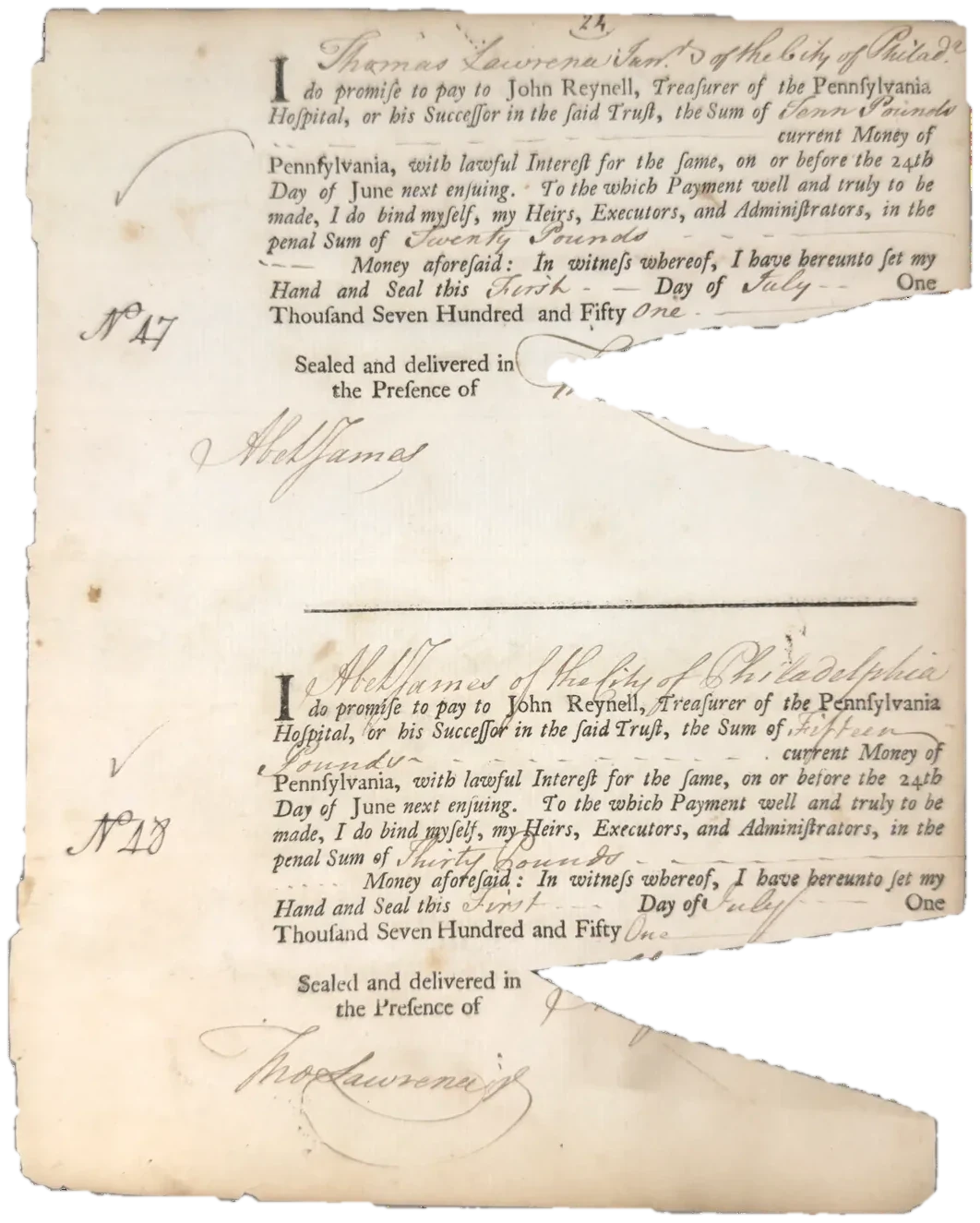
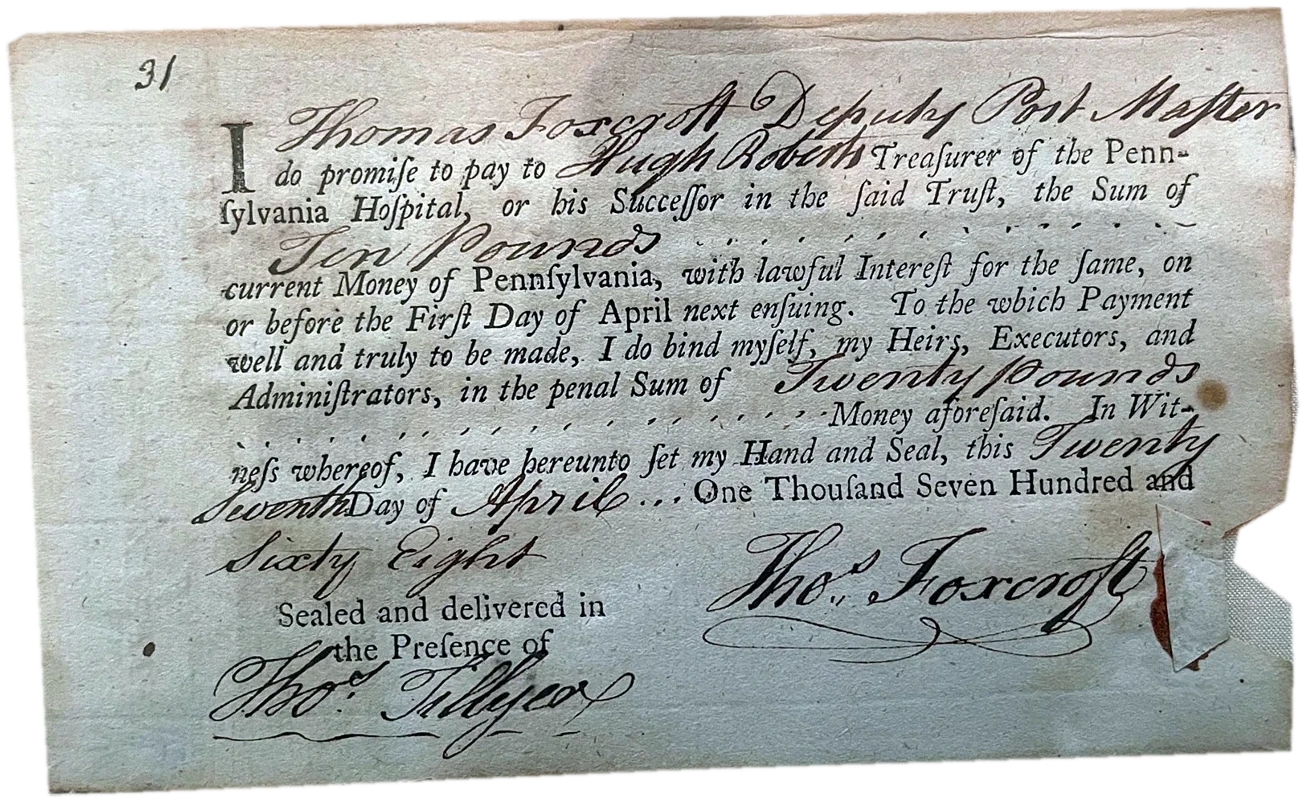
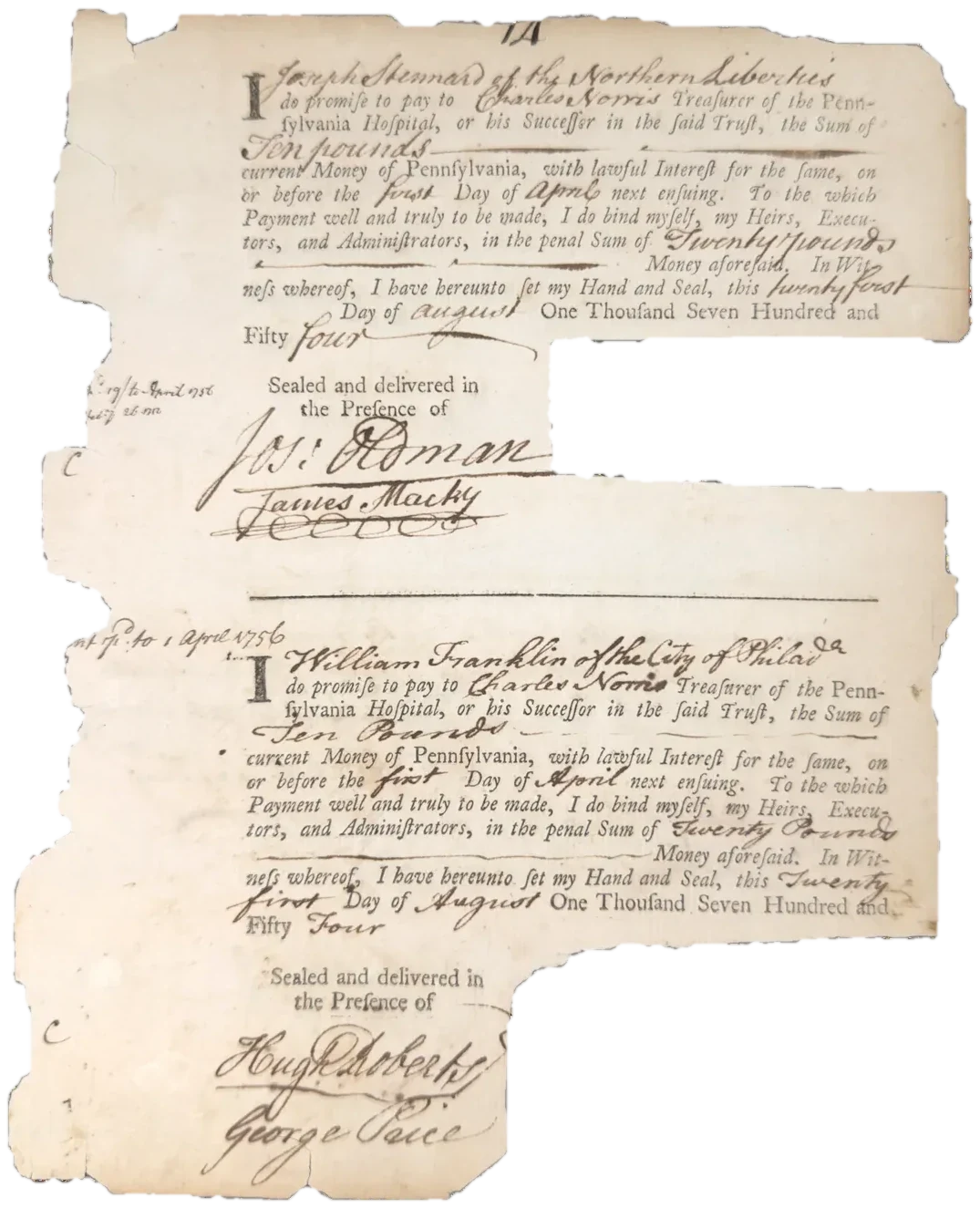
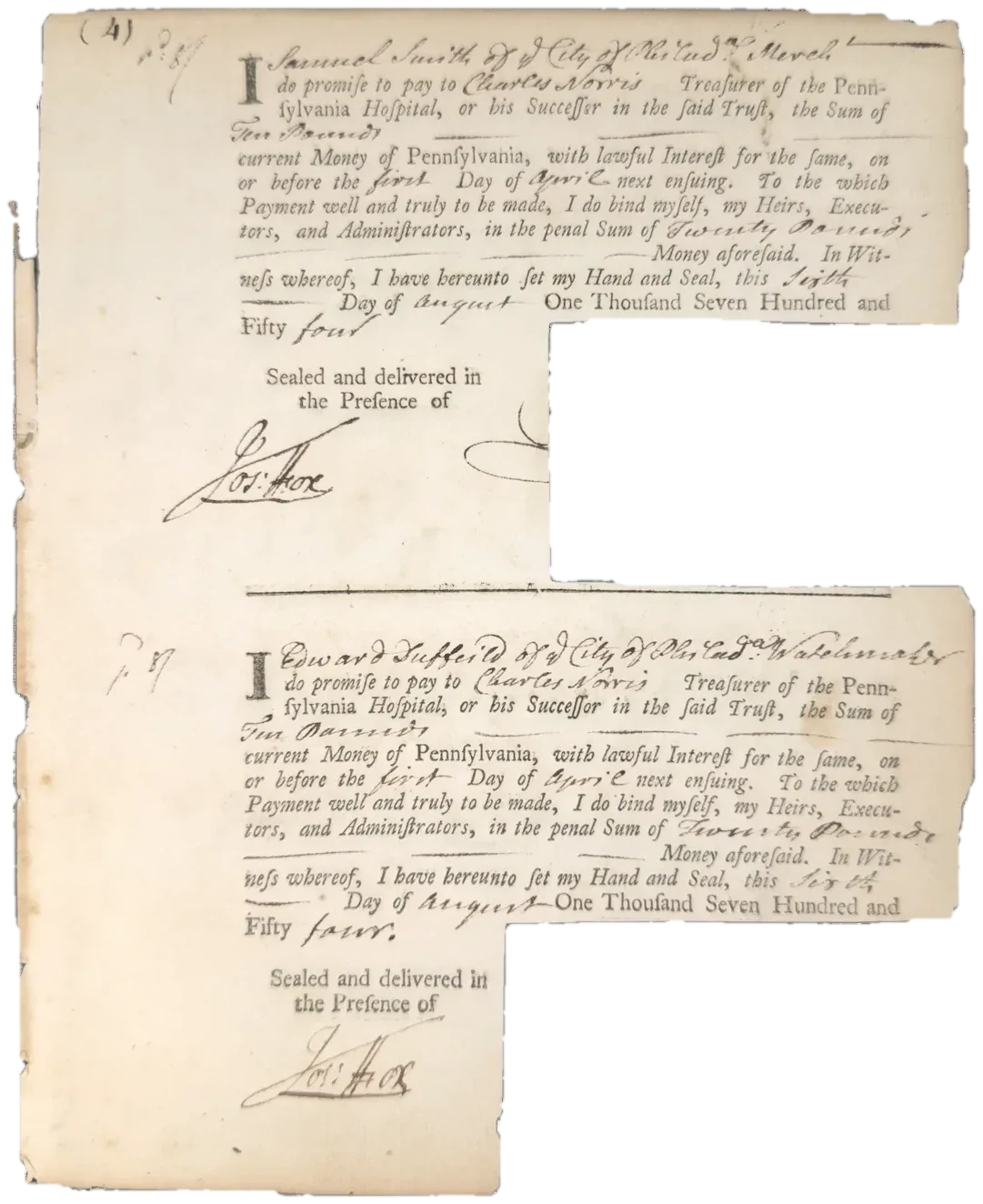
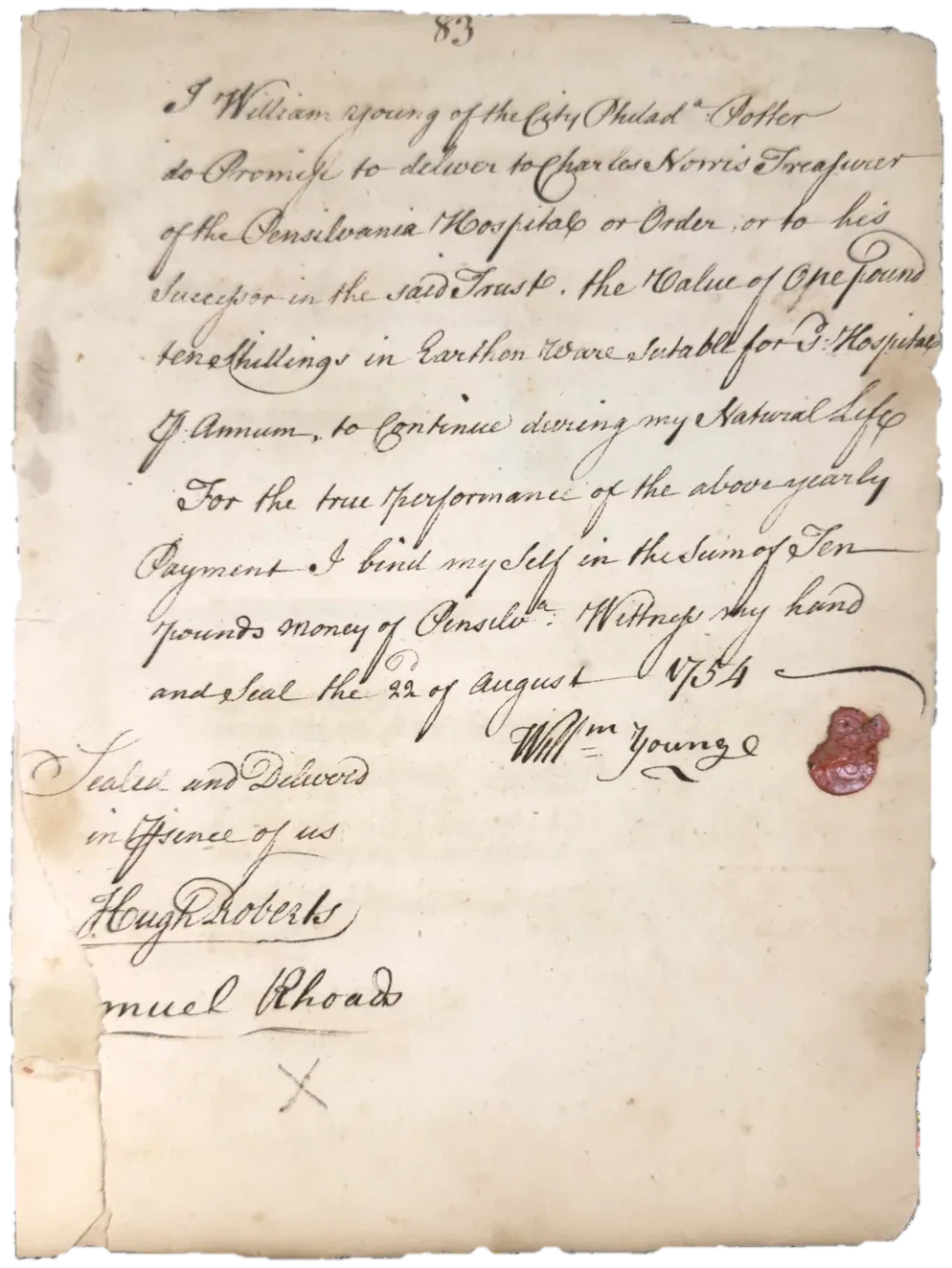
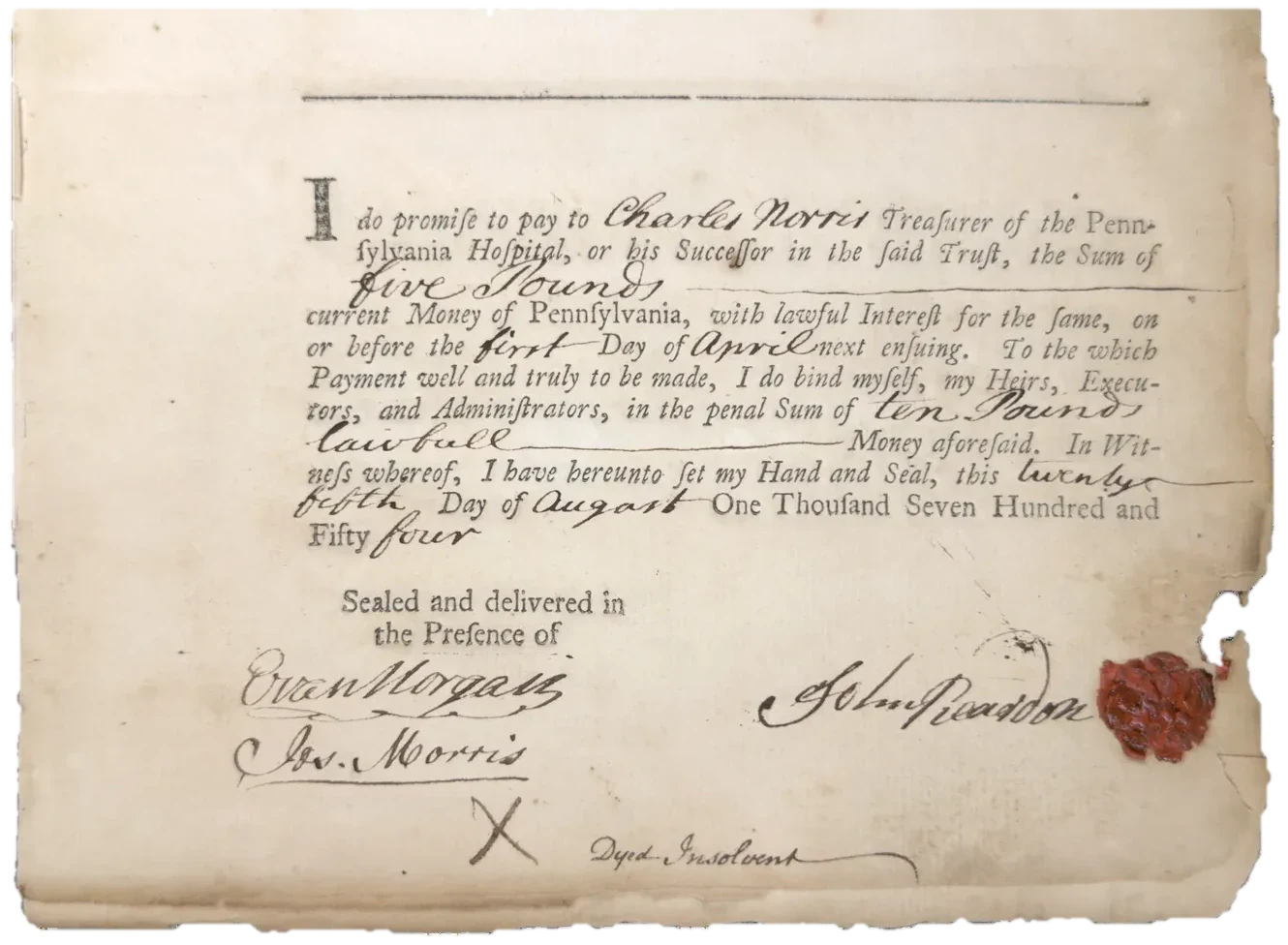
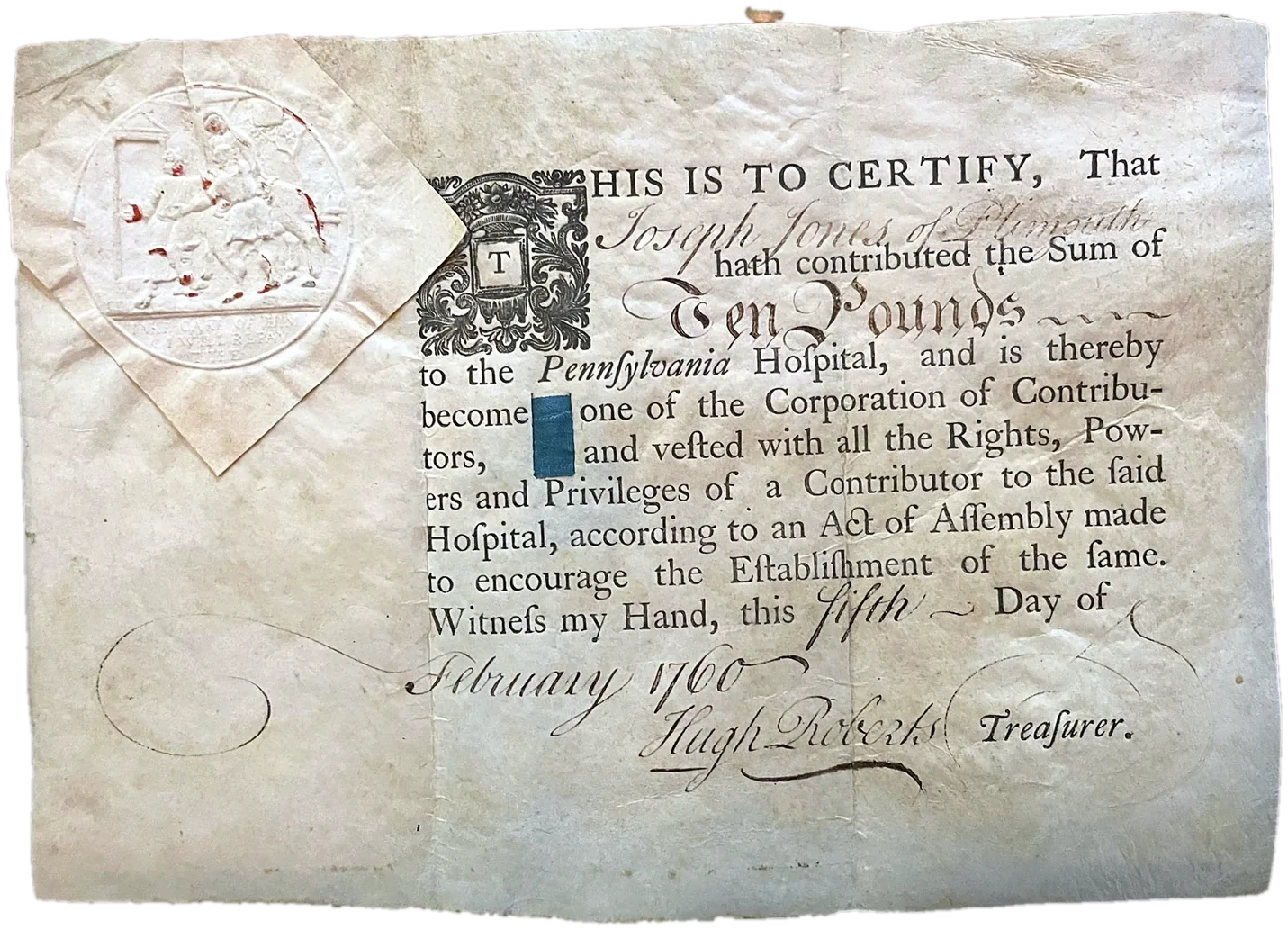
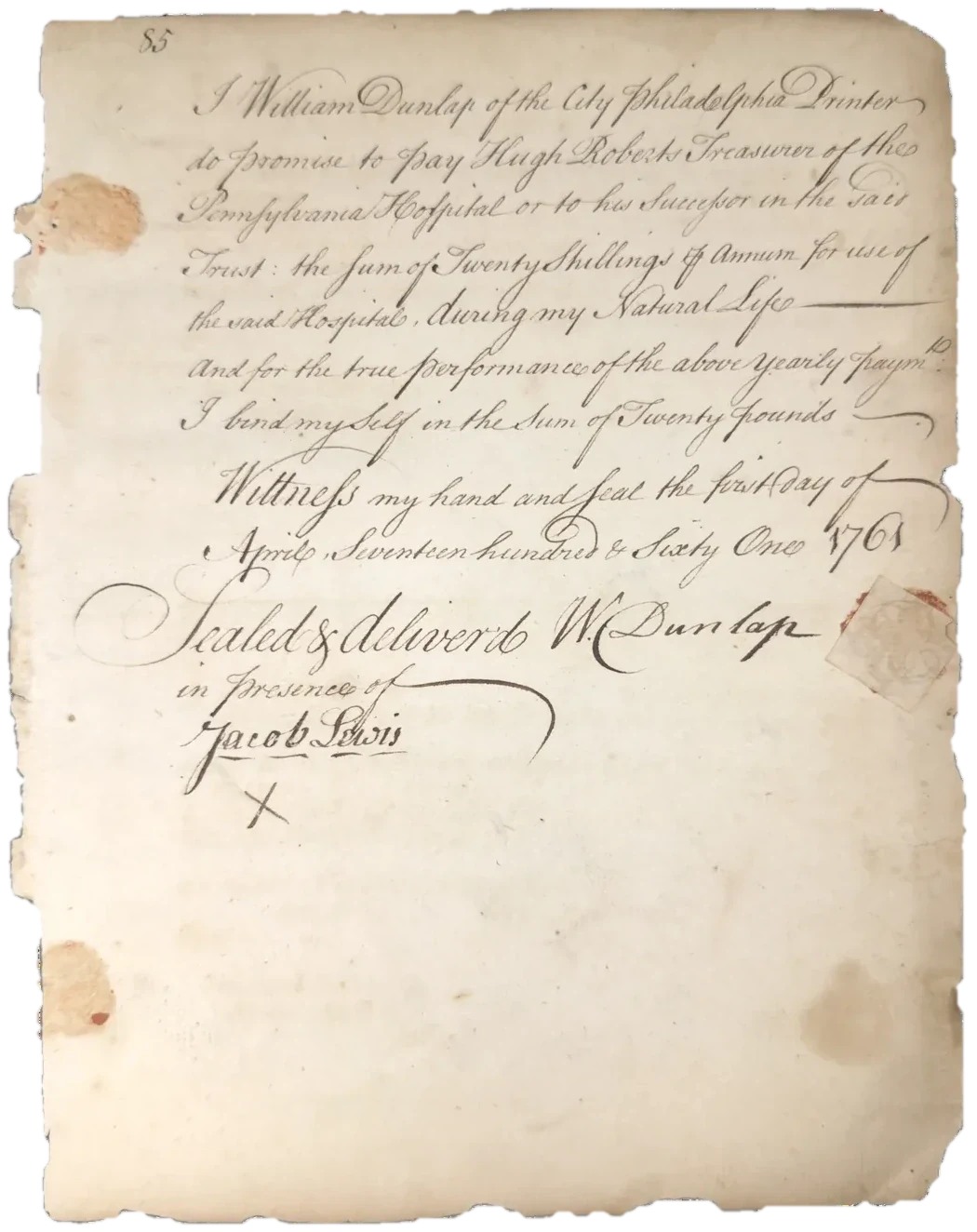
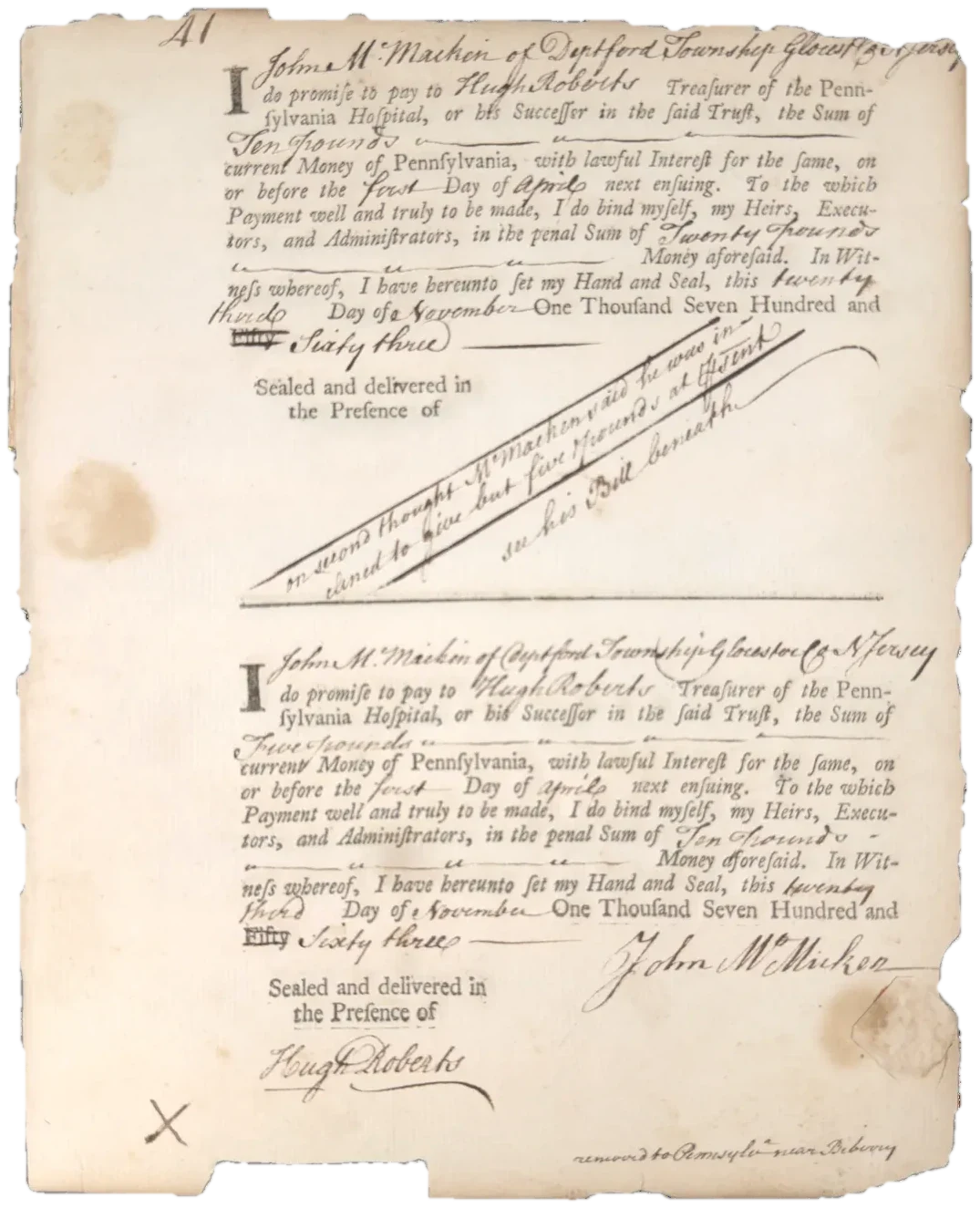
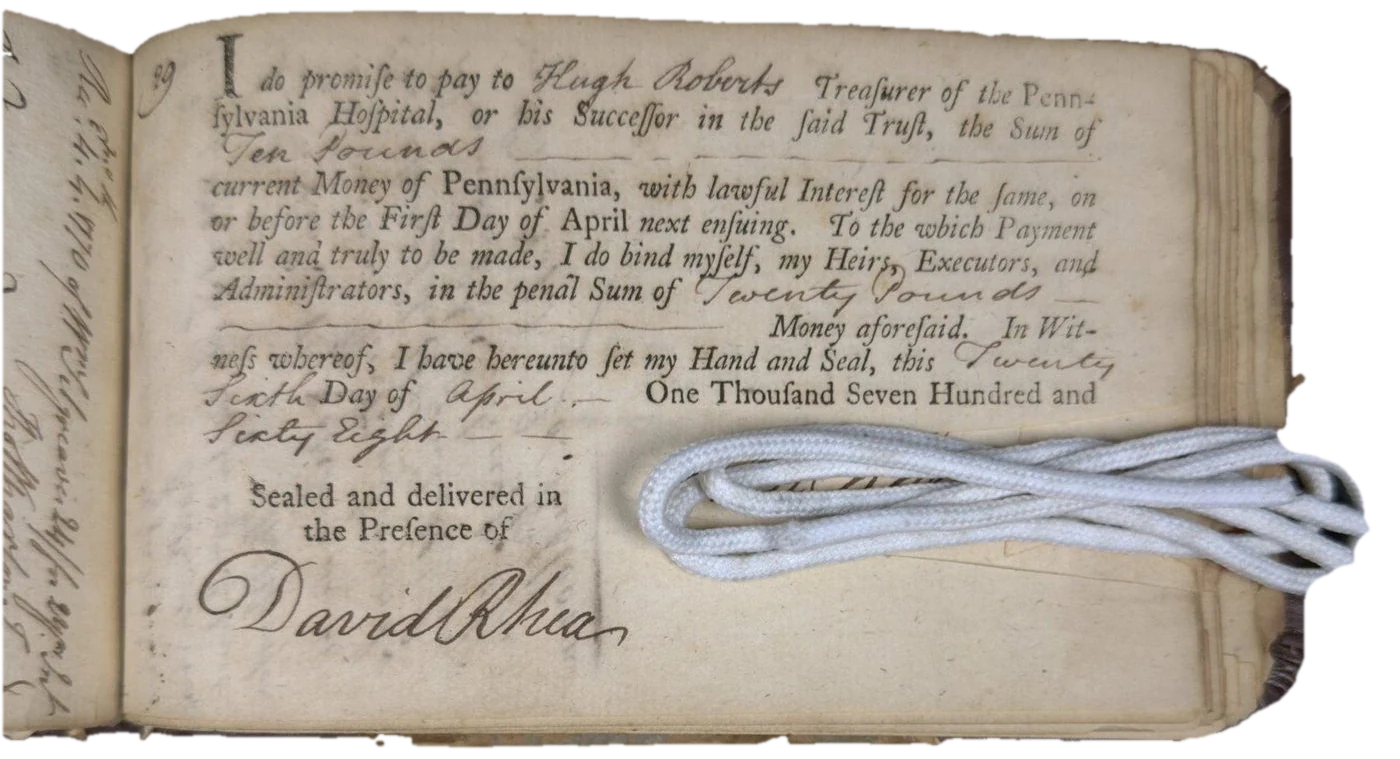
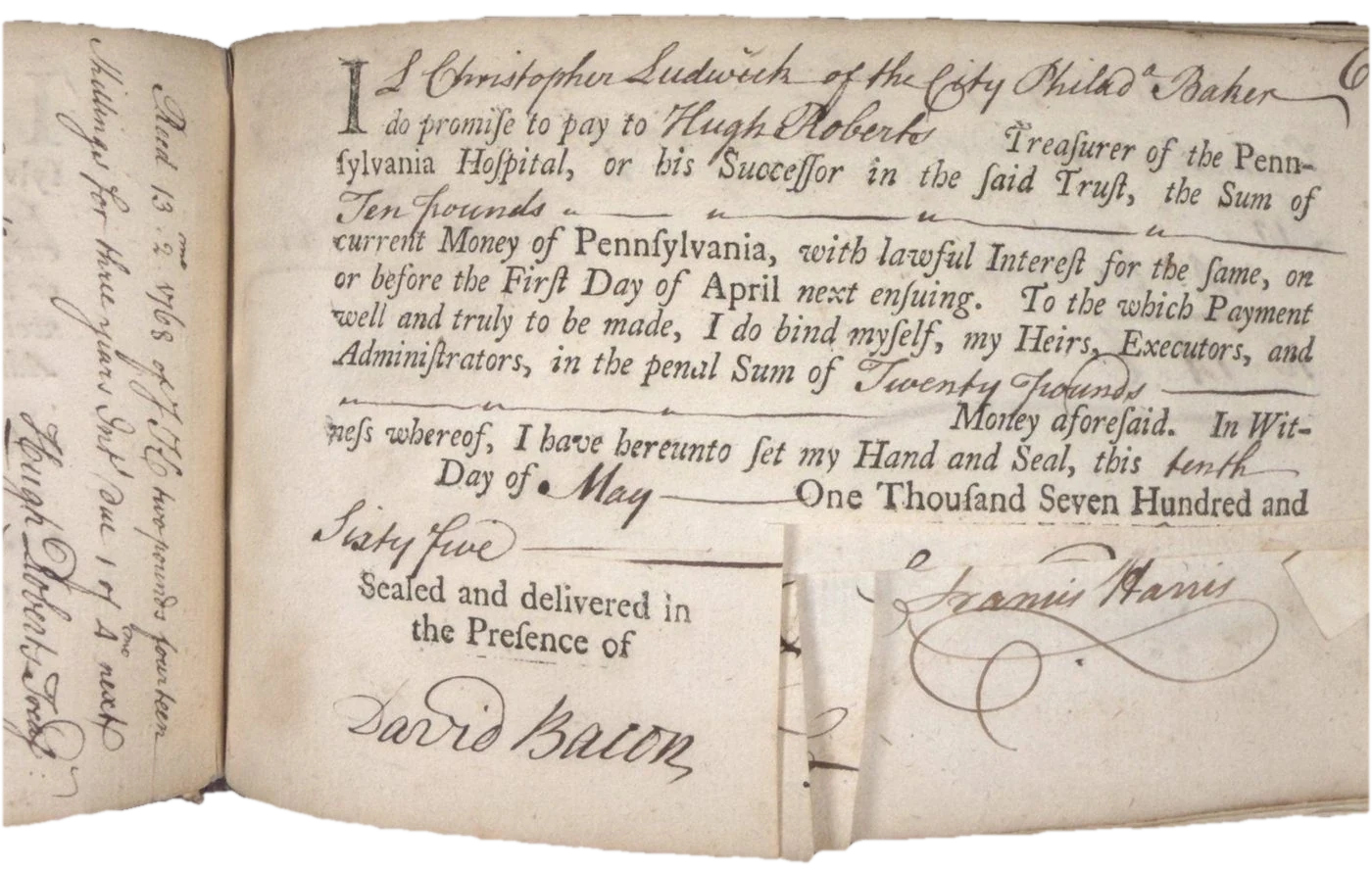
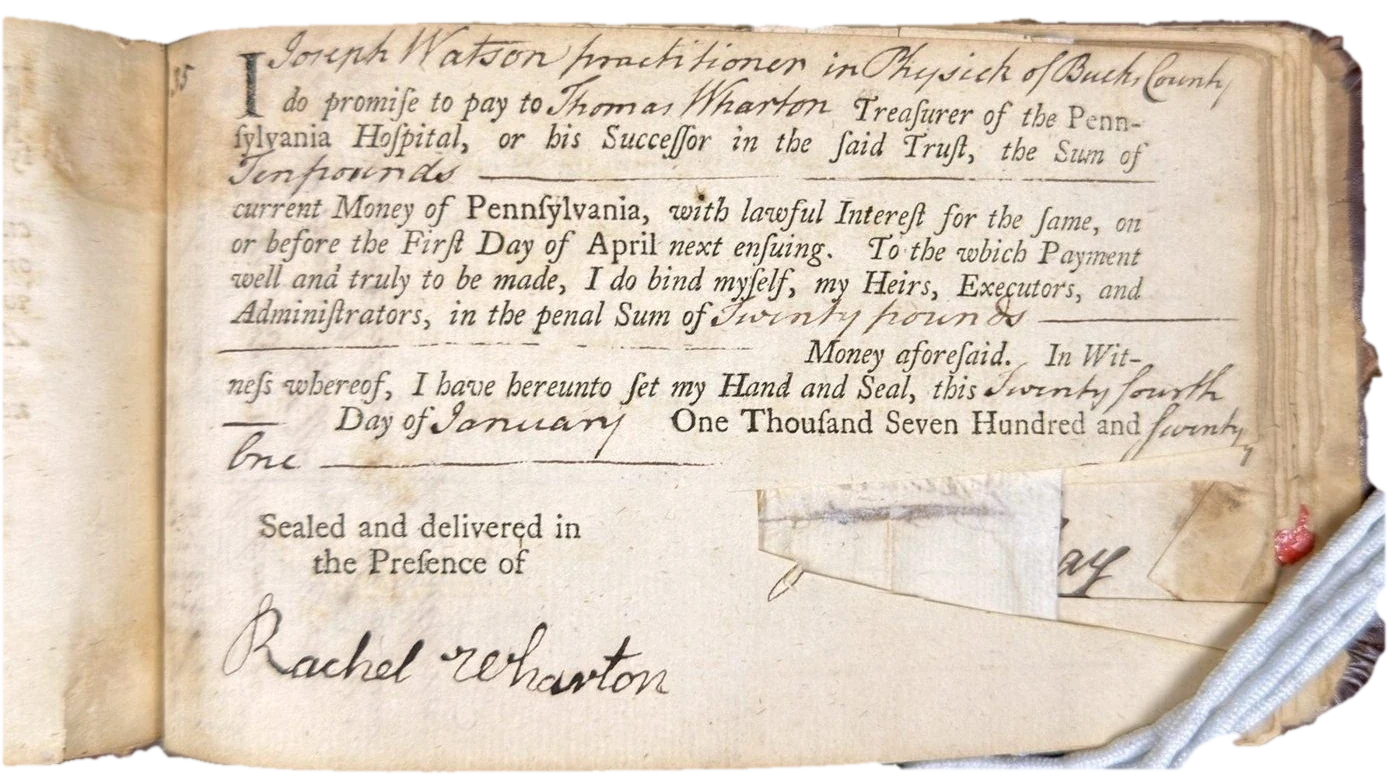
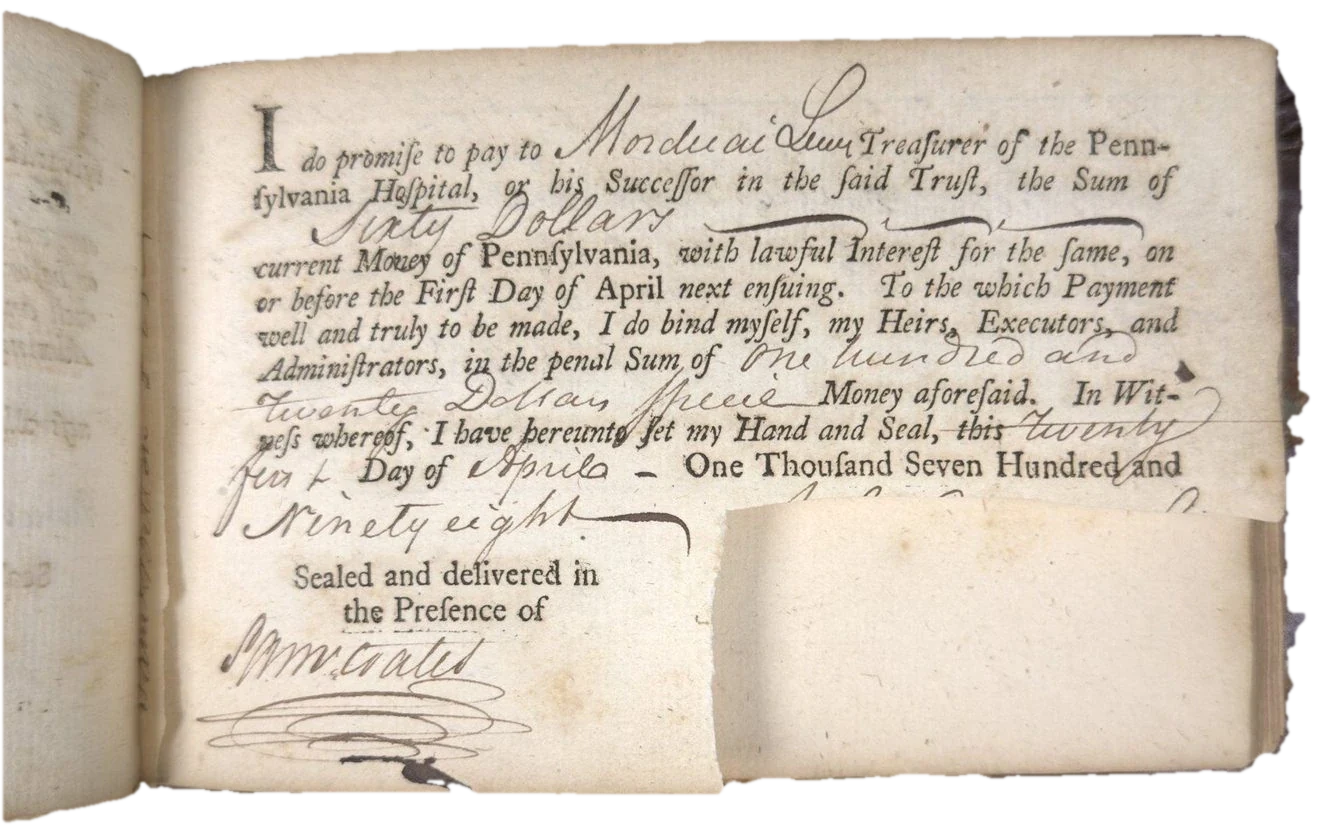
The bargain had a catch, and it is why this room is full of paper. When the Managers came to claim the grant, the Speaker, Isaac Norris, would not count mere promises toward the two thousand pounds. Every subscriber had to sign a penal bond for what he pledged, at double the sum. They signed, on printed forms from Franklin’s press. The contributors met at the State-House on 1 July 1751 and elected twelve Managers and a Treasurer, John Reynell. By the middle of August the pledges came to more than two thousand seven hundred pounds.
The Hospital took its first patients in February 1752, in a house on High Street, now Market Street. The Managers were already planning a building of its own. Its cornerstone was laid on the Pine Street lot on 28 May 1755, under an inscription Franklin composed, which said that it was “by the bounty of the government, and of many private persons, piously founded for the relief of the sick and miserable.” Samuel Rhoads was its architect. The patients moved into the east wing in December 1756. The act that created the Hospital had provided for the insane as well as the sick, and the ground floor held cells for them.
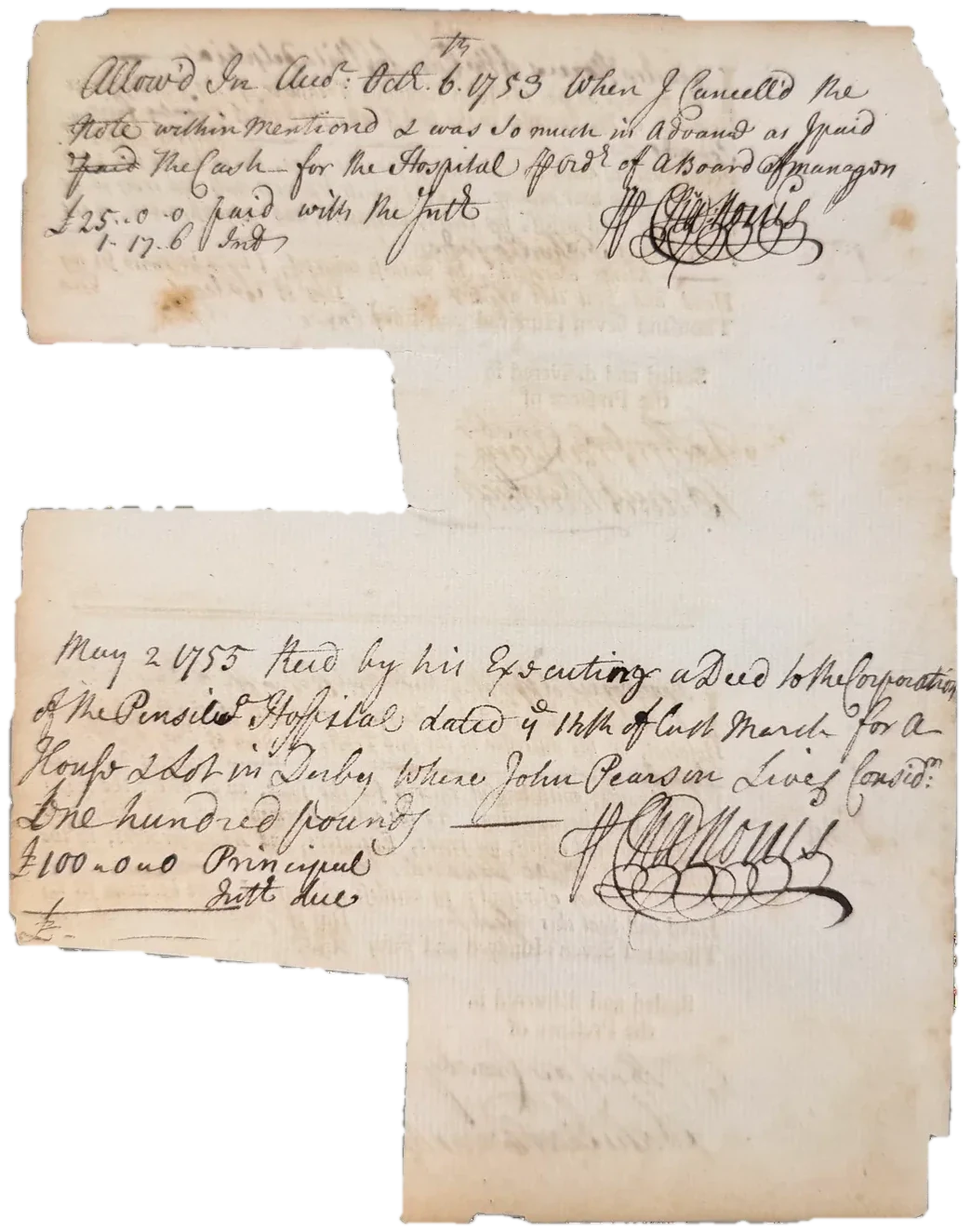
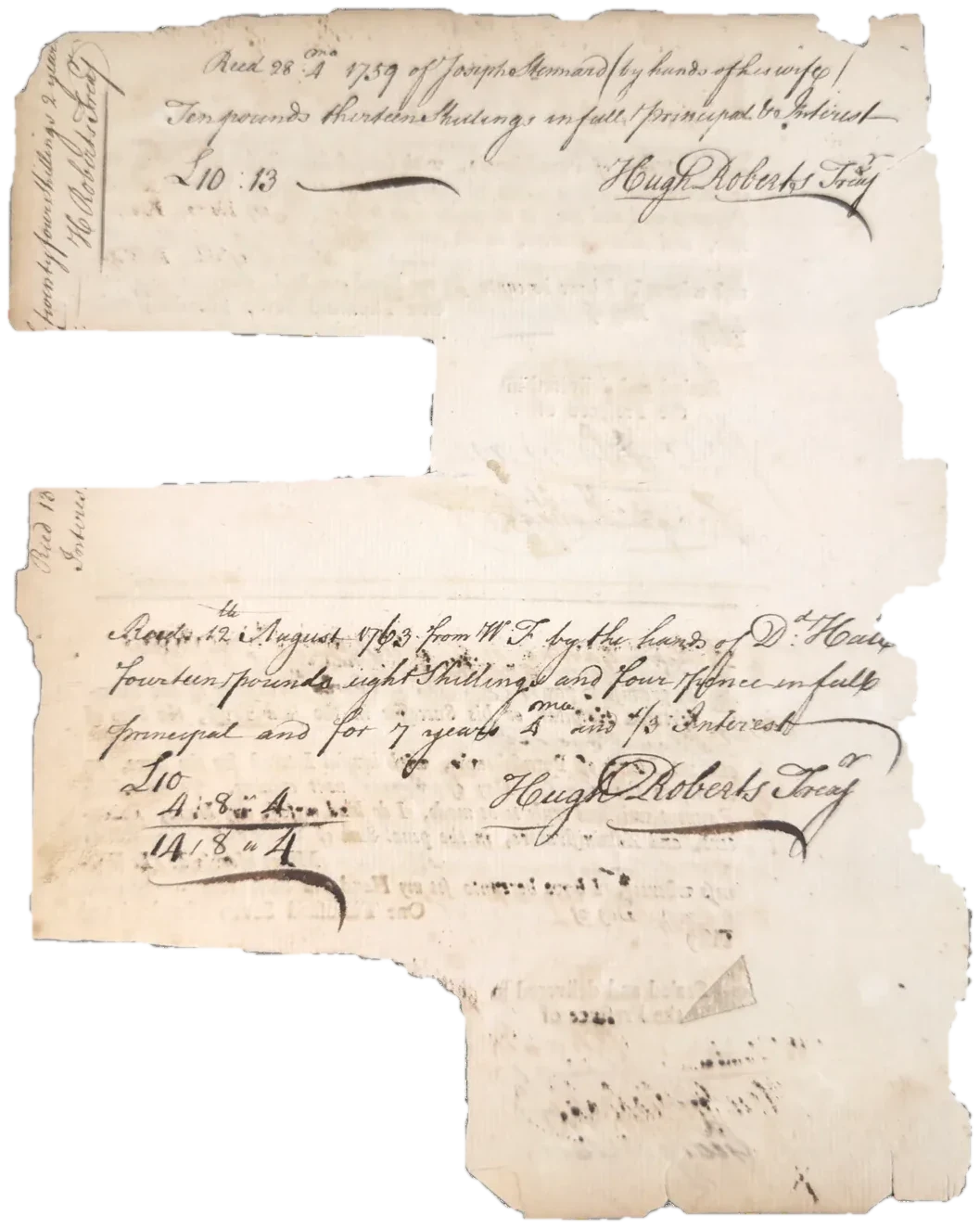
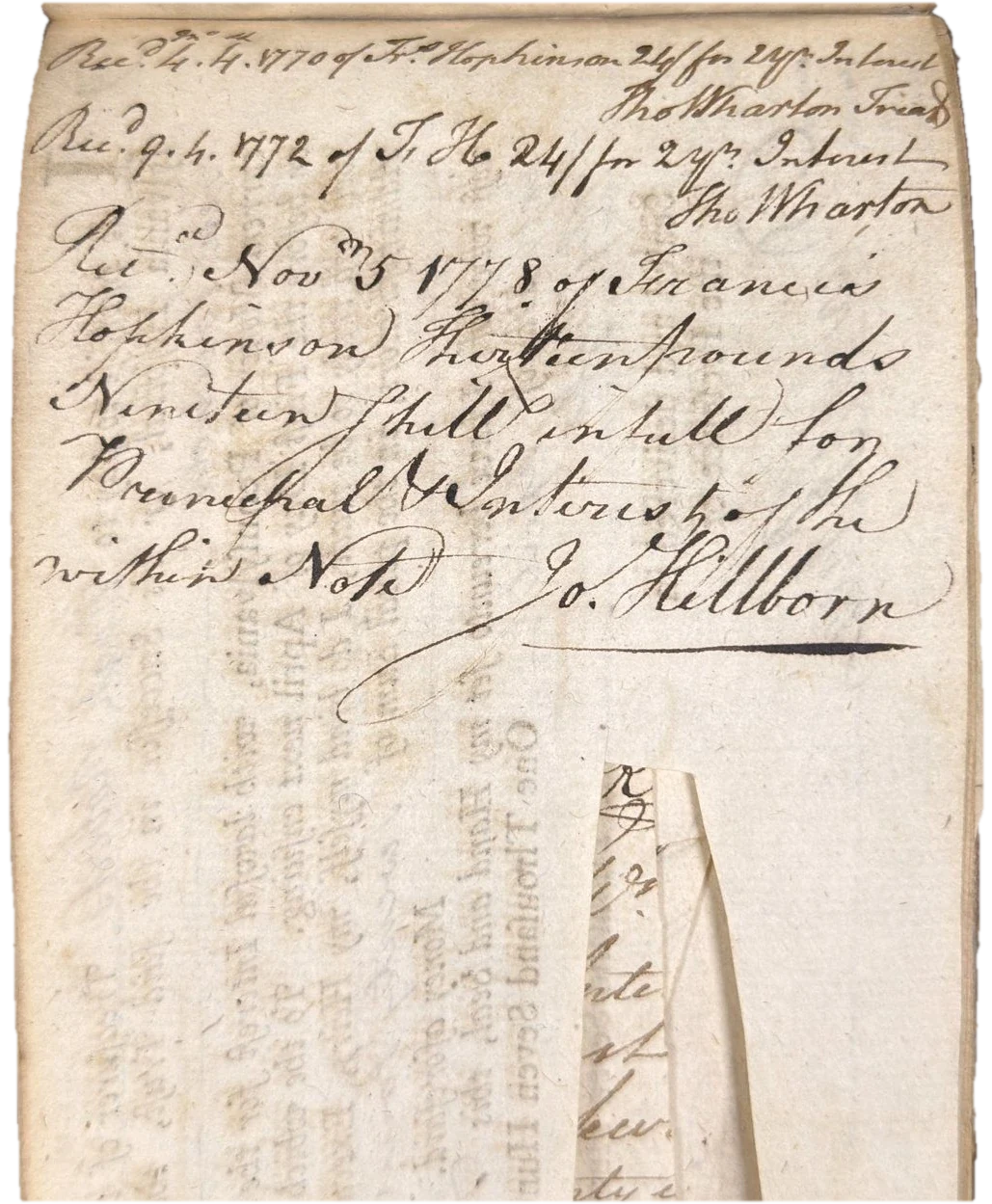
The notes outlived the debts. The Treasurers bound them into books, two to a page, wrote receipts on their backs, and cut away the signature of each man who paid, which is how a bond was cancelled. Some never were. In April 1767 the clerk listed the nine pledges still unpaid, sixteen years after the founding.
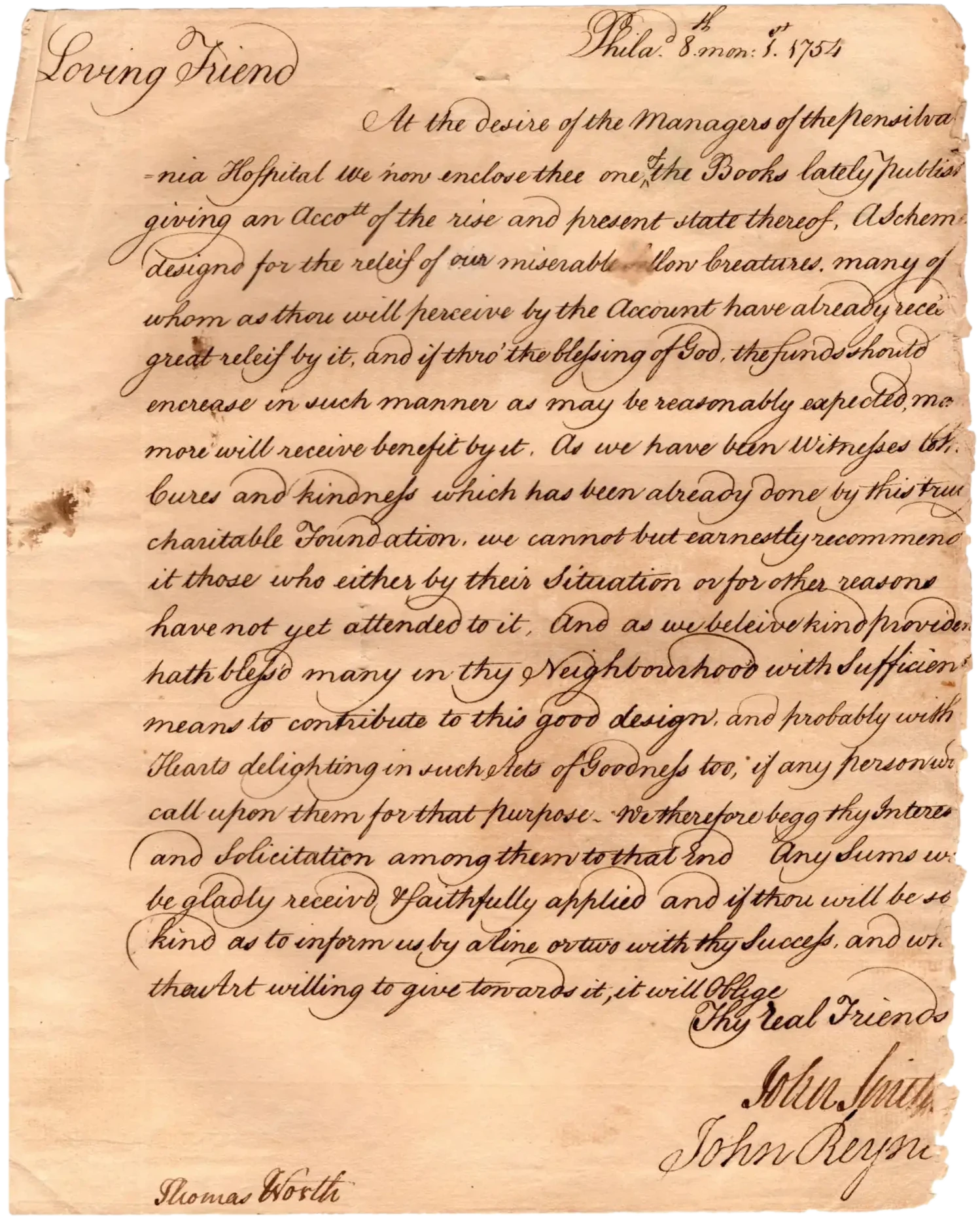
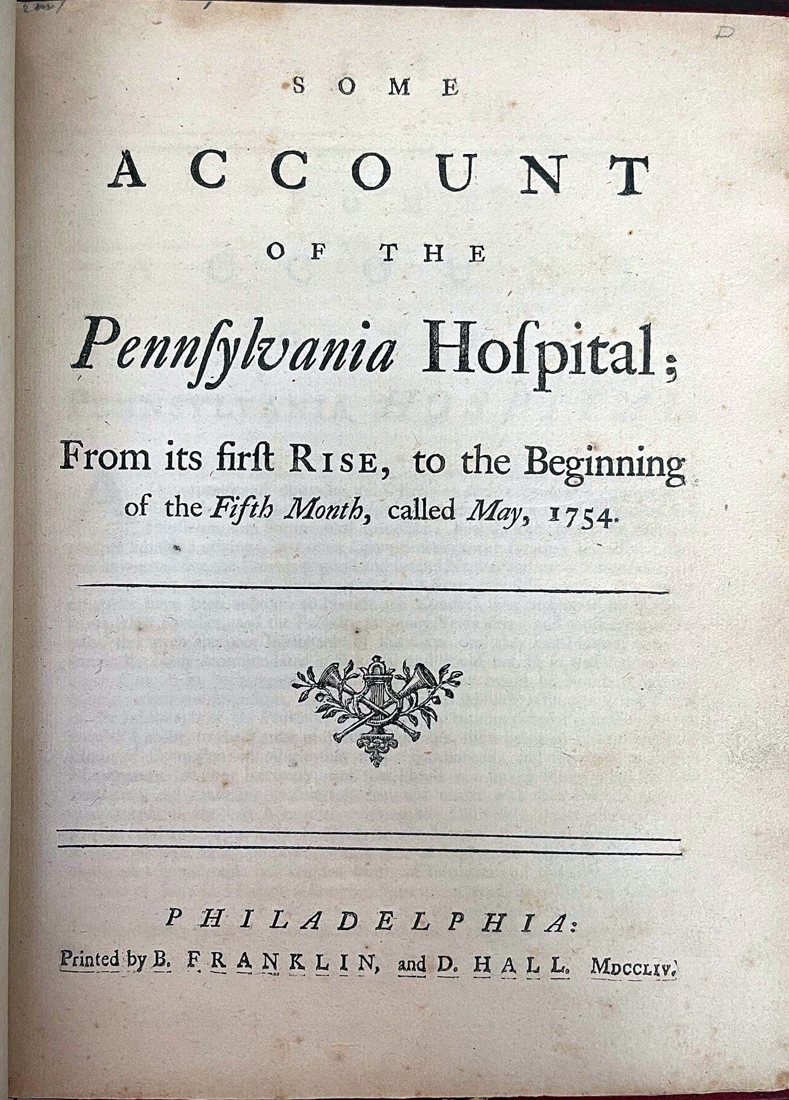
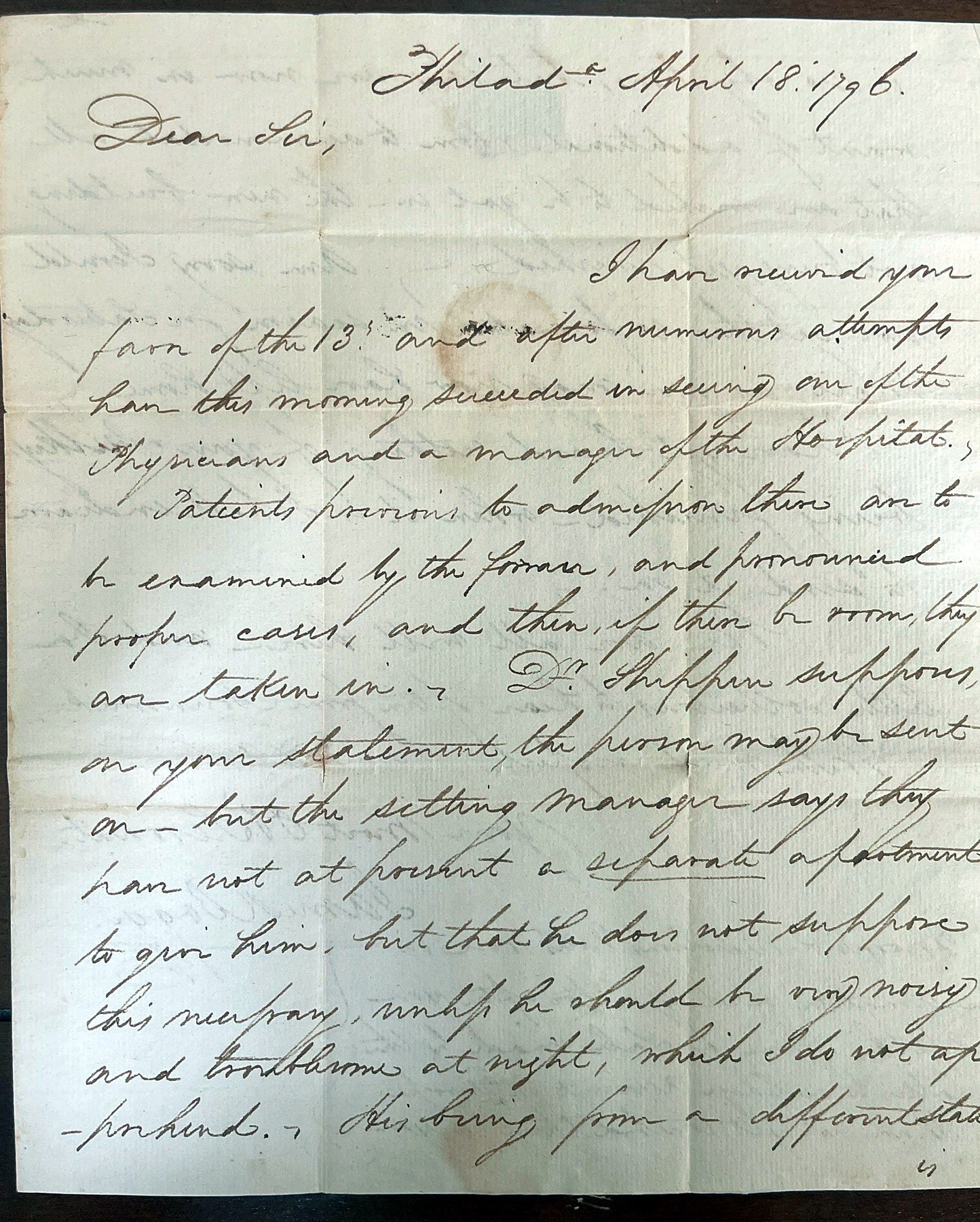
The Hospital raised money by print as well. In 1754 its Managers published Some Account of the Pennsylvania Hospital, the first part of it generally believed to be Franklin’s, and sent copies to friends of the cause with a letter asking each to solicit his neighbours. One of those letters, from John Smith and John Reynell to Thomas Worth, stands at the head of this room.
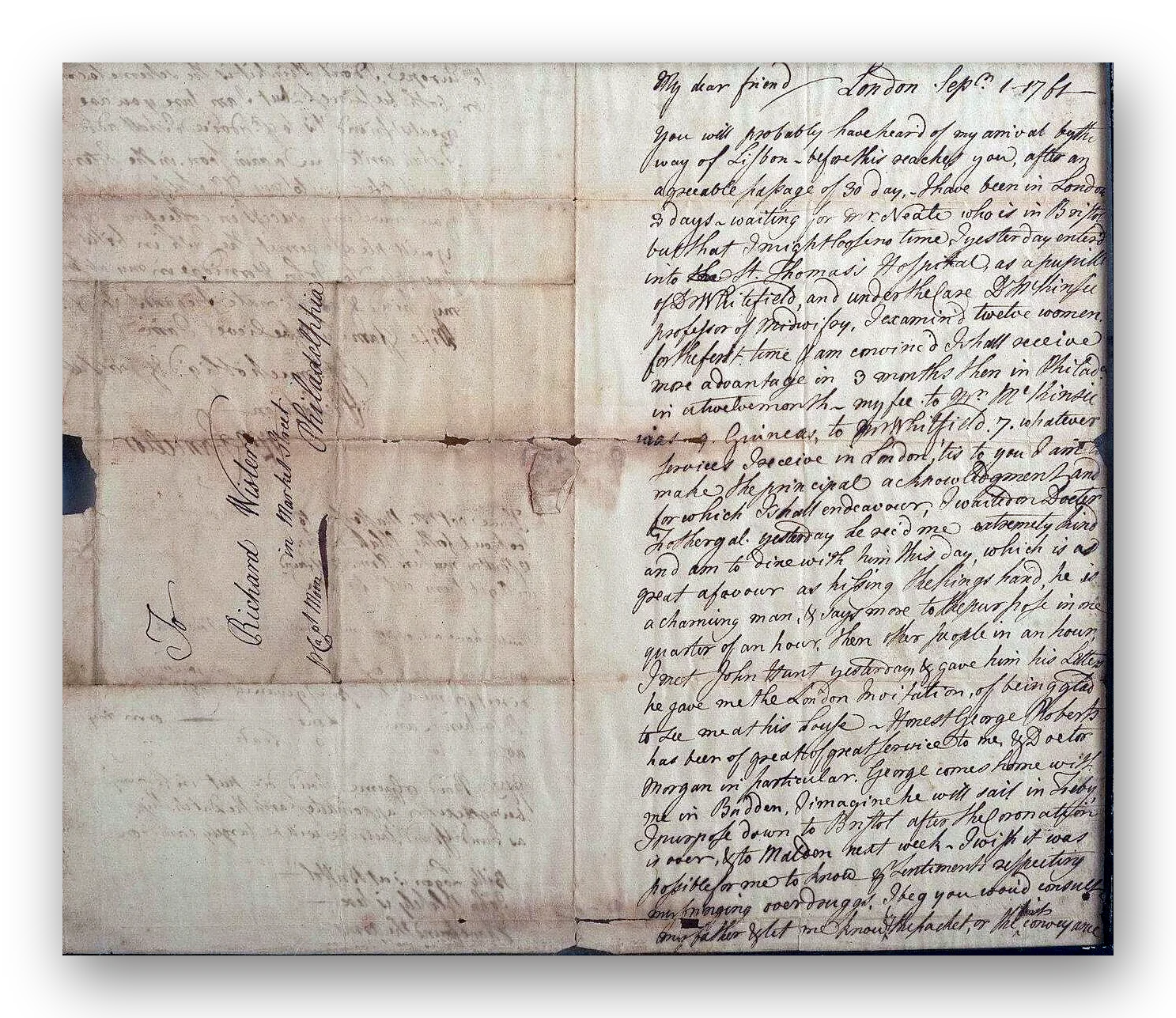
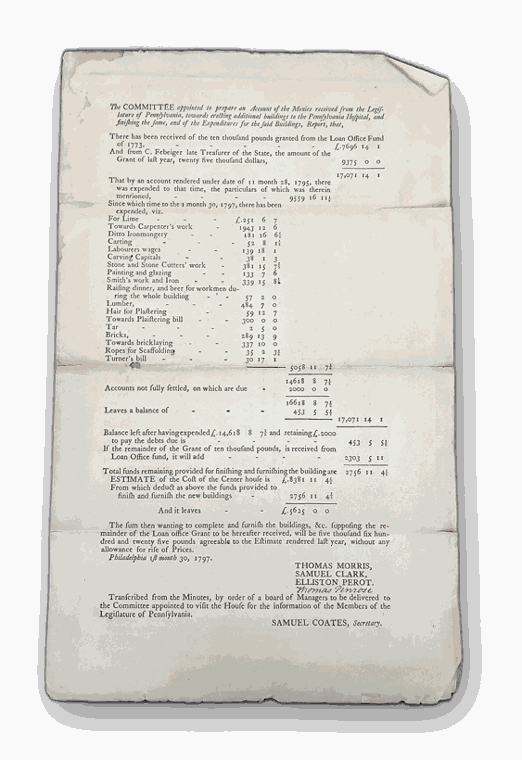
It was also a school. In 1766 Bond began the first course of clinical lectures in America, taught at the bedsides of its patients. Benjamin Rush joined the staff in 1783 and served until his death in 1813, and his reforming career began on these wards, among the patients in the cells. By the 1790s the building was too small. The Managers added new wings with money from the legislature and printed the building committee’s accounts on single sheets, three of which are in this room. The original building still stands at Eighth and Pine.