
Against Slavery
Rush, Franklin, and the Pennsylvania Abolition Society
RUSH published his first antislavery pamphlet in 1773, when he was twenty-eight years old, at a moment when such arguments were genuinely dangerous to make in a city whose commerce depended substantially on the Atlantic slave trade. His "Address to the Inhabitants of the British Settlements in America upon Slave-Keeping" was one of the first explicitly abolitionist pamphlets published in America — not merely an argument for the amelioration of slavery's conditions, but a demand for its abolition on the grounds of natural right.
The argument was both moral and medical. Rush contended that slavery violated the natural rights principles the colonists were beginning to articulate in their dispute with Britain — a point that the colonial leadership was conspicuously reluctant to apply to enslaved people. But he also argued, as a physician, that the experience of enslavement produced specific physical and psychological damage: that the degradation of enslaved people was not a natural condition but an inflicted one, and that it damaged enslavers as well as the enslaved. The medical argument was characteristically Rush's: the body as a political object, the physician's knowledge as a political resource.
Franklin joined the Pennsylvania Abolition Society in 1787 and became its president the following year, lending his enormous prestige to a cause that was becoming increasingly contentious as the new nation's constitutional compromises with slavery became clear. Rush served as secretary. They worked together on the Society's legal advocacy, educational programs for free Black Philadelphians, and correspondence with antislavery activists across the country. Franklin submitted the last great petition of his long life to the United States Congress in February 1790, signed as president of the Pennsylvania Abolition Society, calling for the abolition of the slave trade. He died two months later.
David Brion Davis, in The Problem of Slavery in the Age of Revolution (1975), identifies the Pennsylvania Abolition Society as "the most important antislavery organization in the Atlantic world" in the 1780s and 1790s, and notes that its combination of legal activism, public advocacy, and educational programming served as a model for subsequent abolition movements. Rush's sustained engagement with the Society — as secretary, as pamphleteer, as correspondent — placed him at the center of this transatlantic network.
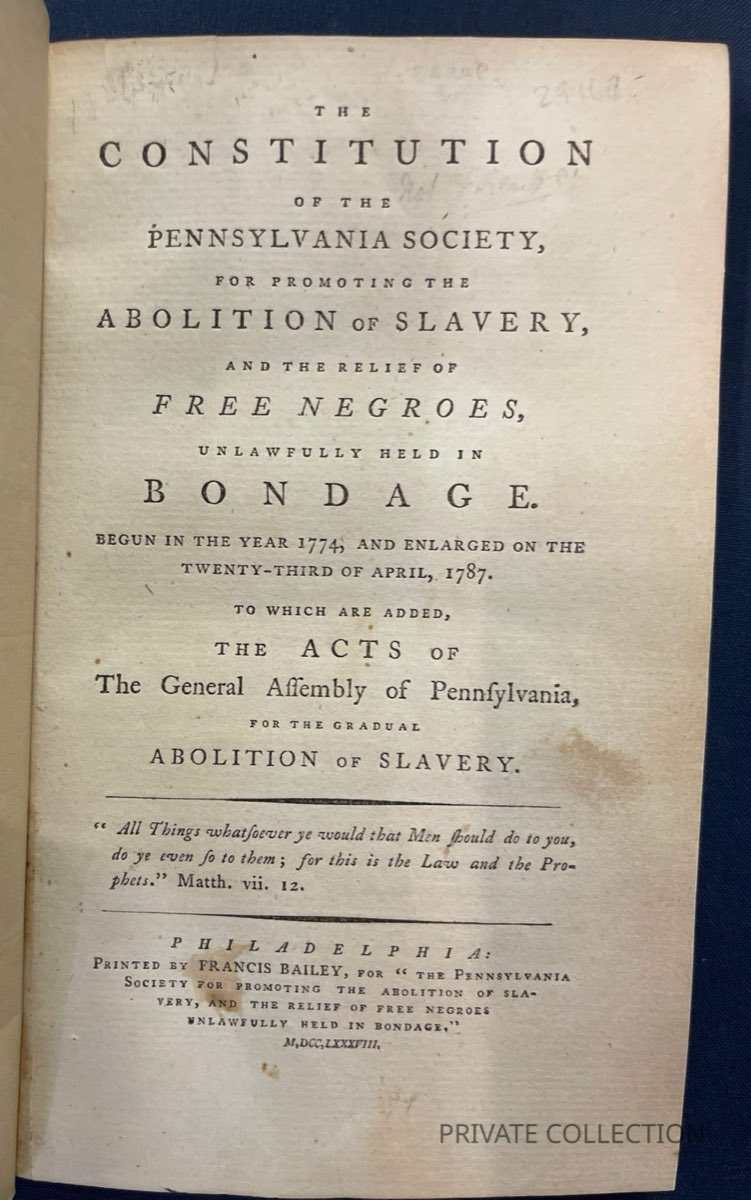
Constitution of the Pennsylvania Society, for Promoting the Abolition of Slavery
The Pennsylvania Society for Promoting the Abolition of Slavery was the first abolition society in the world, founded in Philadelphia in 1775. Reorganized in 1787 with Franklin as president and Rush among the most active members, the Society pursued a combination of legal advocacy, education, and moral suasion. The Constitution documents the Society's formal structure and stated purposes — including its Committee on Correspondence, its legal aid committee, and its educational programs for free Black Philadelphians. Rush's engagement with all of these programs was consistent and sustained, and the Society's publications and correspondence provide some of the most important surviving evidence of his antislavery commitment.
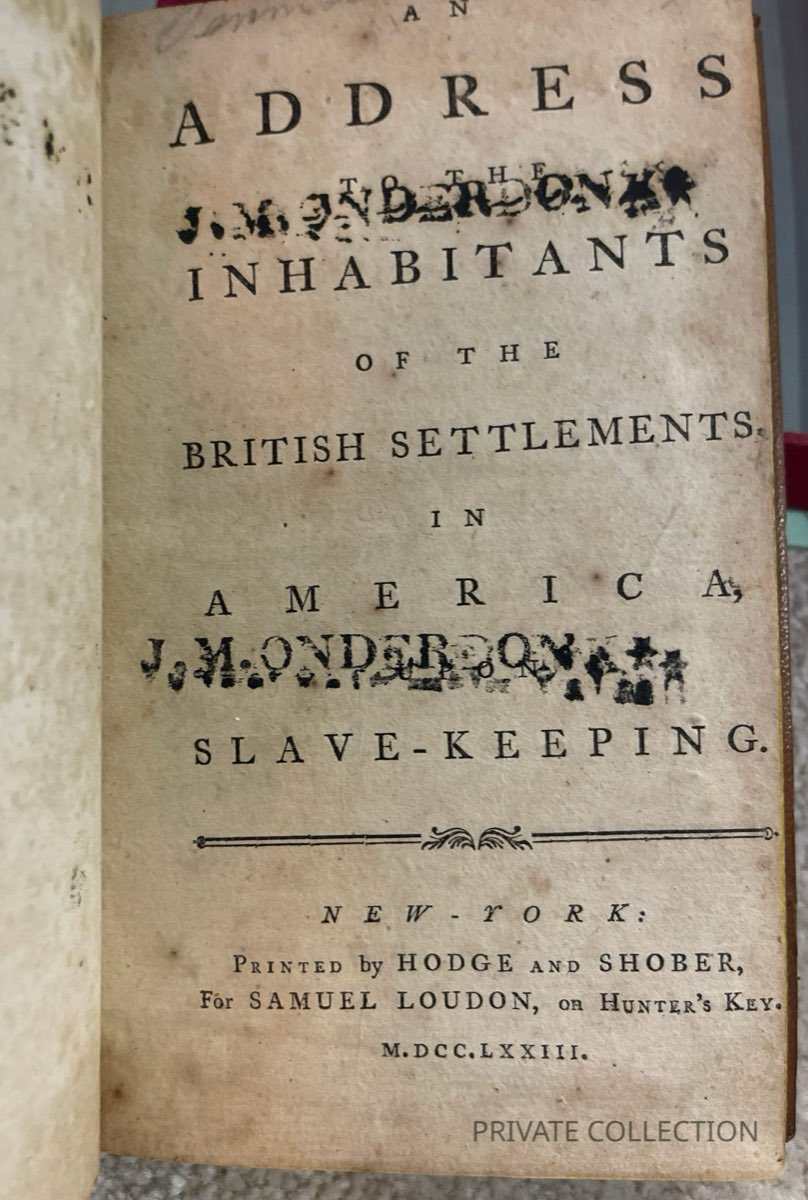
An Address to the Inhabitants of the British Settlements in America upon Slave-Keeping
Rush was twenty-eight years old when he published this pamphlet — already Benjamin Franklin's student in the broadest sense, following the older man's example of using the press as an instrument of civic improvement. The argument is both moral and medical: slavery is incompatible with natural rights principles; the experience of enslavement produces precisely the moral and physical degradation that slave-holders use to justify the institution. Publication in 1773 — two years before the Revolution and two years before the founding of the Pennsylvania Abolition Society — marks Rush as one of the earliest antislavery voices in America. Franklin read it with approval.
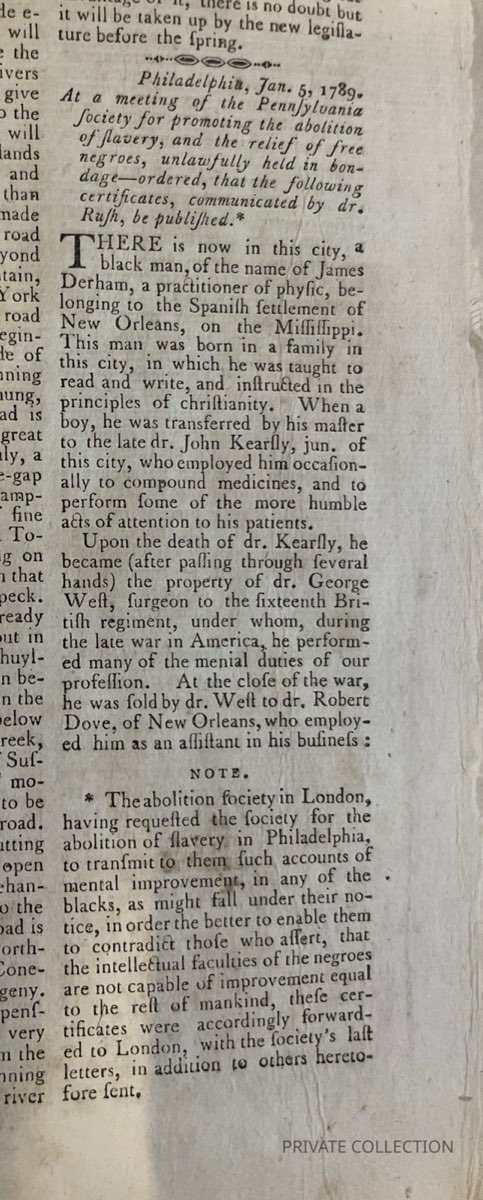
An Account of a Negro Physician
Rush's account of James Derham — a formerly enslaved physician who had purchased his freedom and established a practice in New Orleans — is an antislavery argument made through the example of individual excellence rather than abstract principle. Rush met Derham in Philadelphia and was struck by the quality of his medical knowledge. The account documented Derham's achievement for a white readership that might find such excellence surprising, and implicitly argued against the racial hierarchies that slavery required and produced. The pamphlet connects directly to the context of the 1793 epidemic, during which the free Black community's nursing and burial work would be both crucial and subsequently misrepresented by Matthew Carey.
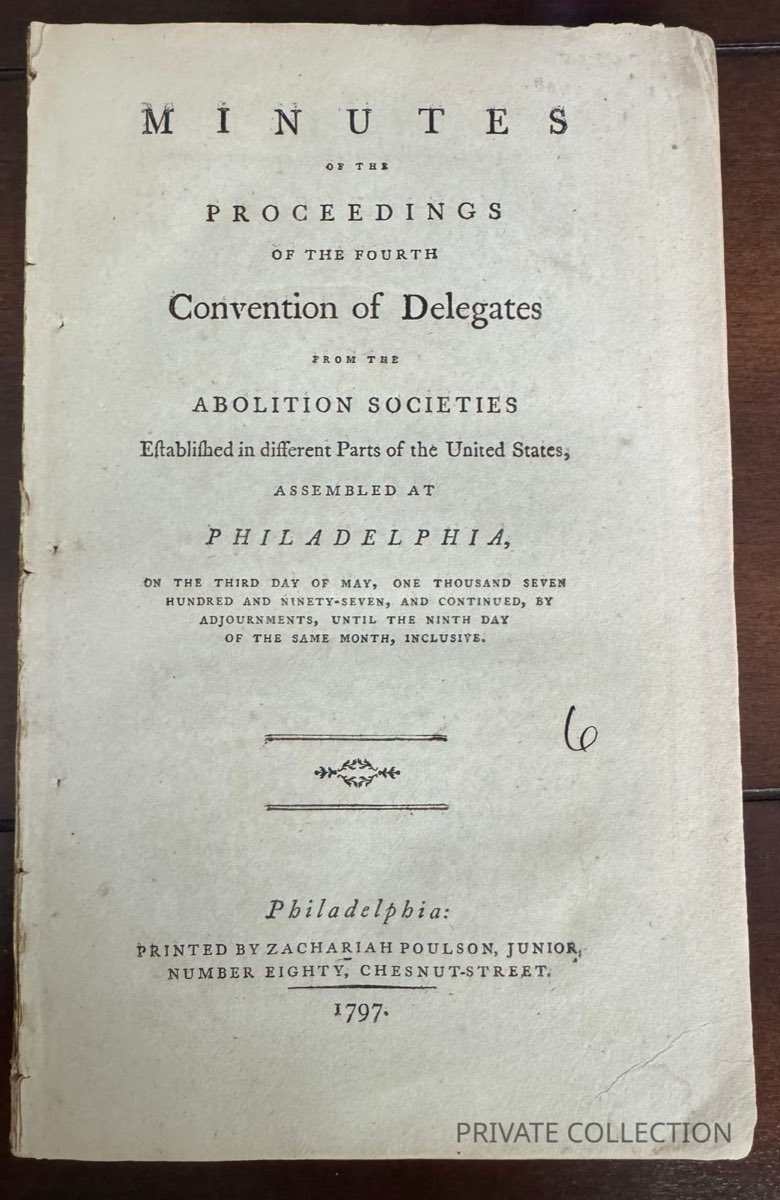
(Abolition Societies — Proceedings and Pamphlets)
The annual conventions of the American Convention for Promoting the Abolition of Slavery, which began meeting in 1794, produced a documentary record that is among the most important archival traces of the early abolitionist movement. Rush participated in the Pennsylvania delegation's work and corresponded with antislavery activists across the country. These documents place his commitment in its institutional context: not a solitary moral position but an organized, sustained campaign that Franklin helped found and Rush helped maintain through the first decades of the nineteenth century.
The limitations of Rush's antislavery position are also documented here, if obliquely. Rush never joined the radical abolitionists who demanded immediate emancipation without compensation; he worked within the Pennsylvania Abolition Society's framework of gradual abolition and legal advocacy. He was also capable of the kind of racial paternalism that marred Carey's account of the epidemic — the assumption that Black excellence was surprising, the anthropological curiosity about African physical characteristics that colored some of his medical writing. The antislavery position was real and consistent; the racial framework within which it operated was the framework of his time and class.