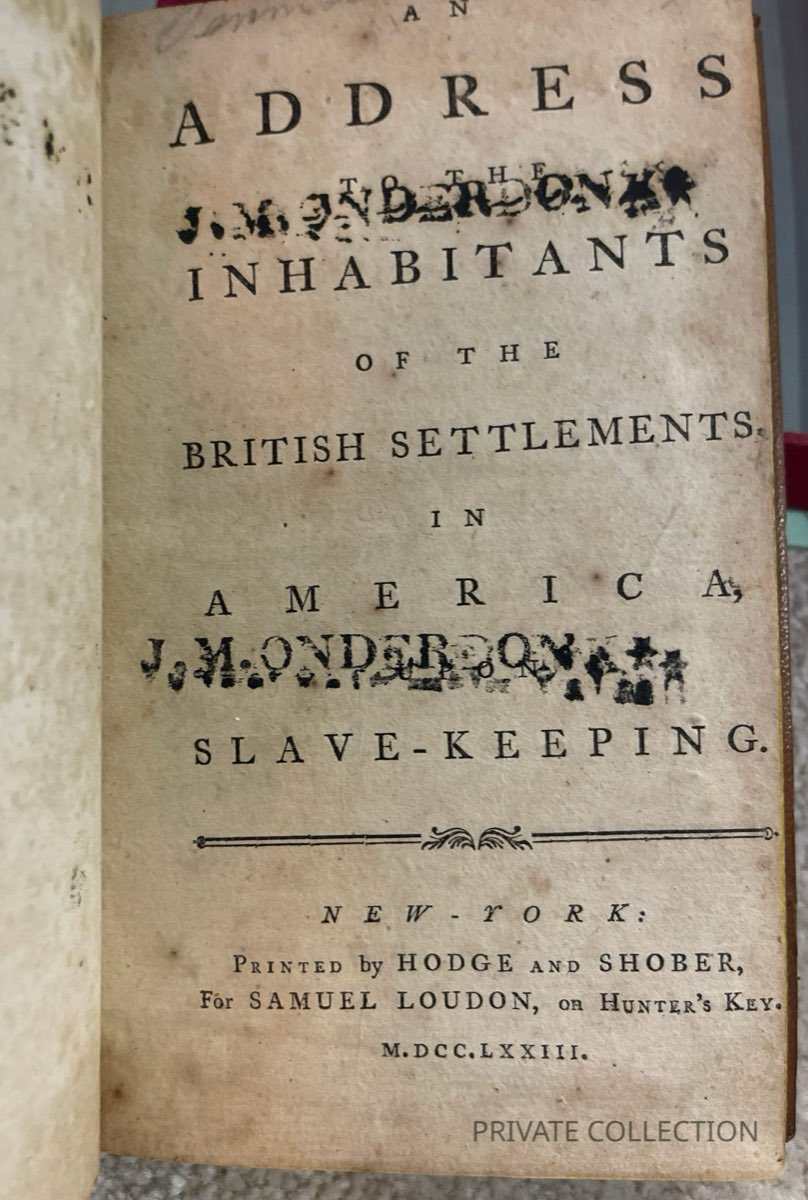
An Address to the Inhabitants of the British Settlements in America upon Slave Keeping
BR-2023.017
Rush identifies himself as the author of this unsigned address in a 29 April 1773 letter to Barbeu Dubourg (see Butterfield, Letters, 76). Butterfield (77-78, n. 2) says that this unsigned address, the first of Rush's "controversial tracts, and his first effort in behalf of the Negroes . . . is one of his most forceful productions and remains one of the most read-able."
Rare. Only 9 copies at auction in the last 125 years, the latest in 2004.
Rush was twenty-eight years old when he published this pamphlet -- already Benjamin Franklin's student in the broadest sense, following the older man's example of using the press as an instrument of civic improvement. The argument is both moral and medical: slavery is incompatible with natural rights principles; the experience of enslavement produces precisely the moral and physical degradation that slave-holders use to justify the institution. Publication in 1773 -- two years before the Revolution and two years before the founding of the Pennsylvania Abolition Society -- marks Rush as one of the earliest antislavery voices in America. Franklin read it with approval.
- Accession
- BR-2023.017
- Date
- 1773 — First Edition
- Author / maker
- Rush, Benjamin
- Inscription
- Custom Clamshell Box. Ink Stamp of “J. M. Onderdonk” on front pages, ink signature "George Onderdonk's Book, November 10, 1811" on last page.
- References
- Fox 1773-3, Butterfield, Letters, 76, Butterfield 77-78, n. 2
- Notes
- Benjamin Rush to Benjamin Franklin: "Phila May 1st 1773 You will receive with this Letter a small Pamphlet which the public have ascribed to me. It was written at the Request of Anth: Benezet to promote and accompany a Petition to our Assembly to put a more complete Stop to the Importation of Negro Slaves into the Province. I have sent a Copy of it together with all those News Papers which contain the late Dispute between Govr: Hutcheson and the Counsil and Assembly at Boston to our good Friend Monsr. Dubourg of Paris. They are directed to your Care. Please to forward them by the first Opportunity."