A Synopsis of Methodical Nosology
BR-2024.015
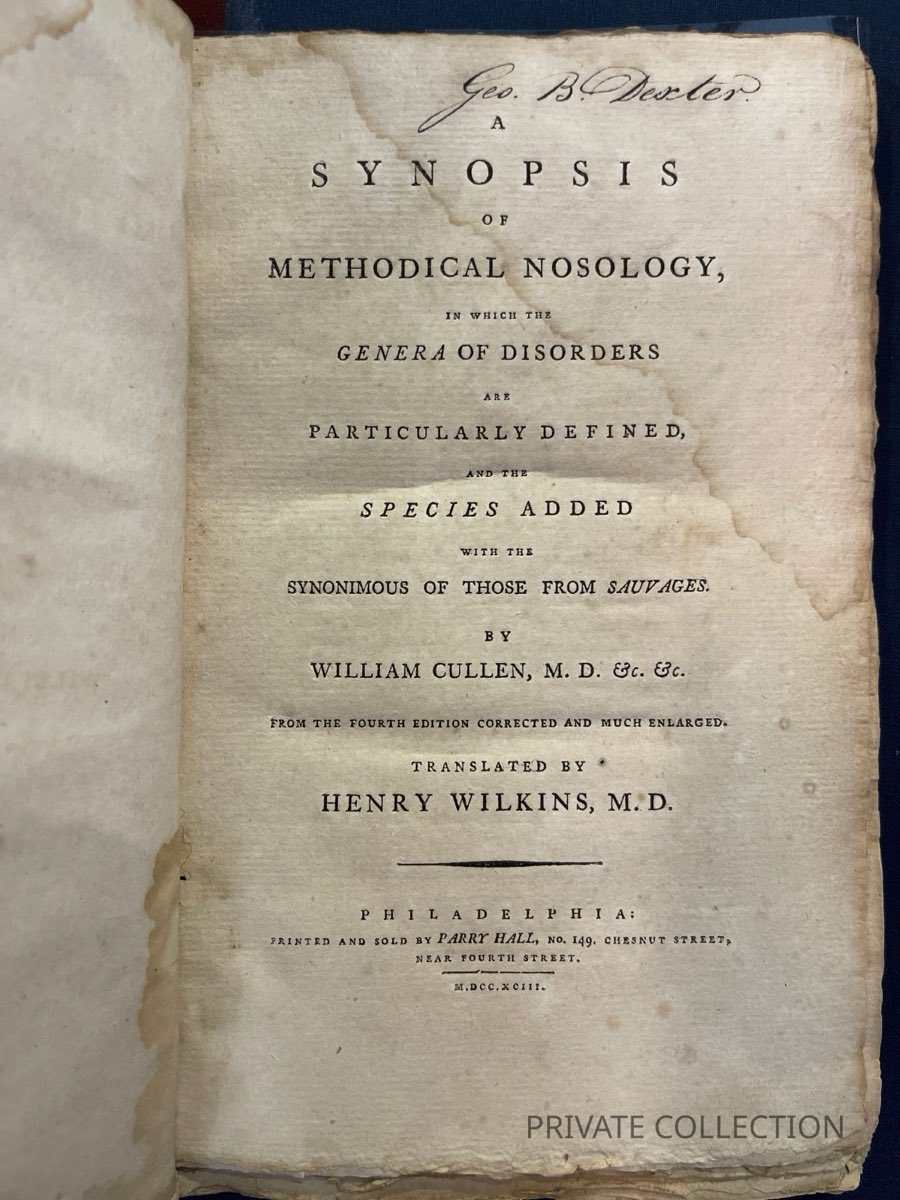
CULLEN, William. A Synopsis of Methodical Nosology, in which the Genera of Disorders Are Particularly Defined, and the Species Added with the Synonimous of those from Sauvages. Phila.: Printed and Sold by Parry Hall, 1793. xix,[21]-183pp. . On verso of leaf after the title page, is the notice of a District of Pennsylvania copyright for the book, dated "on the twelfth day of February, in the nineteenth year of the independence of the United States" (i.e., Feb. 12, 1795) claimed by Elizabeth Hall as a proprietor. "Apparently a reissue by Elizabeth Hall (widow of Parry Hall) of the original 1793 edition (Evans 25361)... Translation of Genera morborum, which comprises v. 2 of the 4th ed. of the author's Synopsis nosologiae methodicae, published in Edinburgh in 1785"--Austin. With the ownership signature of and some annotations by George B. Dexter was a Granville, Nova Scotia, physician, a graduate of the University of Pennsylvania medical school. He attended to patients throughout what is now Digby and Annapolis Counties.
Cullen's nosology -- his systematic classification of diseases -- structured Rush's understanding of illness for forty years. The first American edition appeared in 1793, the year of the yellow fever epidemic, reflecting the demand that three decades of Rush's teaching had created for Cullen's theoretical frameworks. The nosology classified yellow fever as a genus within the Pyrexiae (fevers), and it was from within this Cullenic framework that Rush and his opponents argued about what, precisely, the epidemic was.
- Accession
- BR-2024.015
- Date
- 1793 -- First American Edition
- Author / maker
- Cullen, William
- Condition
- Orig. paper-backed boards. Very old waterstain to boards and exterior leaves, else a very good copy
- References
- Evans 28508. Austin 585.
- Notes
- Cullen stratified diseases into separate entities based on his criteria. This caused Rush to split from his mentor as he believed that all disease was one and the same. He said that to classify diseases as different was similar to saying that ice, dew, frost, and water were all different entities rather than different forms of the same entity.