EIS LIBRISEIS LIBRIS
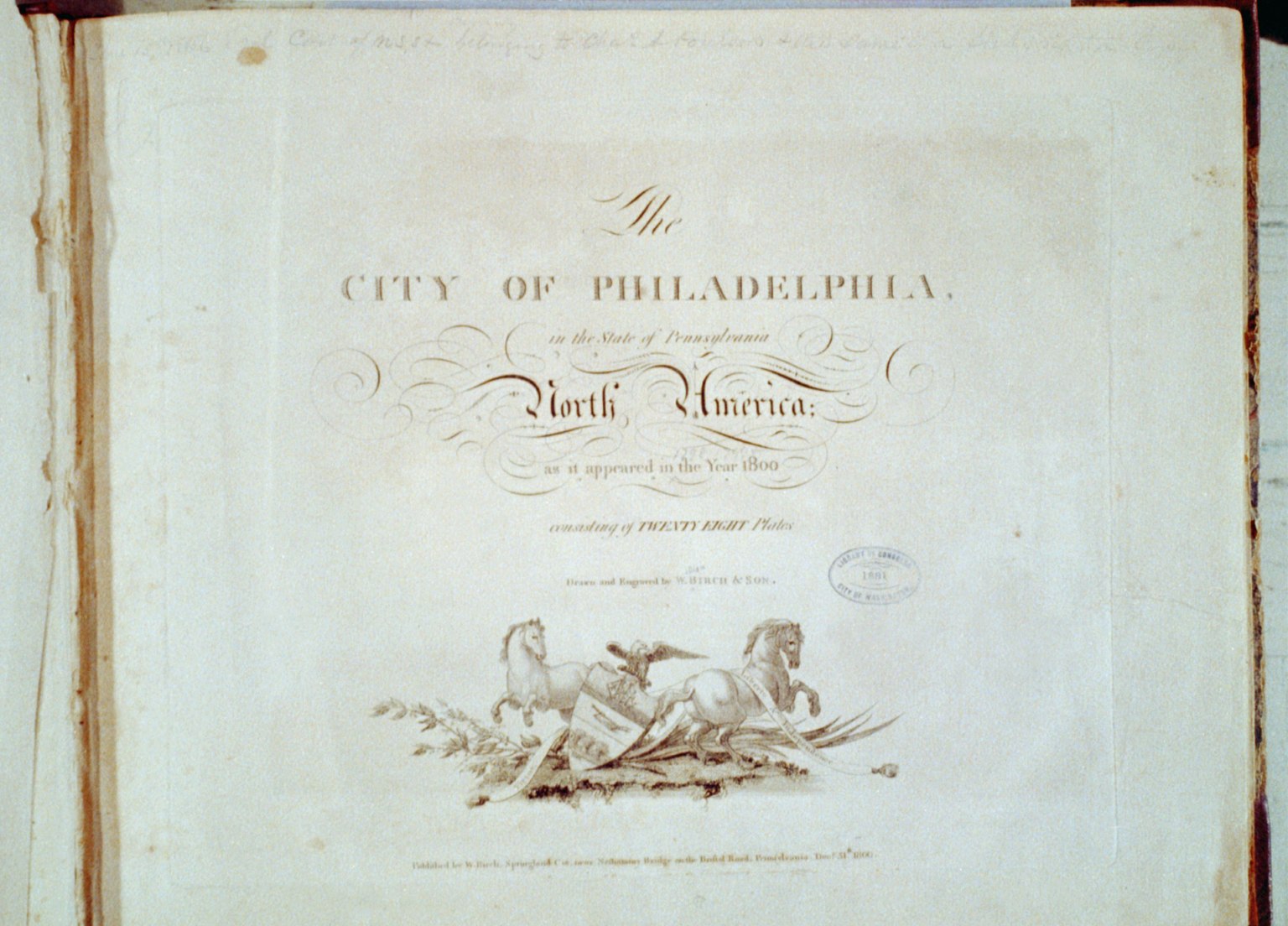
William Birch, The City of Philadelphia as it appeared in the year 1800. Library of Congress.

Room 9 of 10

1793
The City in the Fever

Before it: Rush, Physician, Teacher, Reformer. After it: Memory.

William Birch, The City of Philadelphia as it appeared in the year 1800. Library of Congress.

In August 1793 a fever came up from the wharves on Water Street. By the middle of October it was killing a hundred people a day. Before the frost ended it in November, some five thousand had died, a tenth of the city, and twenty thousand more had fled, the President and the government among them.

What remained was a committee of volunteers under Mayor Matthew Clarkson, the physicians who stayed, and the Free African Society, whose members nursed and buried the sick when no one else would. Benjamin Rush stayed, and bled and purged his patients on a scale his colleagues thought murderous. At Bush Hill, the French physician Jean Devèze did the opposite, and his patients did about as well. Mathew Carey, a member of the committee, printed the first account while the dead were still being counted, and revised it three times by January.

Everything in this room was written, printed or signed by someone who lived through the fever or its returns.

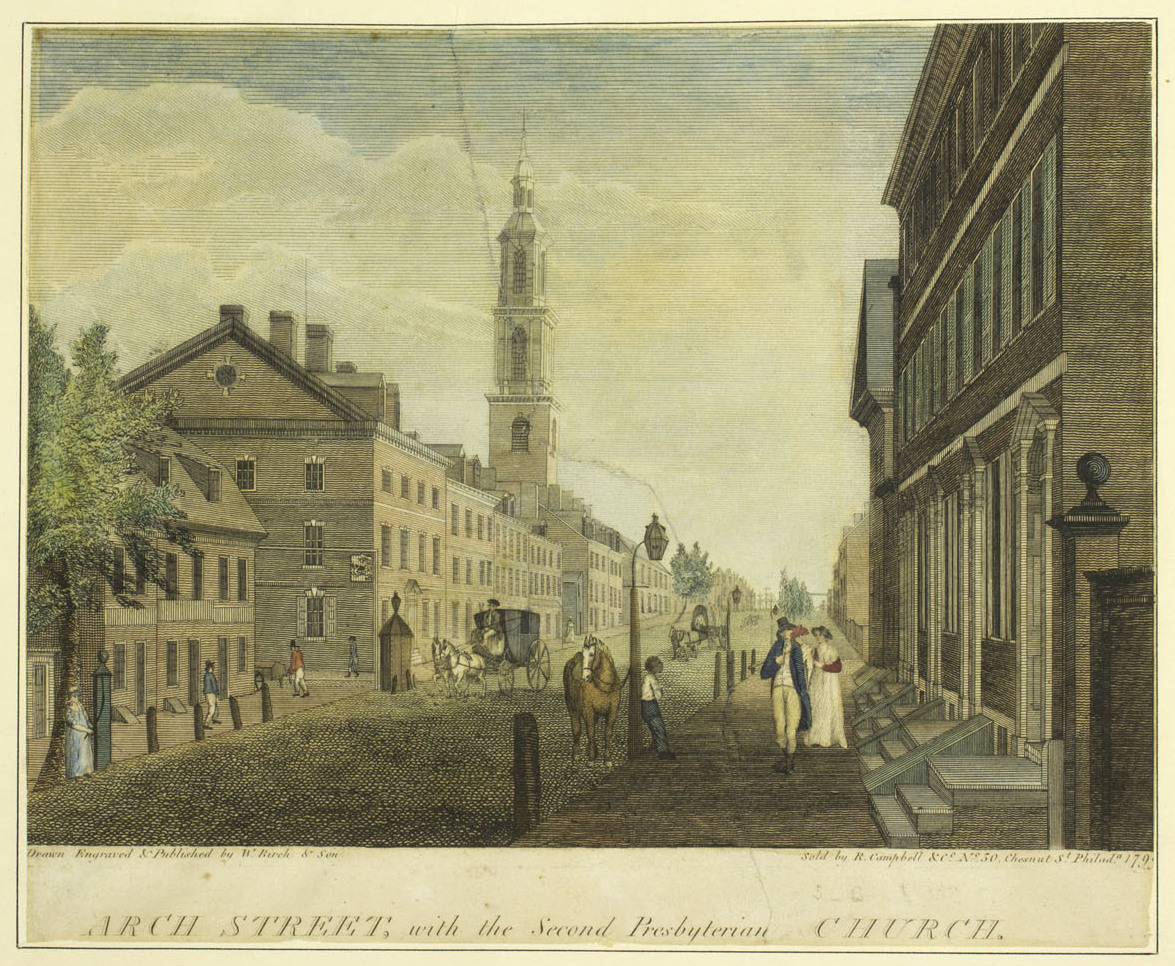
Arch Street, with the Second Presbyterian Church, from Birch's Views, 1799. Water Street and the wharves below Arch Street are where the fever began.
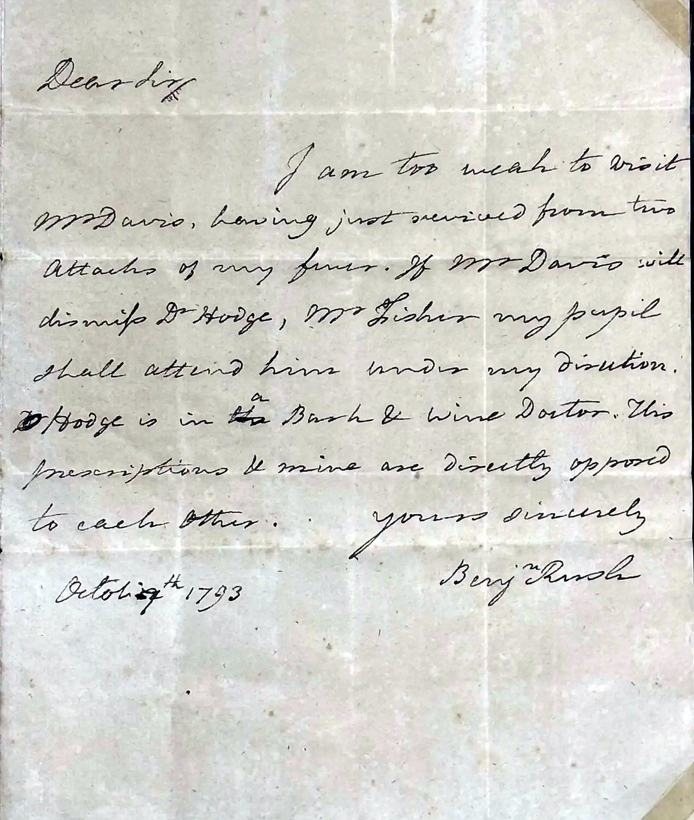
Benjamin Rush, autograph letter signed, October 17, 1793

Benjamin Rush, autograph letter signed, October 17, 1793

To James Wharton, Philadelphia
BR-2026.003

Written from inside the epidemic, in the week the deaths reached their peak. Rush has just risen from his own second attack and is too weak to go out. He offers his pupil Fisher in his place, on one condition: that the patient dismiss Dr. Hodge, "a Bark and Wine Doctor" whose prescriptions "and mine are directly opposed to each other." In three lines the letter holds the whole medical quarrel of 1793: Rush's depletion by bleeding and calomel against the older treatment by Peruvian bark and wine, which Devèze was using at Bush Hill.

Read the full entry

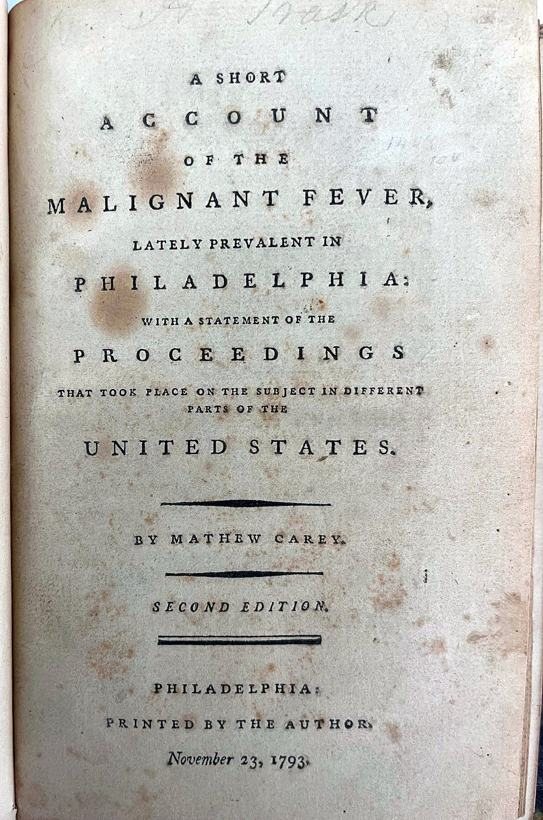
A Short Account of the Malignant Fever, Lately Prevalent in Philadelphia:

Mathew Carey, A Short Account of the Malignant Fever, Lately Prevalent in Philadelphia

Philadelphia: printed by the author, November 23, 1793; with the fourth edition, January 16, 1794
YF-2024.011

Carey sat on the committee and printed as it met. The first edition appeared on November 14, while the fever was still in the city; this second edition followed nine days later, and by January he had added the list of the dead from August 1 to mid-December and the meteorological table kept by David Rittenhouse. The editions in this room can be read as a diary of the city counting its losses. Carey's remarks on the Black nurses, in the first three editions, drew the reply from Absalom Jones and Richard Allen described on the wall opposite. He softened the passage in the fourth.

Read the full entry · 5 photographs

See also: Jonathan Dickinson Sergeant
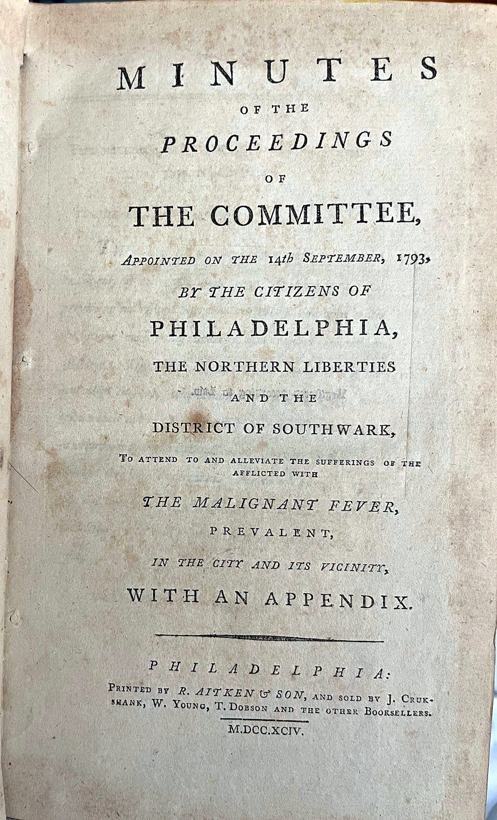
Minutes of the Proceedings of the Committee Appointed on the 14th September 1793

Minutes of the Proceedings of the Committee Appointed on the 14th September 1793

Philadelphia: R. Aitken and Son, 1794
YF-2023.045

The committee's own record. Twenty-six citizens met at the City Hall when the aldermen had fled, took over Bush Hill as a hospital, put Stephen Girard and Peter Helm in charge of it, sent carts for the dead, and paid for the orphans. Four of the twenty-six died. The minutes name them, day by day.

Read the full entry · 6 photographs

See also: Jonathan Dickinson Sergeant
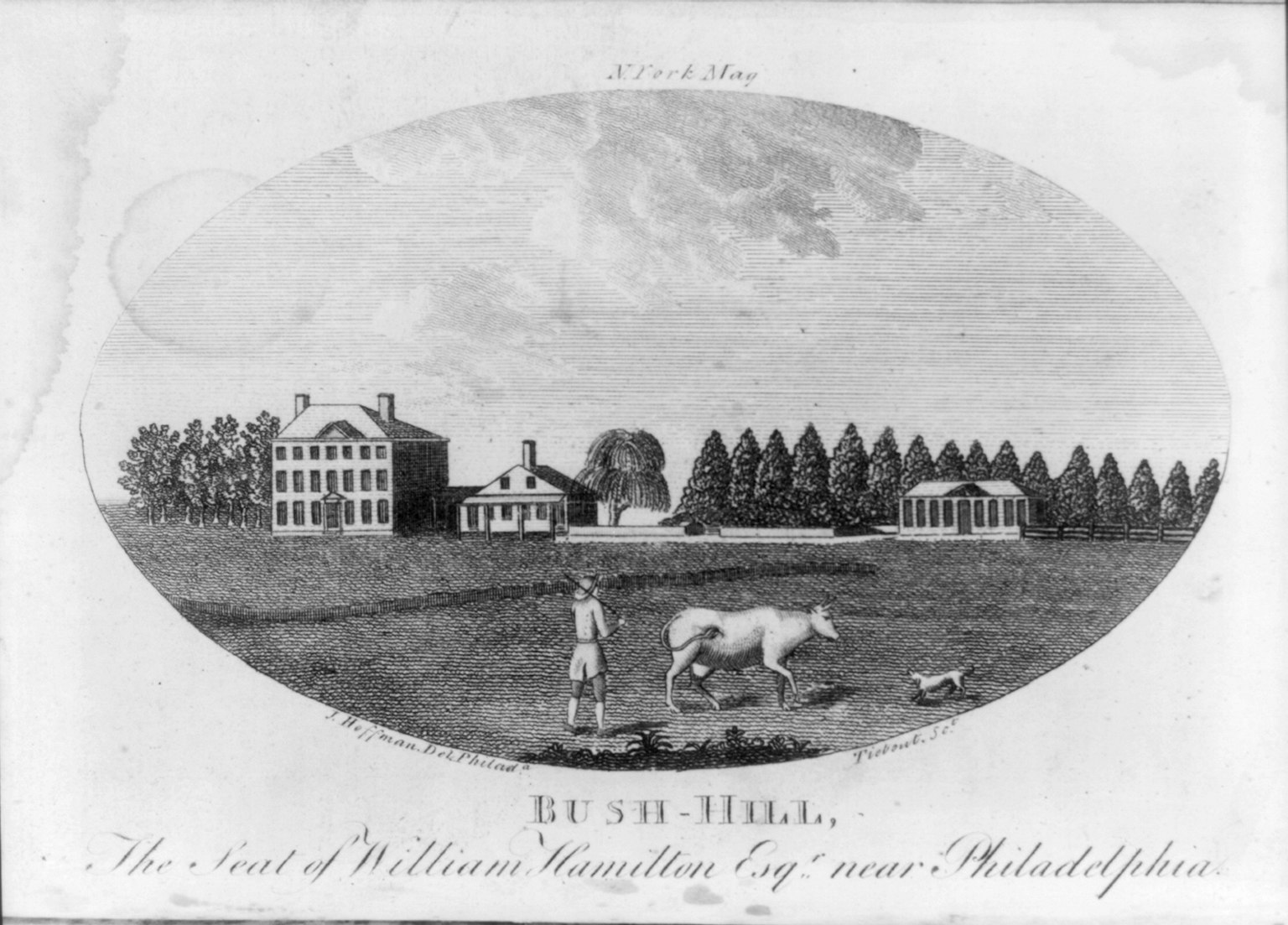
Bush-Hill, the seat of William Hamilton, drawn by Jacob Hoffman and engraved by Cornelius Tiebout, 1793. Library of Congress. The house became the fever hospital in September 1793.
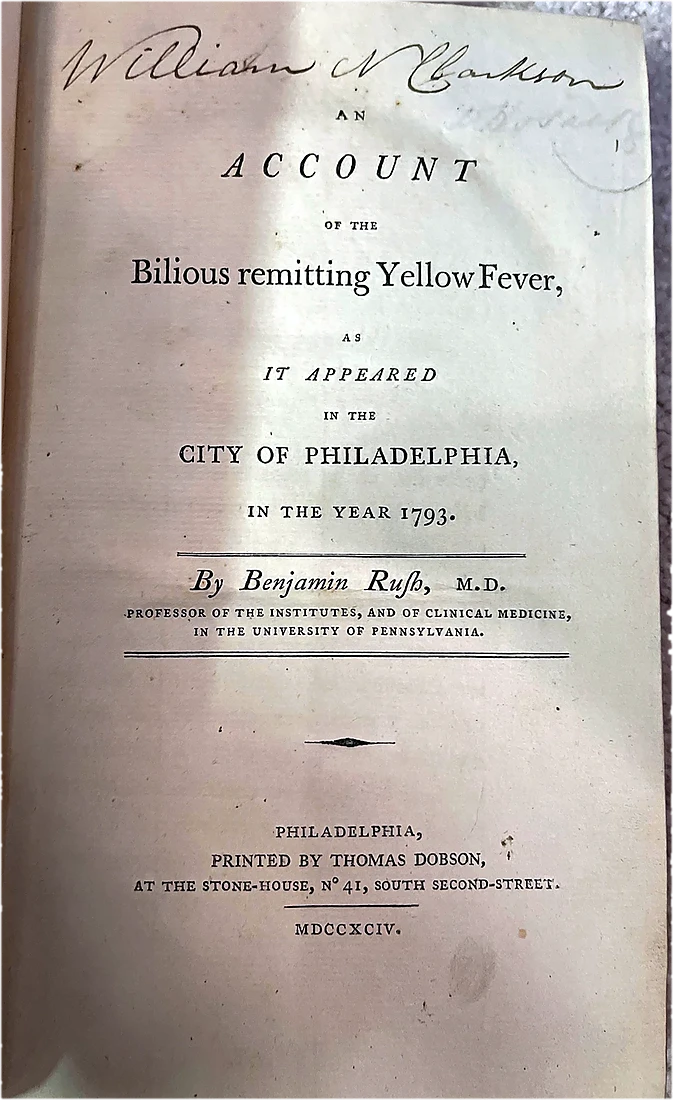
An Account of the Bilious remitting Yellow Fever, as it appeared in the City of Philadelphia, in the Year 1793.

Benjamin Rush, An Account of the Bilious Remitting Yellow Fever, as It Appeared in the City of Philadelphia, in the Year 1793

Philadelphia: Thomas Dobson, 1794. First edition
YF-2023.015

Rush's defence of his practice, written in the winter after the fever. He argues that the disease arose from rotting coffee on Ball's wharf, that it was not imported, and that the only cure was to bleed and purge early and hard. The book made him famous and cost him most of his colleagues. The German translation of the same year, shown nearby, carried the argument to Pennsylvania's other language.

Read the full entry

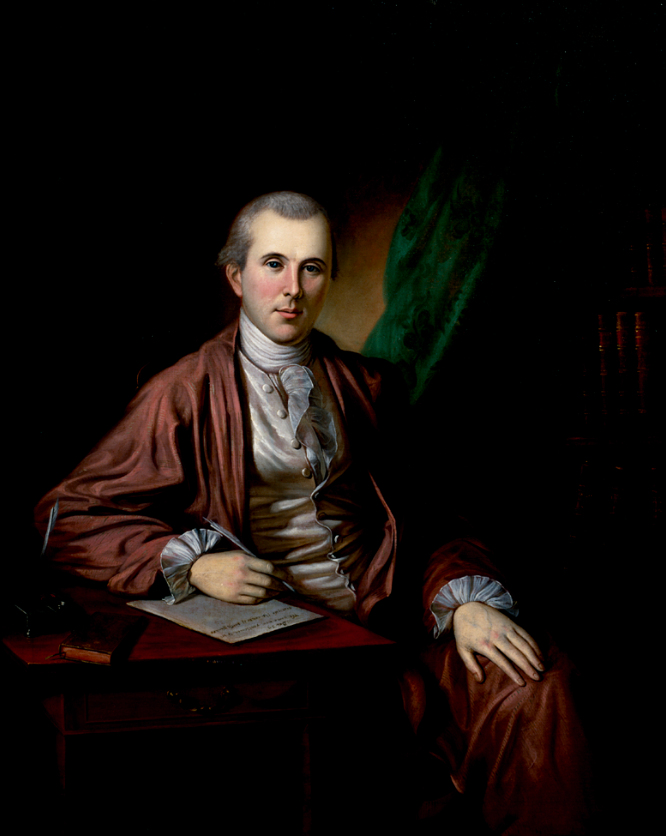
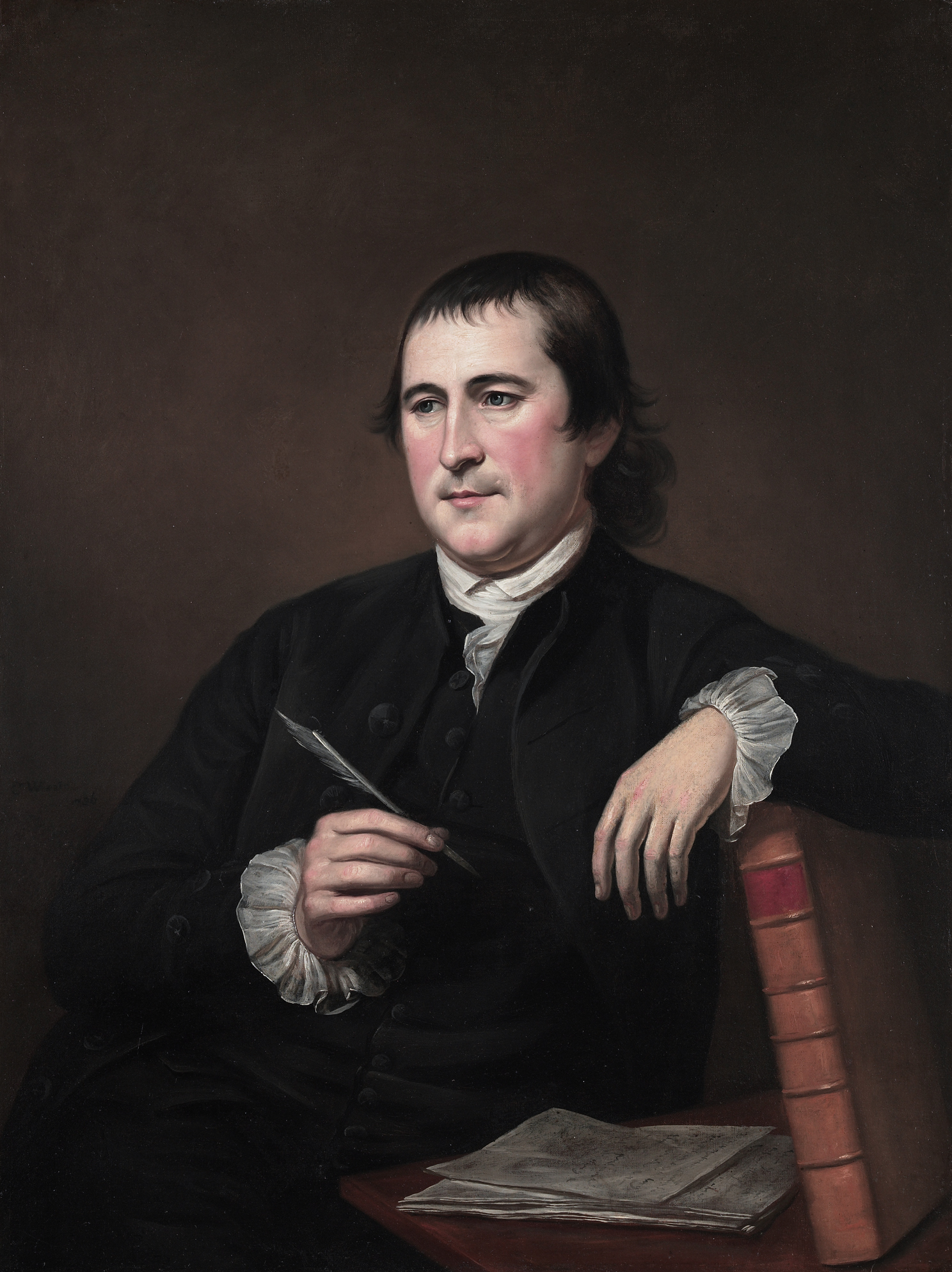
Benjamin Rush, by Charles Willson Peale, 1783. Winterthur Museum.
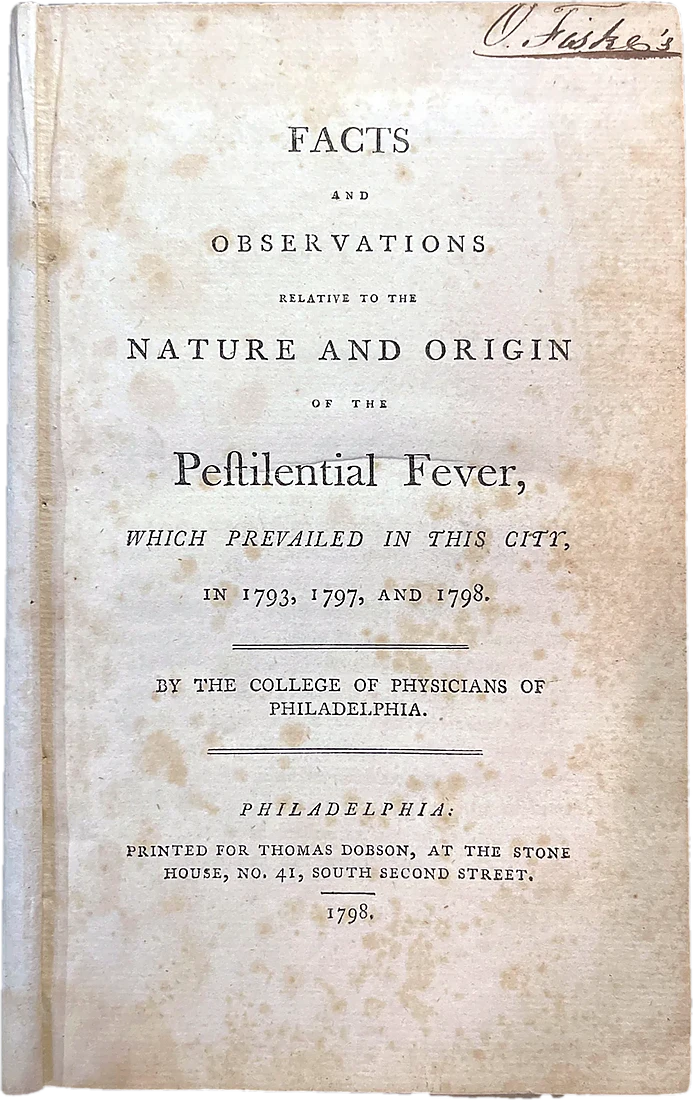
Facts and Observations Relative to the Nature and Origin of the Pestilential Fever,

College of Physicians of Philadelphia, Facts and Observations Relative to the Nature and Origin of the Pestilential Fever

Philadelphia: Thomas Dobson, 1798. Signed by Oliver Fiske
YF-2022.016

The College's answer to Rush. The fever, it says, was imported from the West Indies and was contagious; the remedy was quarantine and a board of health, not the lancet. Rush had resigned from the College he helped found rather than sign it. This copy belonged to Oliver Fiske, one of Rush's own students, who took his teacher's controversy home to Massachusetts. The two books face each other in this case because the collection holds both sides of the argument.

Read the full entry · 3 photographs

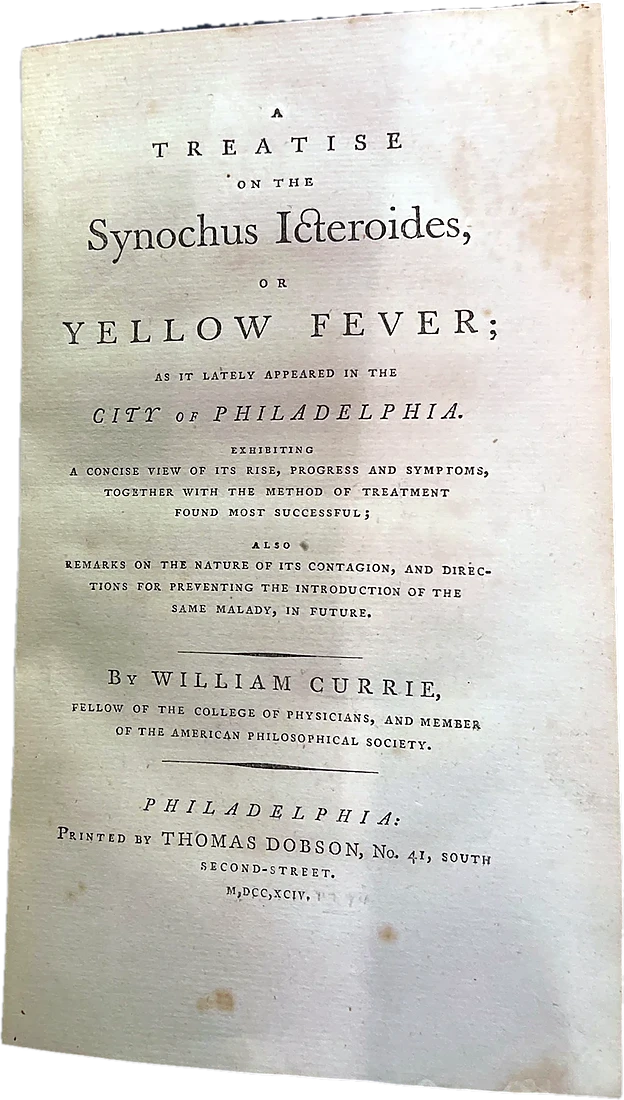
A treatise on the synochus icteroides

William Currie, A Treatise on the Synochus Icteroides, or Yellow Fever

Philadelphia: Thomas Dobson, 1794
YF-2023.011

Currie, a founder of the College, was Rush's most persistent critic in print. He kept the daily returns of the sick and dead and the weather, and argued for contagion and importation for the rest of his life. His Memoirs of the 1798 epidemic, also in this room, are the fullest day-book of any Philadelphia fever.

Read the full entry · 4 photographs

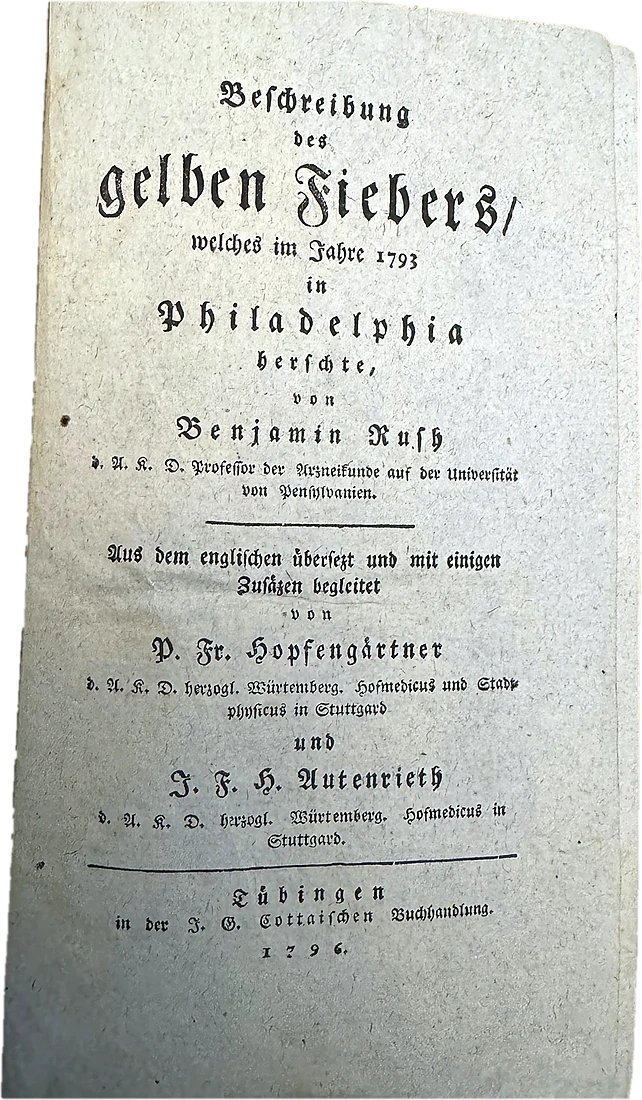
Beschreibung des Gelben Fiebers

Beschreibung des gelben Fiebers

Philadelphia, 1794. First German translation of Rush's Account
YF-2024.031

One Philadelphian in three spoke German. This translation, with notes added by people who had been in the city, is how the epidemic was read in Germantown and the Northern Liberties, where the fever had struck hardest.

Read the full entry

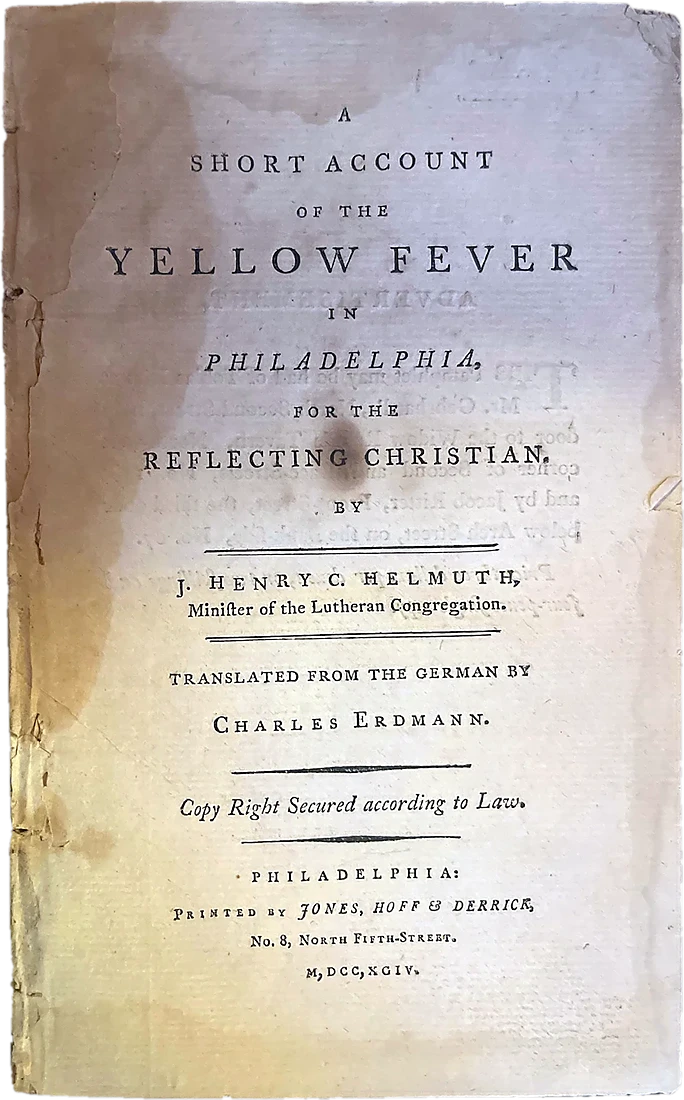
Short Account of the Yellow Fever in Philadelphia,

J. Henry Helmuth, A Short Account of the Yellow Fever in Philadelphia, for the Reflecting Christian

Philadelphia: Jones, Hoff and Derrick, 1794
YF-2023.038

The Lutheran pastor of the city, who buried more of his congregation than any other minister, and who was certain that the wickedness of the town had brought the plague upon it. The sermon and the medical treatise were the two ways the city explained itself to itself.

Read the full entry · 2 photographs

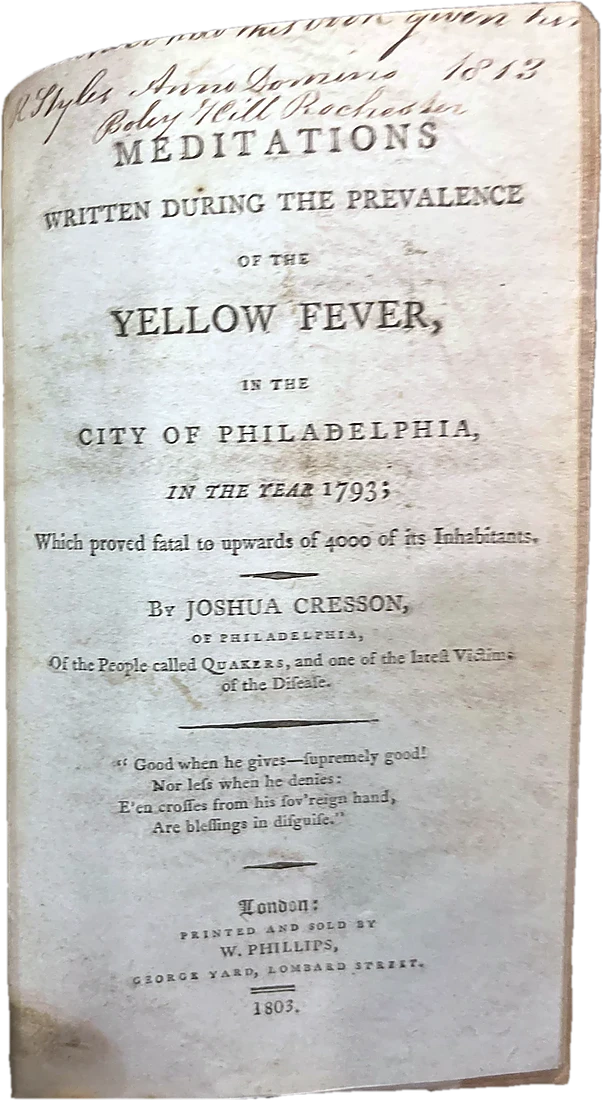
Meditations on Yellow Fever

Joshua Cresson, Meditations Written during the Prevalence of the Yellow Fever

Philadelphia, 1803
YF-2023.047

Cresson, a Quaker, wrote these in the month before the fever killed him on October 21, 1793. His widow's memoir is bound with them. The one voice in this room from a man who knew he was dying.

Read the full entry · 7 photographs

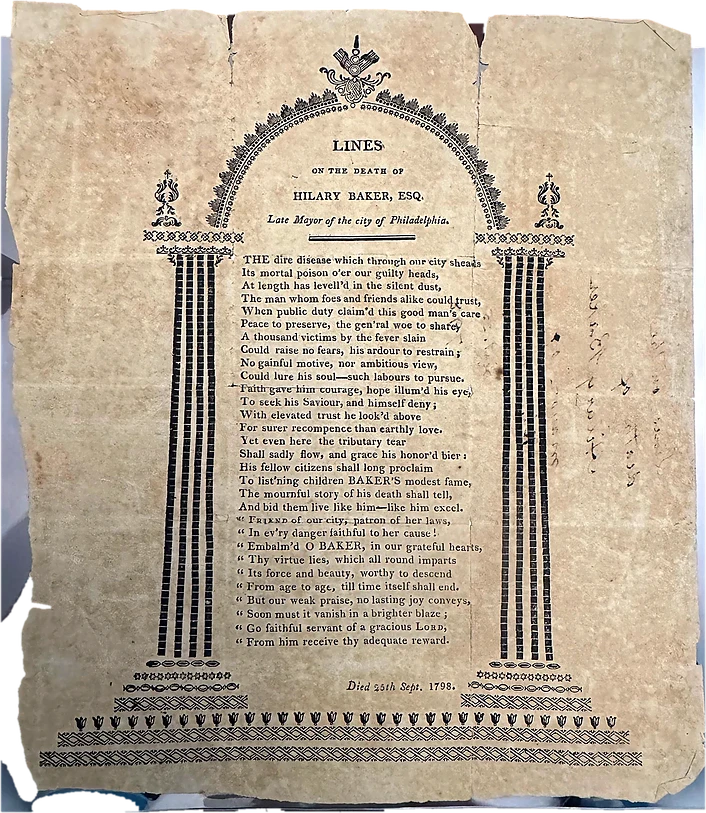
Lines on the Death of Hilary Baker

Lines on the Death of Hilary Baker

Broadside, Philadelphia, 1798
YF-2025.011

The fever came back in 1797 and 1798. Hilary Baker, the mayor, stayed in the city as Clarkson had in 1793, and died of it in September 1798. Thirty lines of verse on a single sheet, printed within the week. The Brandywine watermark in the paper is worth a look.

Read the full entry · 3 photographs

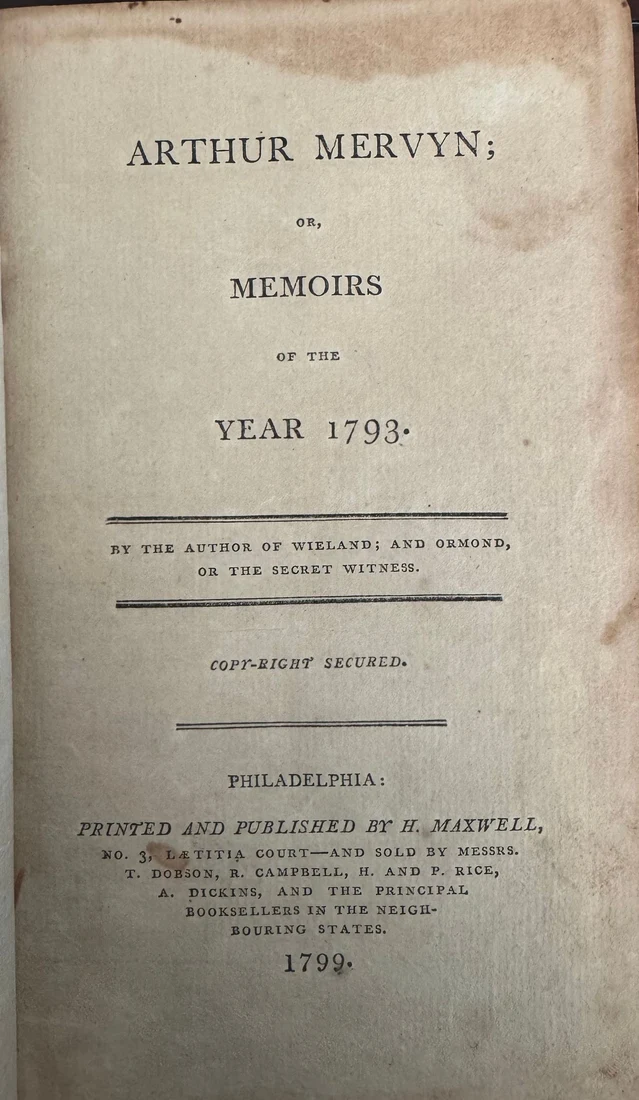
Arthur Mervyn

Charles Brockden Brown, Arthur Mervyn; or, Memoirs of the Year 1793

Philadelphia: H. Maxwell, 1799. First edition
YF-2024.026

The first American novel of consequence, and it is a novel about this room: the dead cart in the silent street, the abandoned houses, Bush Hill. Brown had lived through the New York fever of 1798 and wrote what he had seen into the Philadelphia of five years before.

Read the full entry

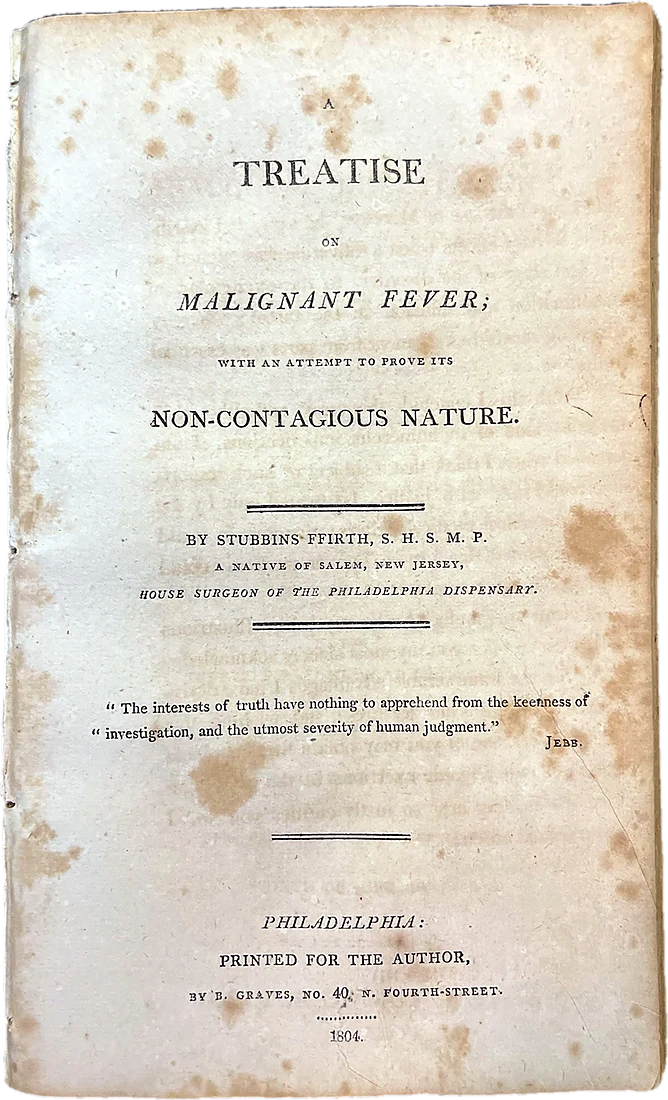
A Treatise on Malignant Fever; with an Attempt to Prove its Non-contagious Non-Malignant Nature.

Stubbins Ffirth, A Treatise on Malignant Fever; with an Attempt to Prove its Non-contagious Nature

Philadelphia: B. Graves, 1804
YF-2024.017

Ffirth's dissertation for the University. To prove the fever was not contagious he slept in the beds of the sick, cut his arms and filled the wounds with their black vomit, and drank it. He did not catch the fever. Rush cited the experiments for the rest of his life as proof that the disease was not contagious; he was right about that and wrong about why.

Read the full entry · 3 photographs

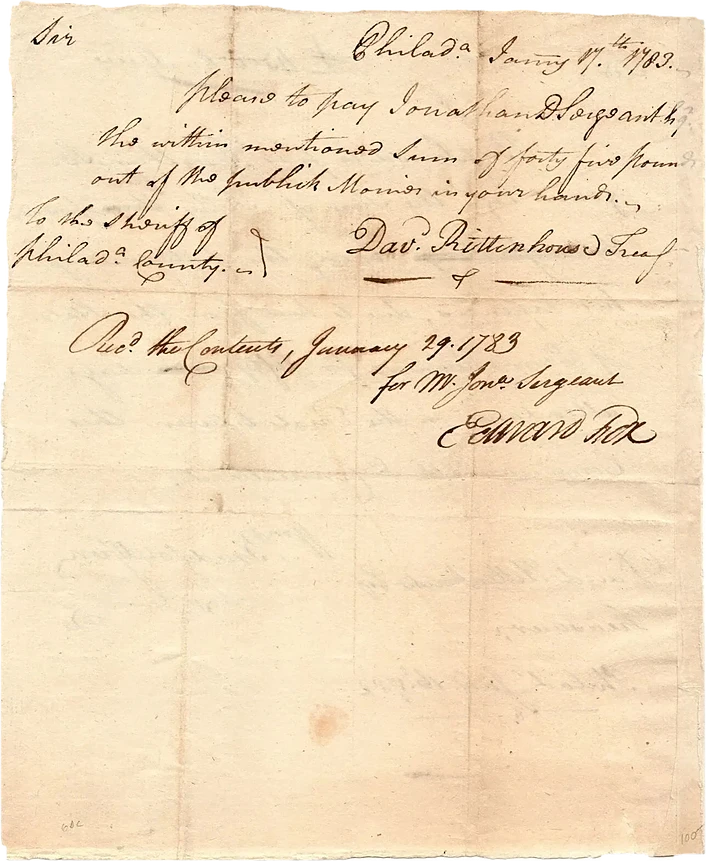
Jonathan Dickinson Sergeant, Ten Years Before the Fever

Jonathan Dickinson Sergeant, Ten Years Before the Fever

Manuscript, Philadelphia, January 1783
BF-2026.203

In the winter of 1782 the Court of Commissioners at Trenton heard the quarrel between Pennsylvania and Connecticut over the Wyoming Valley, the first dispute between states settled under the Articles of Confederation. Pennsylvania sent four lawyers, Jonathan Dickinson Sergeant among them, and in December the court decided for Pennsylvania. Sergeant attended for fifty days.
This leaf is how he was repaid. On 16 January 1783 William Bradford Jr., the Attorney General of Pennsylvania, asked the state treasurer to pay Sergeant forty-five pounds in specie, the balance of his expenses on the trial between the Commonwealth and Connecticut. On the back the treasurer, David Rittenhouse, the astronomer and instrument maker, wrote and signed his own order to the Sheriff of Philadelphia County to pay the sum out of the public monies, and Edward Fox signed for the money on Sergeant's behalf on 29 January. Five years later Sergeant married Rittenhouse's daughter Elizabeth.

Ten years after Trenton, when those who could afford to leave the city left it, Sergeant stayed. He joined the citizens' committee, worked through the worst weeks of the epidemic, and died of the fever on 8 October 1793.

Read the full entry · 2 photographs

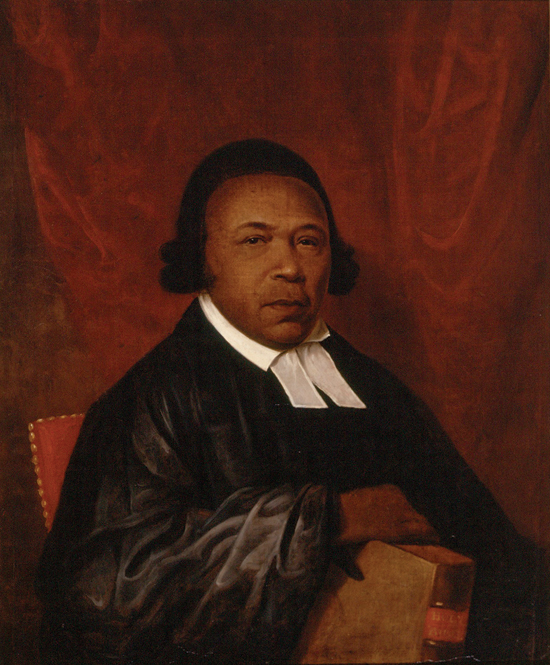
Absalom Jones, by Raphaelle Peale, 1810. Delaware Art Museum.

The Free African Society

When the city emptied, the nursing and the burying fell to Black Philadelphia. Absalom Jones and Richard Allen, who had founded the Free African Society in 1787 as the first mutual-aid society organised by Black Americans, were asked by Rush and the mayor in early September to find nurses and gravediggers, on the belief, which Rush held and printed, that Black people could not take the fever. They could, and did, and died at about the same rate as their neighbours. The Society's members went into white houses to nurse for wages or for nothing, drove the carts, dug the graves, and kept Bush Hill running under Girard while the physicians argued.

Rush's part in this was not an accident of the epidemic. Two years earlier he had drawn up the plan for an African church in Philadelphia and raised the money for it, and in August 1793, days before the fever was recognised, he sat down with Jones and Allen and a hundred of their people at the roof-raising dinner for the building that became the African Episcopal Church of St. Thomas, the first Black Episcopal church in America. He called it one of the happiest days of his life. When he asked the Society for help a month later, he was asking men he had already stood beside.

Carey's Short Account, printed while the dead were still being counted, said the Black nurses had overcharged and some had stolen. In January 1794 Jones and Allen answered him in A Narrative of the Proceedings of the Black People, during the Late Awful Calamity in Philadelphia, the first published defence of Black Americans written by Black Americans. They set out what they had done, what it had cost them, and what Carey had left out, including that he had left the city himself. Carey softened his fourth edition. The Narrative is the book this room is waiting for; until it is found, the wall holds its place.

Wanted for this wall
Jones and Allen, A Narrative of the Proceedings of the Black People, during the Late Awful Calamity in Philadelphia (Philadelphia: William W. Woodward, 1794).

Bush Hill before the fever

Bush-Hill, the seat of William Hamilton, drawn by Jacob Hoffman and engraved by Cornelius Tiebout, 1793. Library of Congress. The house became the fever hospital in September 1793.
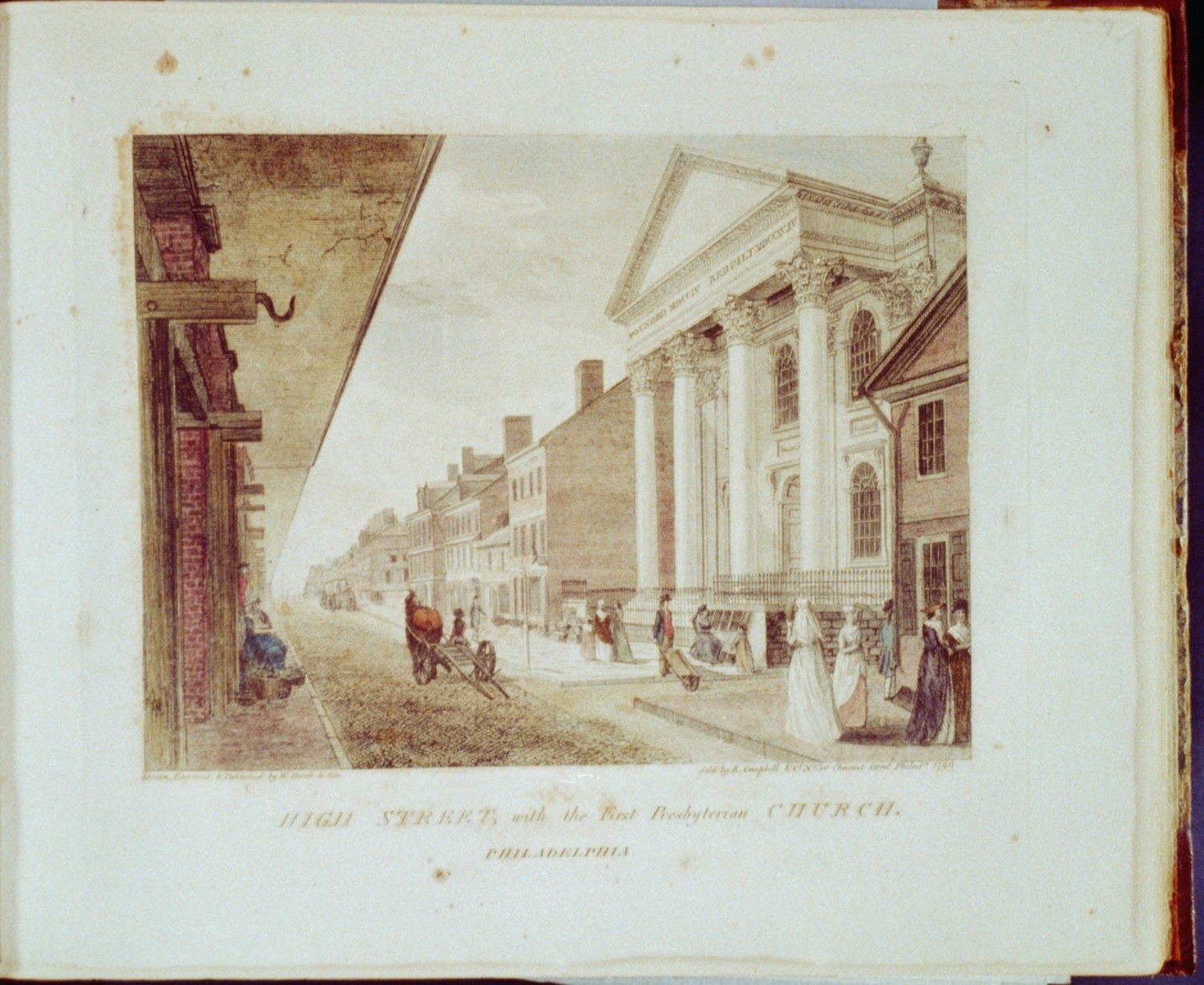
High Street, with the First Presbyterian Church, from Birch's Views, 1799. Library of Congress.

Bush Hill was a house before it was a hospital, and one of the grandest in Pennsylvania. Andrew Hamilton, the lawyer who defended John Peter Zenger in New York in 1735 and gave the language the phrase "a Philadelphia lawyer," built it in 1740 on a rise a mile north-west of the city, on 150 acres he had bought out of the Penn family's Springettsbury manor. It was a two-storey brick mansion in the English manner, with a great hall, a library, a formal garden falling away toward the Schuylkill, and a view of the city and both rivers. Hamilton lived in it for a year and died there in 1741.

The house passed to his son James Hamilton, twice Governor of Pennsylvania, who kept it as his seat through the 1750s; the warrant to Nicholas Scull in the Club room of this collection was signed by him in the years he was living at Bush Hill. From James it went to his nephew William Hamilton, the builder of The Woodlands, who preferred his other house and let Bush Hill to tenants. The most famous of them was the Vice-President: John Adams and Abigail rented it in 1790 and 1791 when the government moved to Philadelphia, and Abigail wrote of its beauty and of the impassable road into town.

By 1793 it stood empty. In late August the Guardians of the Poor, with nowhere else to put the fever cases, took it over without the owner's consent and without staff, and for three weeks it was a horror: the sick left in their filth, the dying beside the dead, the nurses drunk on the wine sent for the patients. When the committee took it in hand on September 15 and Girard and Helm walked through it, they found it in that state. Within a fortnight they had it cleaned, staffed and provisioned, with Devèze as physician and a French pharmacist in the dispensary, and for the rest of the epidemic it was the only hospital the city had. Roughly eight hundred patients passed through it; about half died, which was as well as anyone did in 1793.

After the fever the house was a tavern and a pleasure garden, then an oil-cloth factory, and it was pulled down in 1875. The streets of the Spring Garden district run over its grounds. The Tiebout engraving here, drawn by Jacob Hoffman in the year of the epidemic, is how it looked from the road when the carts were going up.

Across the room

Further Reading

Where the story of this room is told at length.

The Cast of This Room

The people whose names are on the objects in this room. Each opens a short life in the Dramatis Personae, with the institutions that person belonged to and every other object in the collection that carries the name.

Benjamin FranklinBenjamin RushCharles BrockdenRobert AitkenThomas DobsonMathew CareyJohn RedmanPhilip Syng PhysickBenjamin Smith BartonWilliam CurrieWilliam BartramDavid RittenhouseJoseph PriestleyThomas PaineJames WilsonWilliam Bradford Jr.Absalom JonesRichard AllenJonathan Dickinson SergeantJean DevezeHilary Baker

The Rest of the Fever

EIS LIBRIS holds an extensive catalogue of yellow fever material, from the competing accounts of the Philadelphia physicians to the pamphlets of the epidemics that followed. Researchers who wish to see more are welcome to write.