EIS LIBRIS
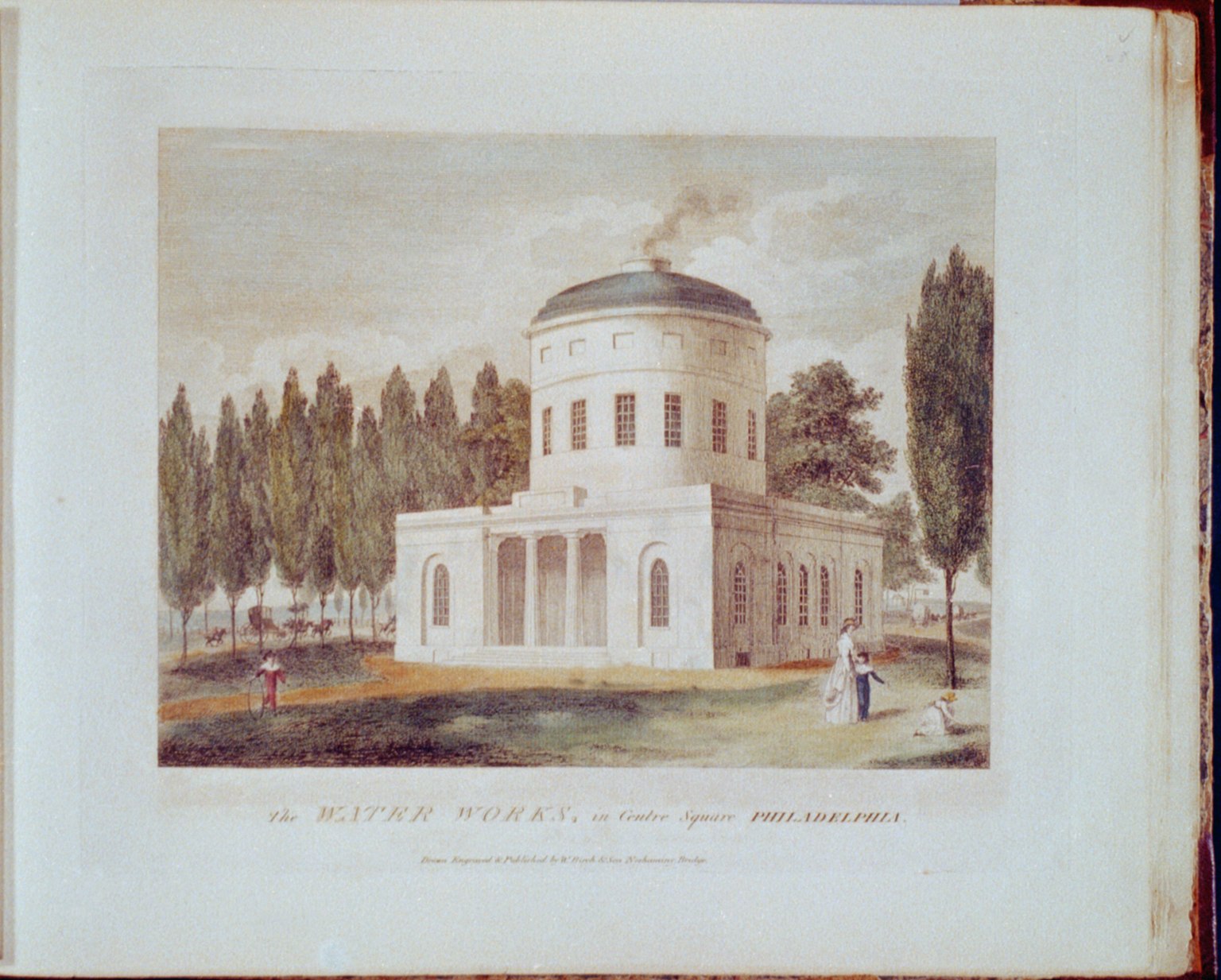
The Water Works in Centre Square, from Birch's Views, 1800. Library of Congress.

Room 10 of 10

Memory

Editions, lives and the making of a reputation, 1790 to 1860

The Water Works in Centre Square, from Birch's Views, 1800. Library of Congress.

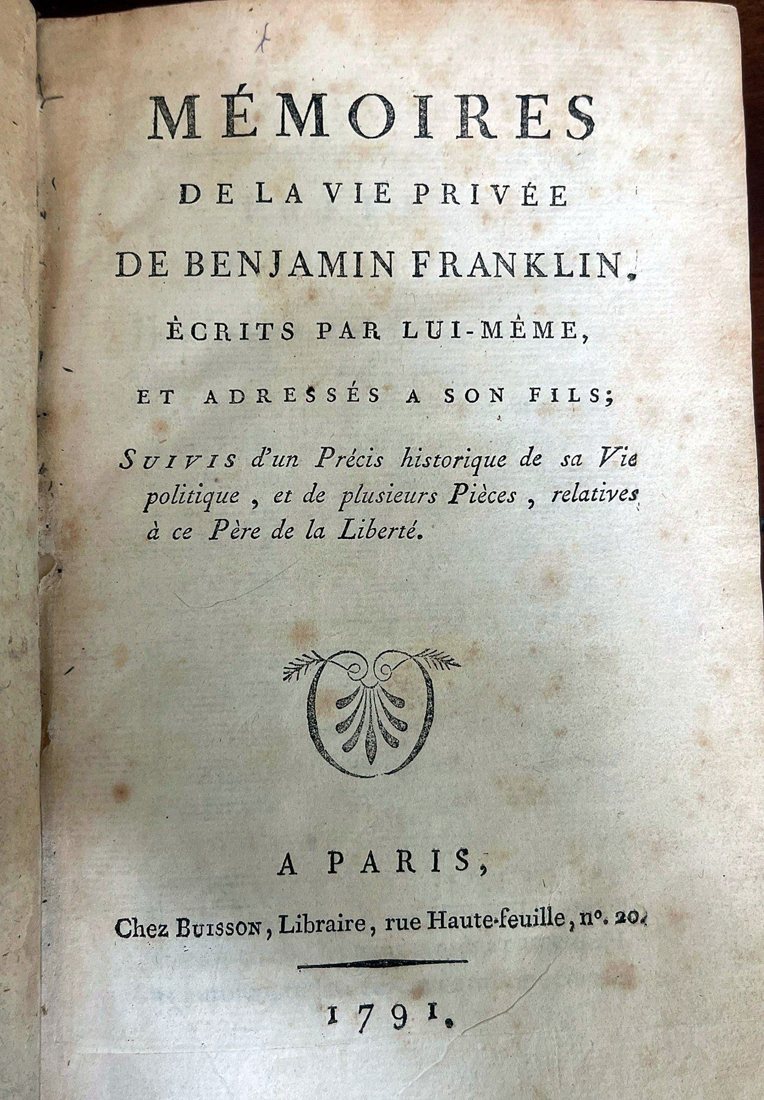
Franklin died in April 1790, and the argument over what he had been began at once. He had left an unfinished autobiography, written in three bursts over eighteen years in England, France and Philadelphia, and he left it to his grandson William Temple Franklin, who sat on the manuscript for twenty-eight years. The result was that the first life of Franklin the world read was a French translation of the first part alone, published in Paris in 1791, which was then translated back into English from the French, mistakes and all.

For thirty years the editions multiplied in every European language, each padded out with whatever the editor could find: letters, essays, other men's anecdotes. The honest text of the private letters did not appear until 1818, and a reliable text of the autobiography not until 1868. By then the printer had been rebuilt as a national character, thrifty and industrious and homely, and a good deal less interesting than the man who wrote the letters.

Europe read Franklin in every language, and Franklin encouraged all of it. He understood, better than any American before him, that a reputation was a thing that could be printed. The collected Franklin was a European invention before it was an American one: Dubourg's French Oeuvres of 1773, Vaughan's London collection of 1779 with an errata leaf in Franklin's own hand, then Dresden and Padua. The Americans came last, and came by way of the French.

This room holds that manufacture. The French, German and Italian editions, the pirated lives, the collected works in their competing forms, and the nineteenth-century biographies through which a country decided what it wanted its founders to have been. It also holds a few of the things the editors left out: the chess, the freemasonry, the natural religion, and Philadelphia writing its own history while it still remembered him.

Rush outlived Franklin by twenty-three years and spent them fixing the reputations of the men he had known. He delivered the eulogy on Rittenhouse, who had succeeded Franklin at the Philosophical Society; he wrote his own account of the signers of the Declaration; and in 1812 he wrote to John Adams and to Thomas Jefferson until the two of them wrote to each other again. The correspondence that followed is the best record we have of what the founders thought they had done, and it exists because Rush would not let the quarrel stand.

Memoires de la Vie Privee de Benjamin Franklin, Ecrits par Lui-Meme at Adresses a Son Fils

Memoires de la Vie Privee de Benjamin Franklin, Ecrits par Lui-Meme at Adresses a Son Fils
BF-2021.005

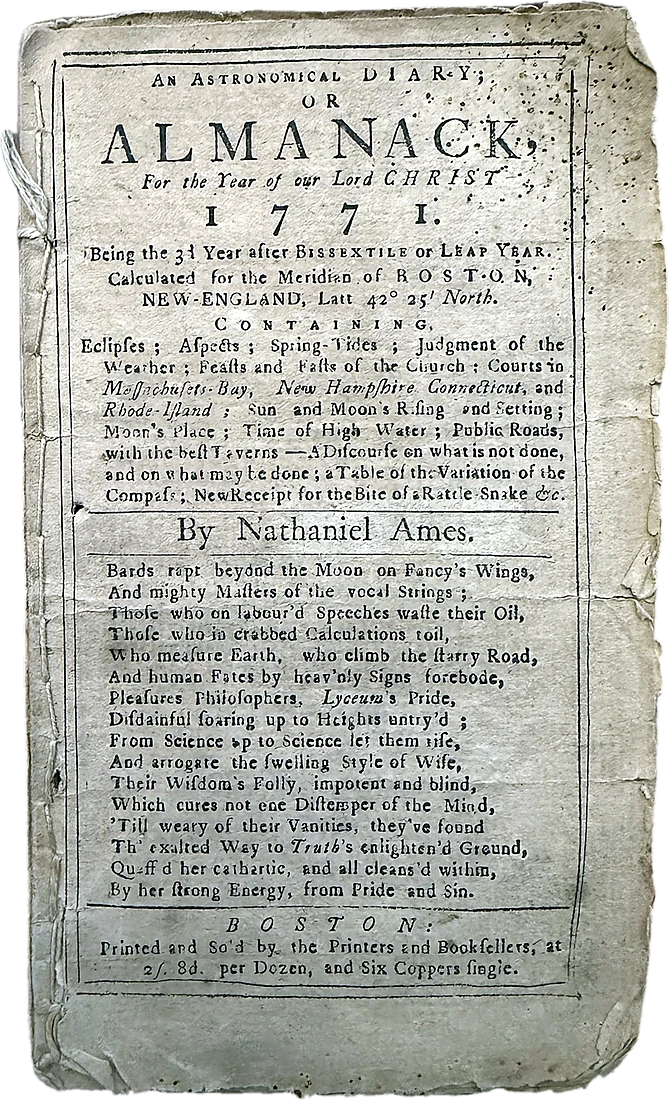
Nathaniel Ames, An Astronomical Diary, or Almanack, for 1771

Nathaniel Ames, An Astronomical Diary; or Almanack, for 1771

Boston, [1770]
BF-2026.001

The first printing of Franklin's epitaph, "The Body of B. Franklin, Printer, Like the Cover of an old Book, Its Contents torn out," on page four of a Boston almanac, forty-two years after he wrote it. The printer's epitaph, printed at last in the town where he learned the trade.

Read the full entry

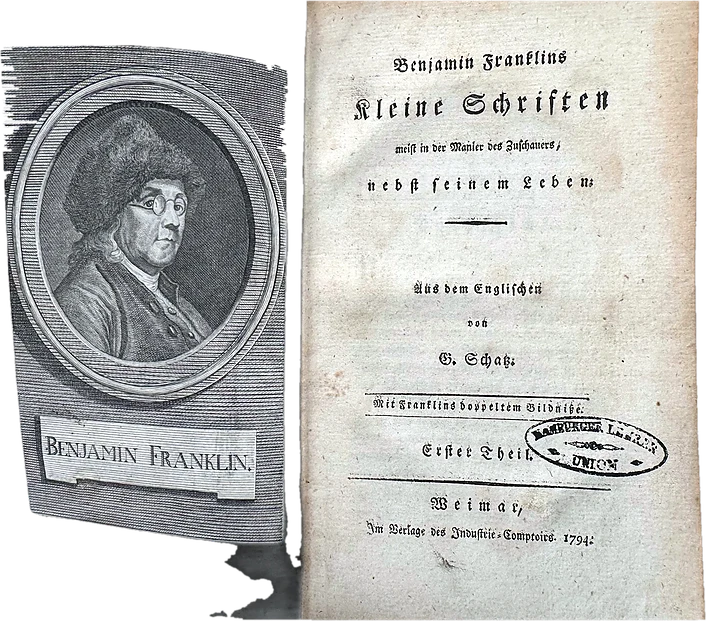
The Works of Benjamin Franklin, First german Edition

The Works of Benjamin Franklin, First german Edition


BF-2025.112

The first German collected Franklin, translated from the English and the French with Dubourg's additions and Wenzel's notes, published at Dresden in 1780, in the middle of the war. The German-speaking world's Franklin.

Read the full entry · 2 photographs

Vie de Benjamin Franklin, Ecrits par Lui-Meme

Vie de Benjamin Franklin, Ecrits par Lui-Meme


BF-2024.059

Franklin's life with his moral and political works, many printed for the first time, published at Paris in the sixth year of the Republic, when the American sage had become a French republican saint.

Read the full entry · 4 photographs

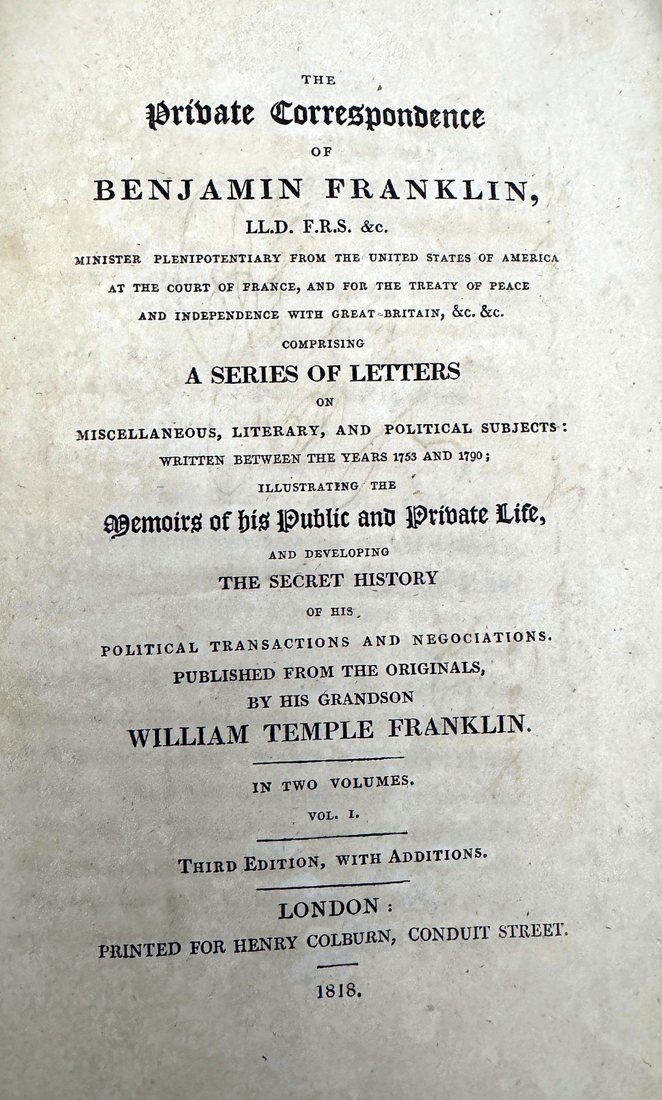
The Private Correspondence of Benjamin Franklin

The Private Correspondence of Benjamin Franklin


BF-2025.109

The first appearance of Franklin's private letters, edited at last by the grandson who had held the papers since 1790. Temple Franklin's edition was incomplete, occasionally bowdlerized, and indispensable for a century. It sits beside the Memoirs of 1818 that finally printed the Autobiography from Franklin's own English.

Read the full entry · 4 photographs

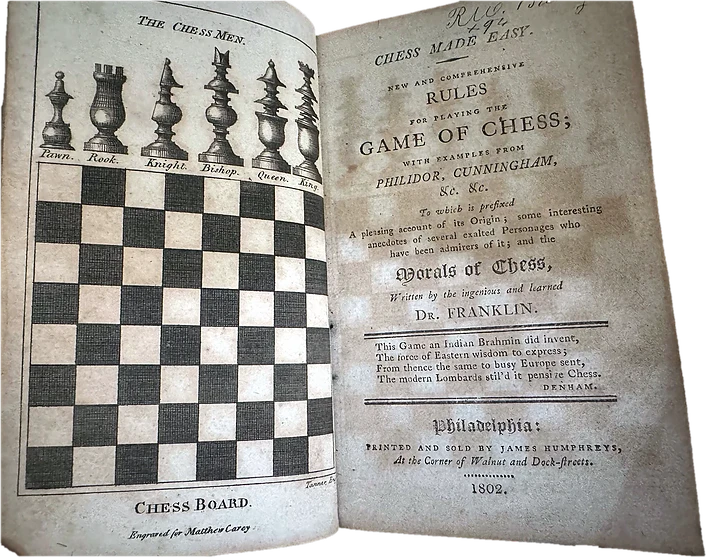
Chess Made Easy, with Franklin's Morals of Chess

Chess Made Easy, with Franklin's Morals of Chess


BF-2023.047

The first American book on chess, containing the first American printing of Franklin's Morals of Chess, the essay written at Passy in 1779 that finds in the game foresight, circumspection, caution, and the habit of not being discouraged. Rare: one copy on the market in a generation.

Read the full entry · 2 photographs

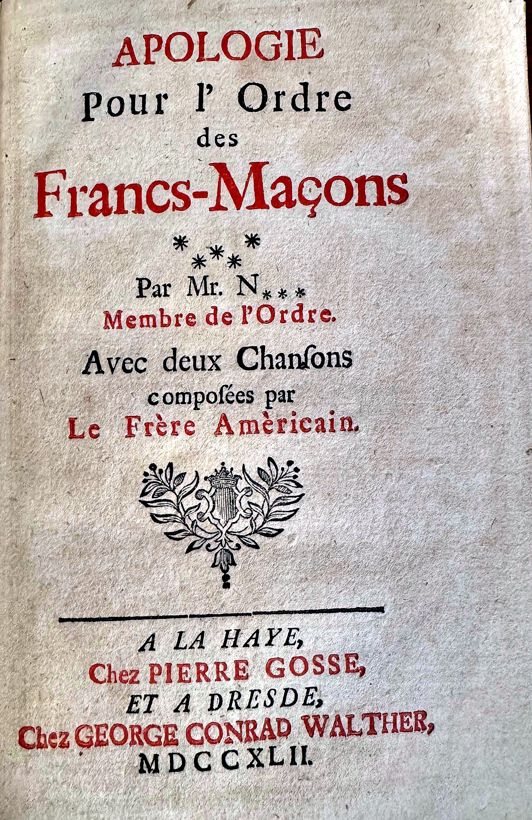
Natter, Apologie pour l'Ordre des Francs-Maçons

Natter, Apologie pour l'Ordre des Francs-Maçons


BF-2025.010

Franklin was a Freemason from 1731, Grand Master of Pennsylvania at twenty-eight, and in Paris the Venerable Master of the Lodge of the Nine Sisters, where he presided at Voltaire's initiation. Natter's Apologie is the French-language defence of the craft that circulated in the lodges Franklin frequented, and the key to a side of his Paris years the diplomatic histories neglect.

Read the full entry · 5 photographs

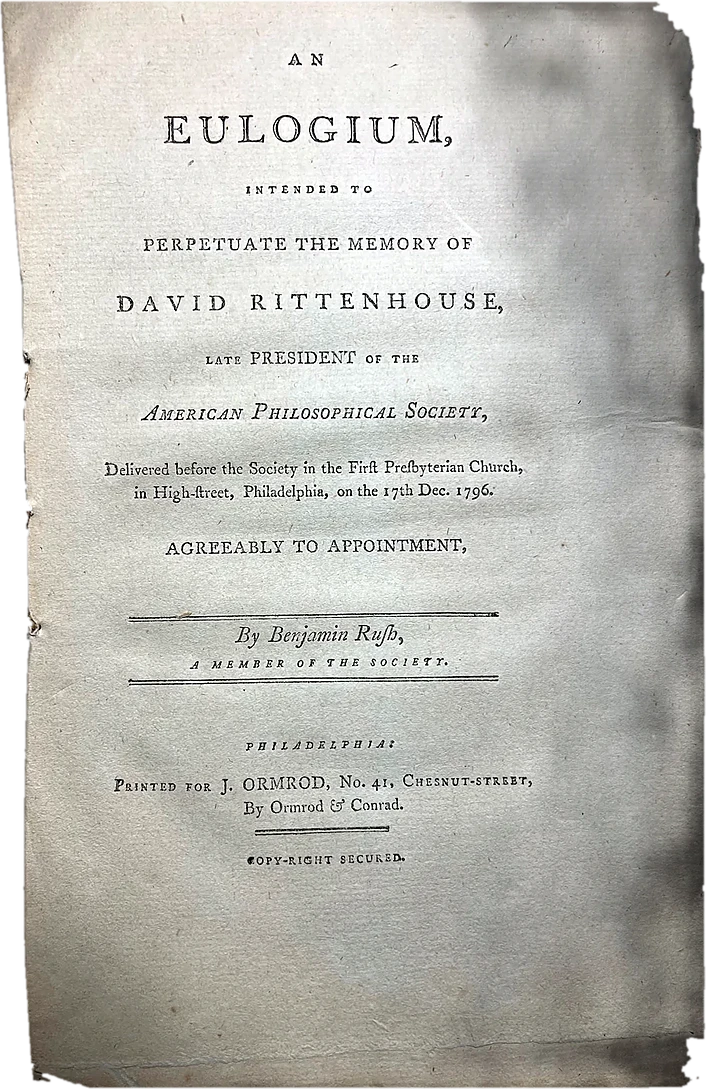
Benjamin Rush, An Eulogium Intended to Perpetuate the Memory of David Rittenhouse

Benjamin Rush, An Eulogium Intended to Perpetuate the Memory of David Rittenhouse

1796
BR-2022.010

Rush's eulogy on David Rittenhouse, delivered before the Philosophical Society on December 17, 1796. Rush burying the astronomer who had timed the transit of Venus and succeeded Franklin as the Society's president: the pupil of one founder speaking for the other. A fine unopened copy, sewn as issued.

Read the full entry

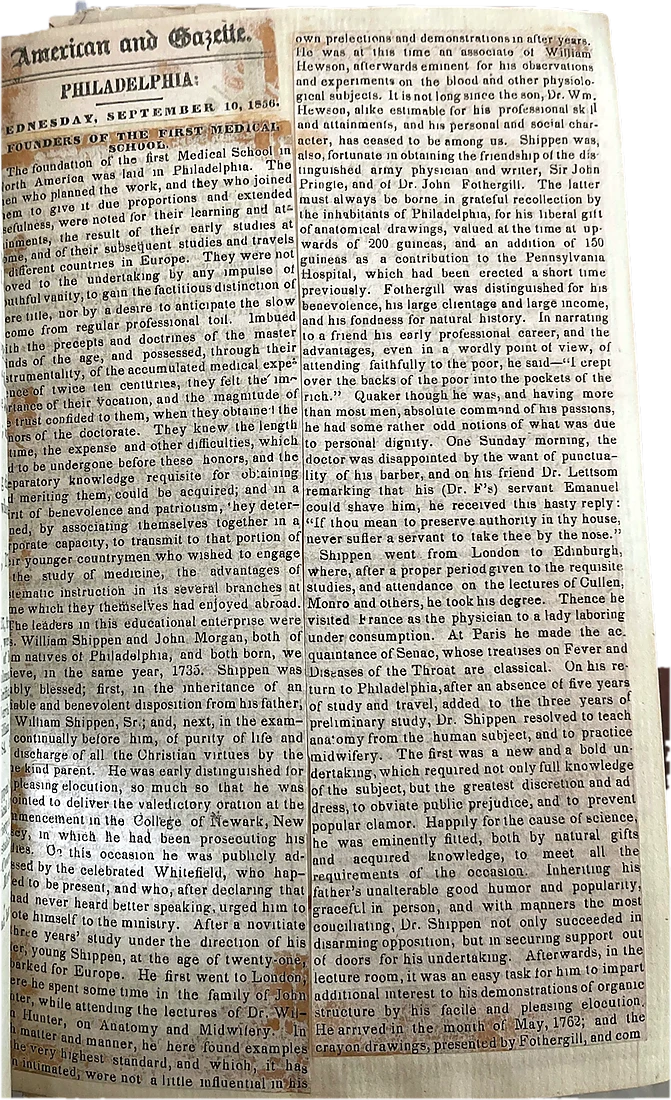
Balch, Letters and Papers

Balch, Letters and Papers


BF-2024.027

Balch's collection of documents on the provincial history of Pennsylvania, in a working copy, annotated for use, with Franklin printing bound in. The historian's tools.

Read the full entry · 5 photographs

Further Reading

Where the story of this room is told at length.

The Cast of This Room

The people whose names are on the objects in this room. Each opens a short life in the Dramatis Personae, with the institutions that person belonged to and every other object in the collection that carries the name.

Benjamin FranklinBenjamin RushWilliam Temple FranklinDavid Rittenhouse

Franklin in Print

Franklin's Life and his Works were reprinted many times in the eighteenth and nineteenth centuries, in many countries and in many languages. EIS LIBRIS holds many volumes of both.