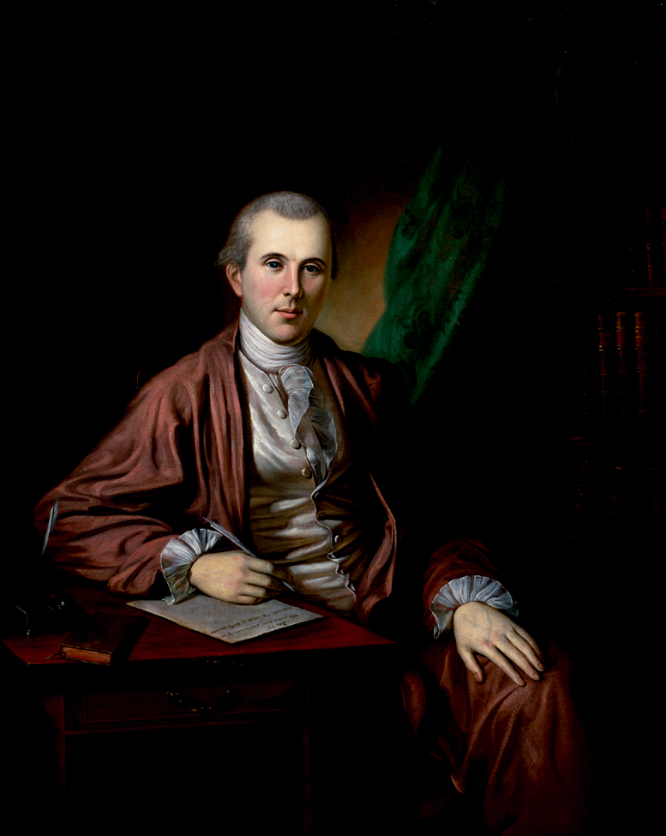
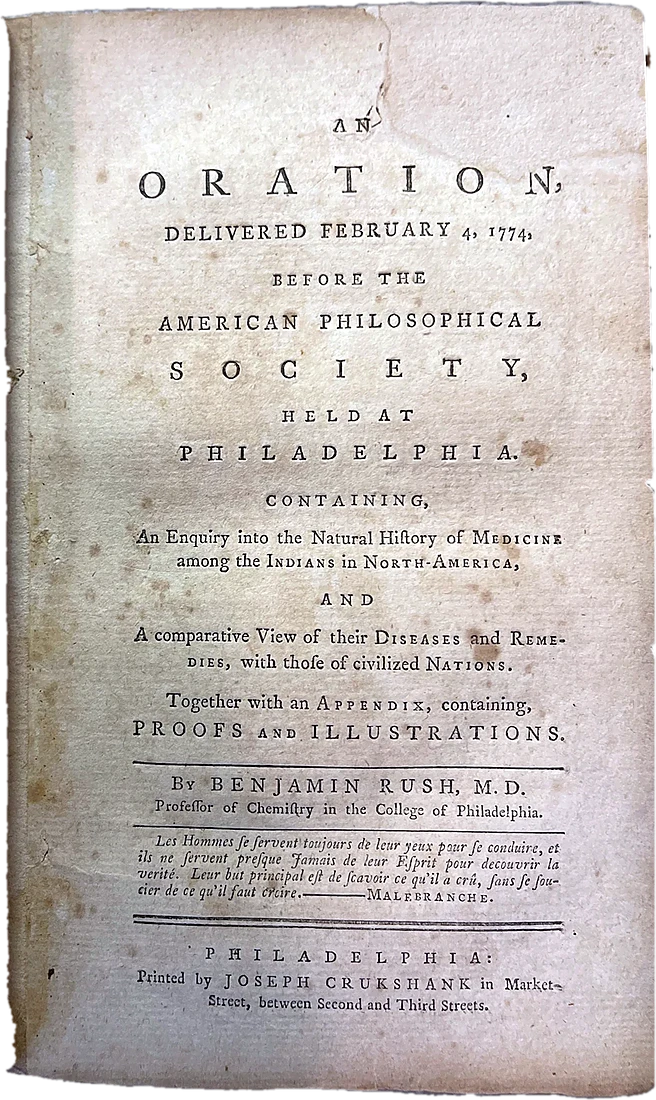
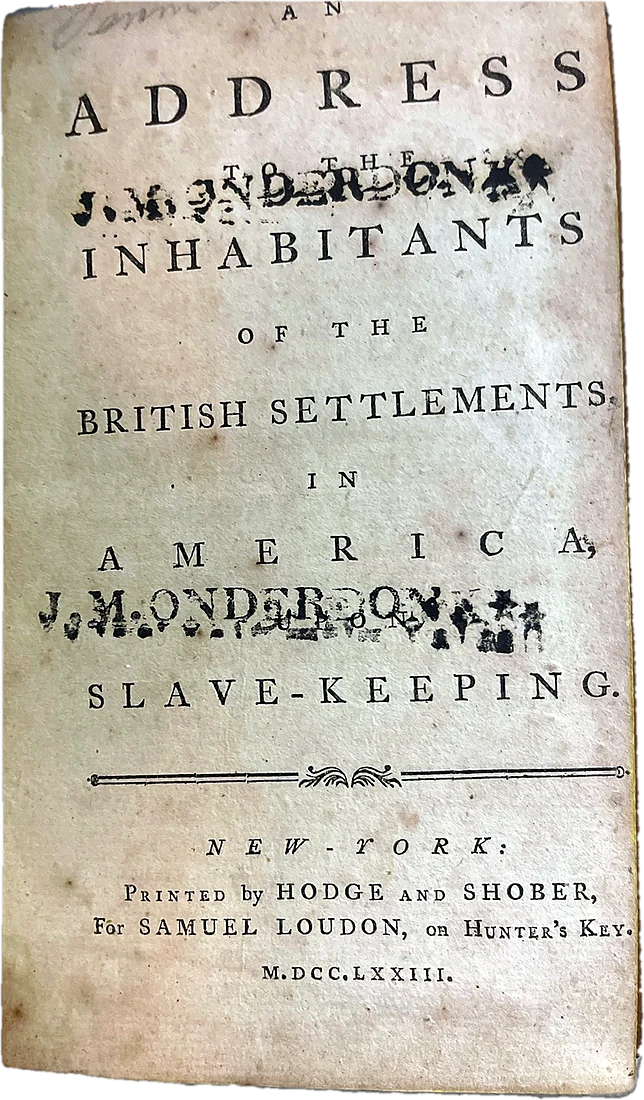
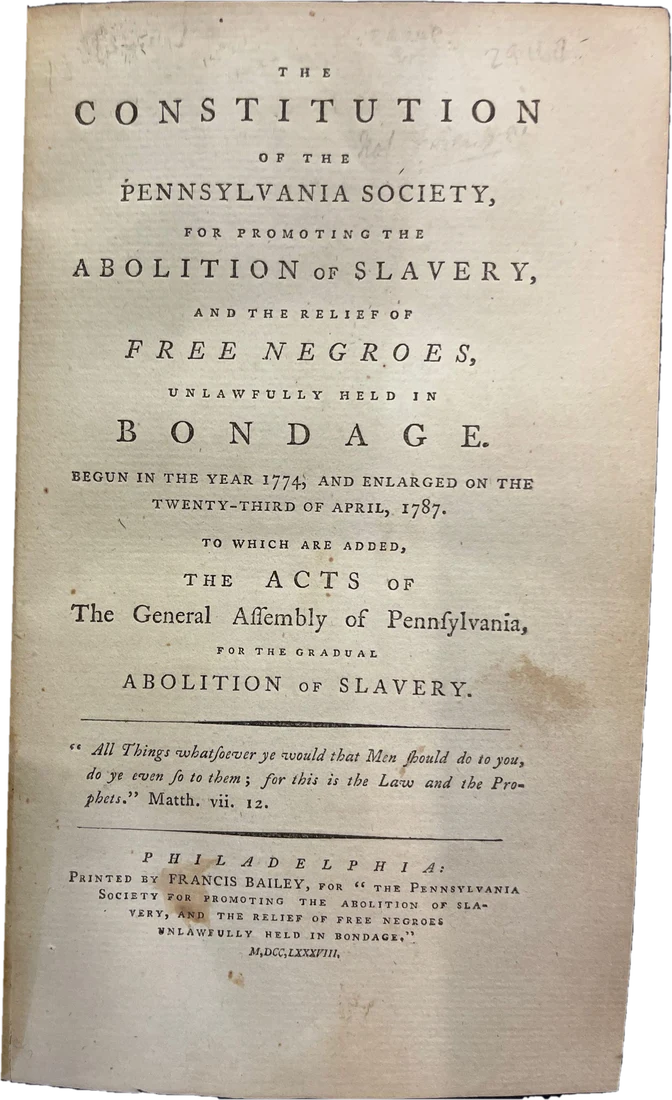
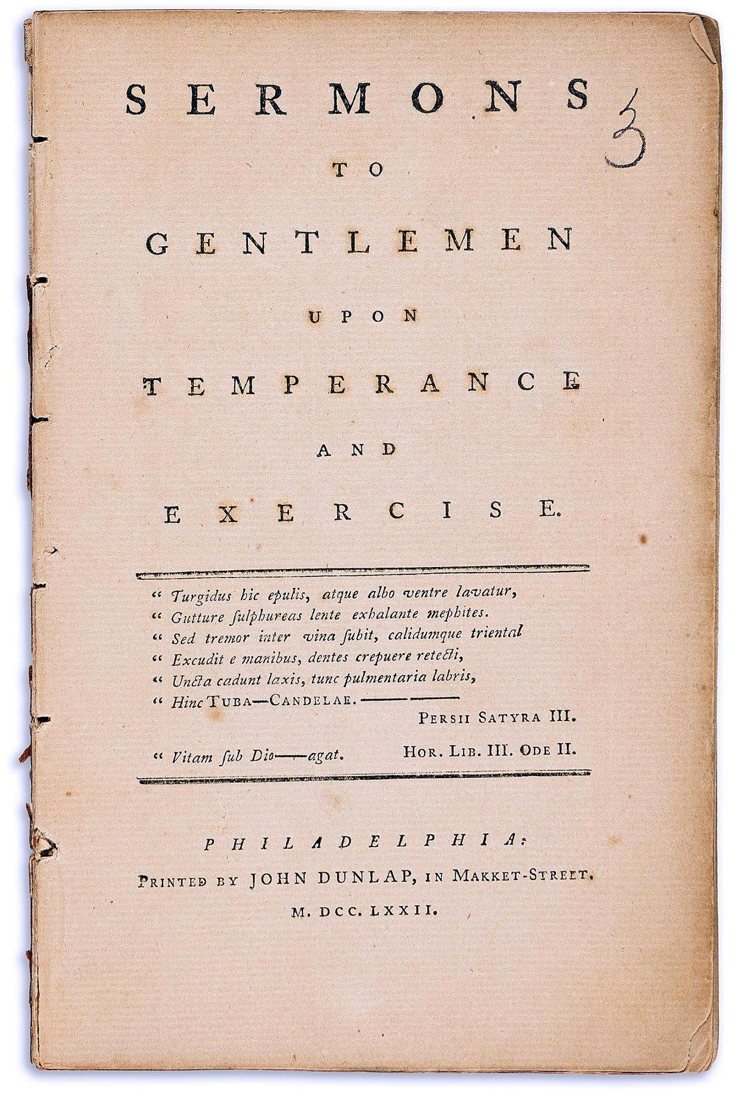
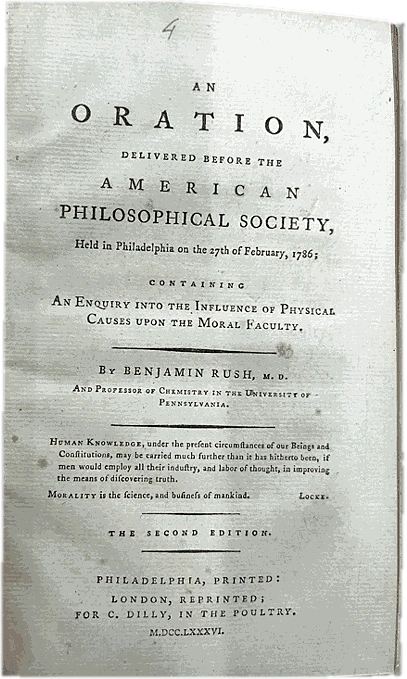
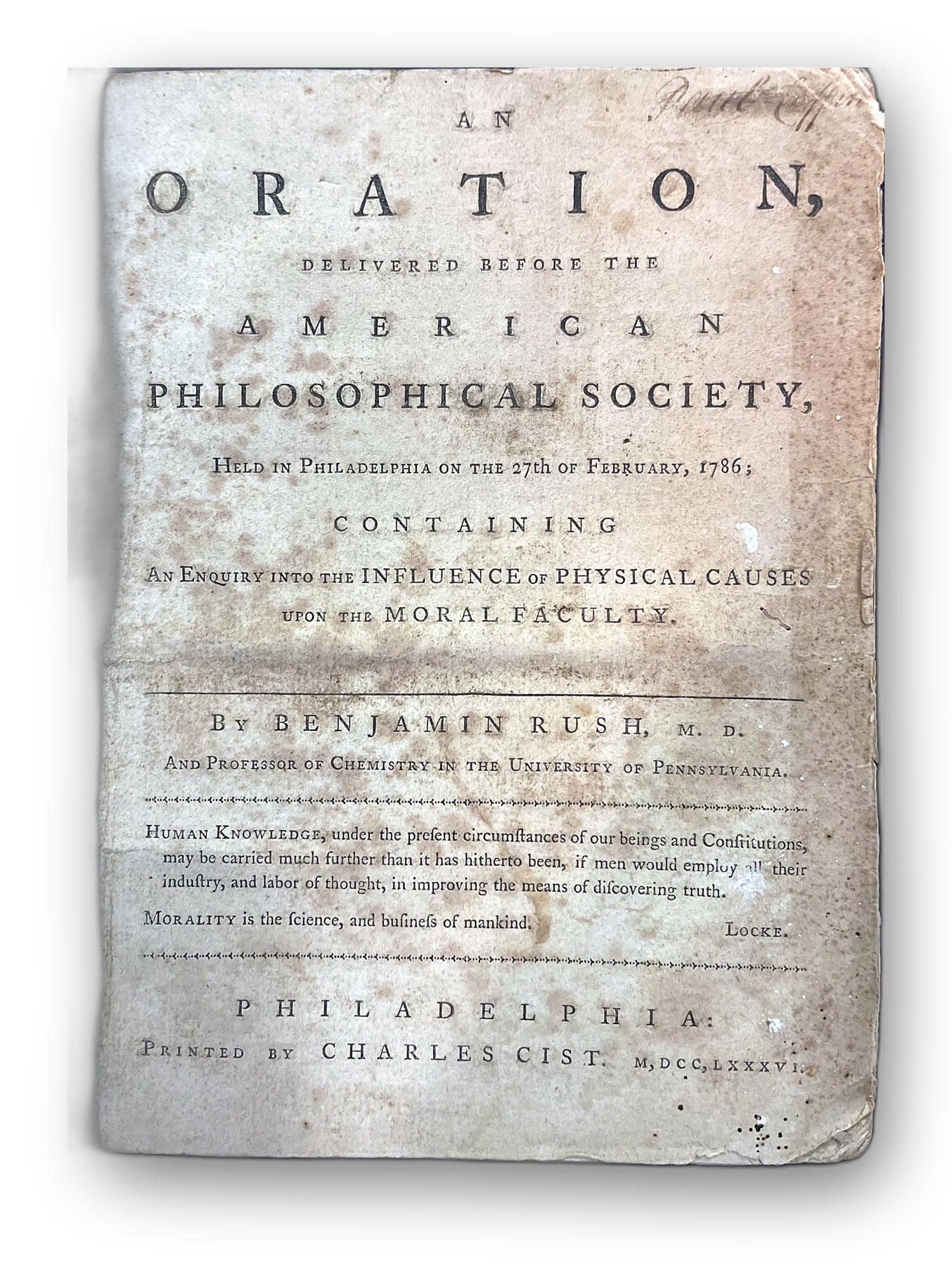
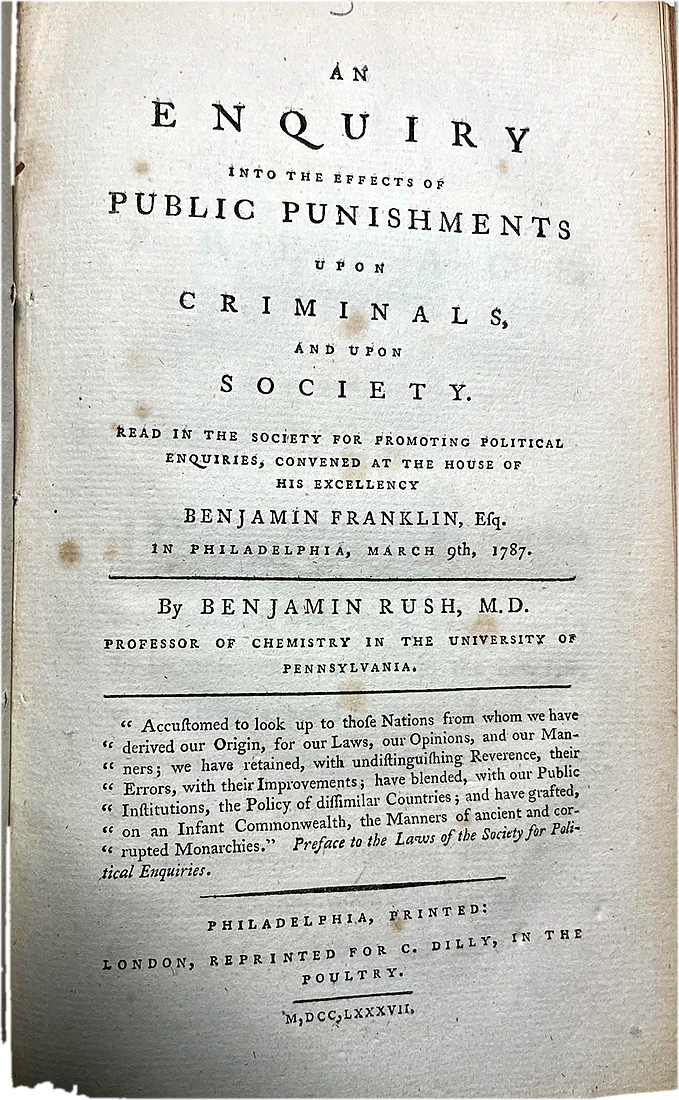
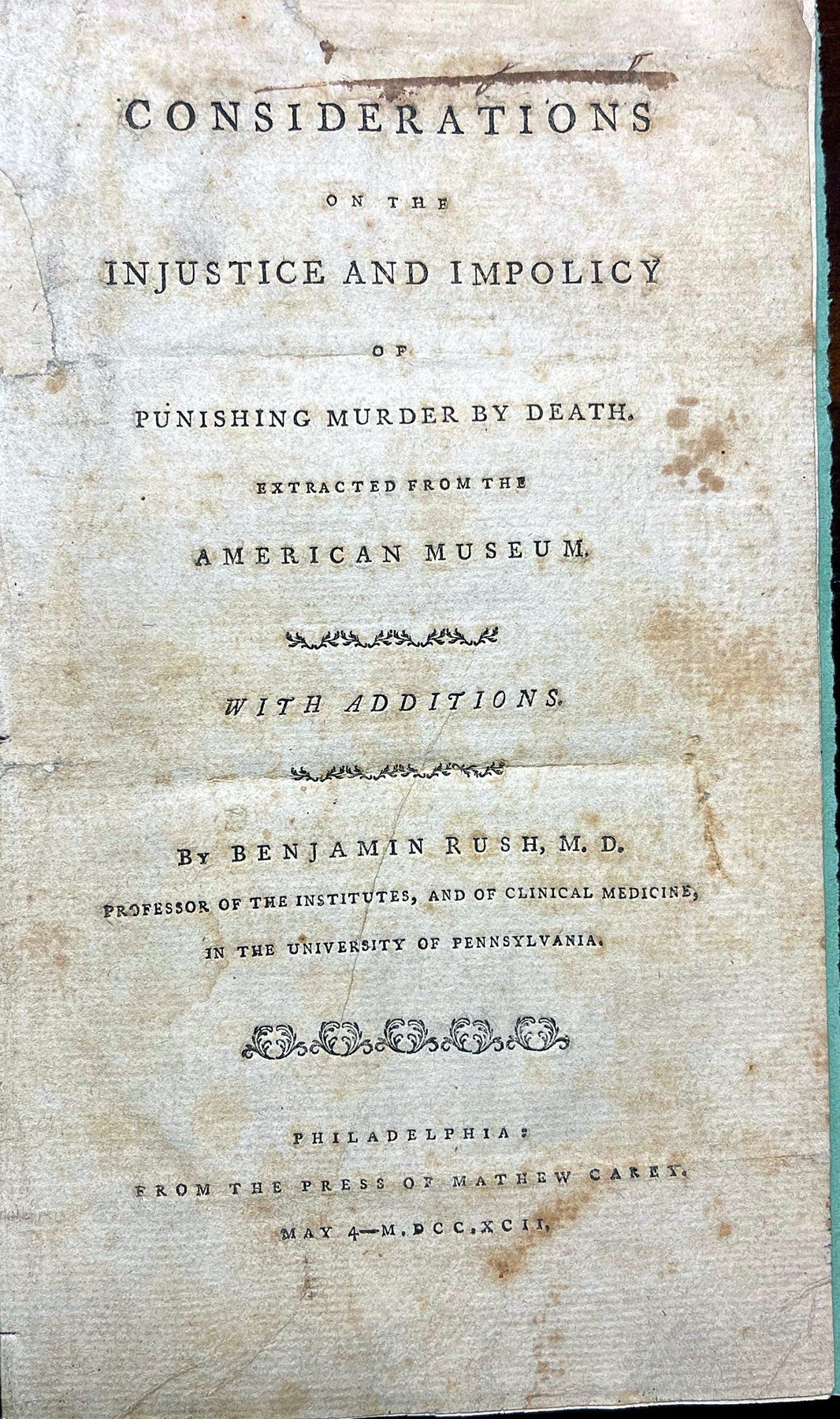
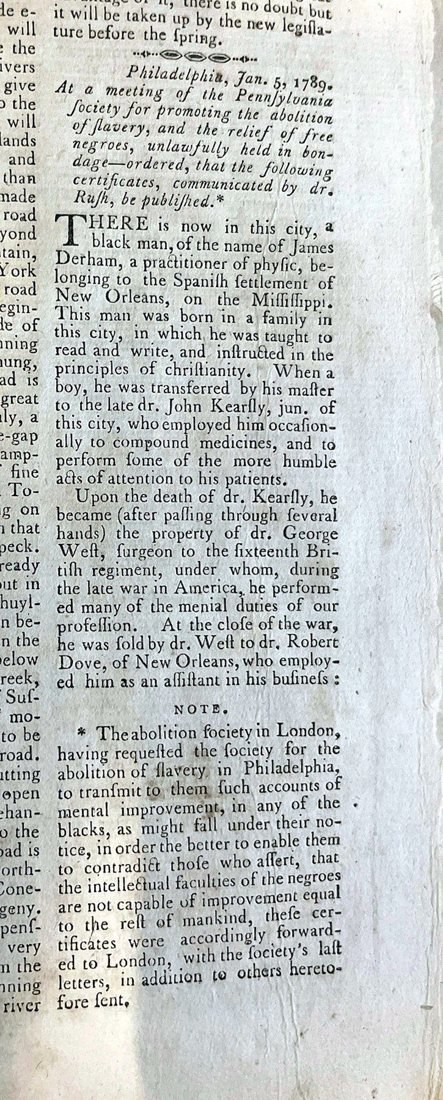
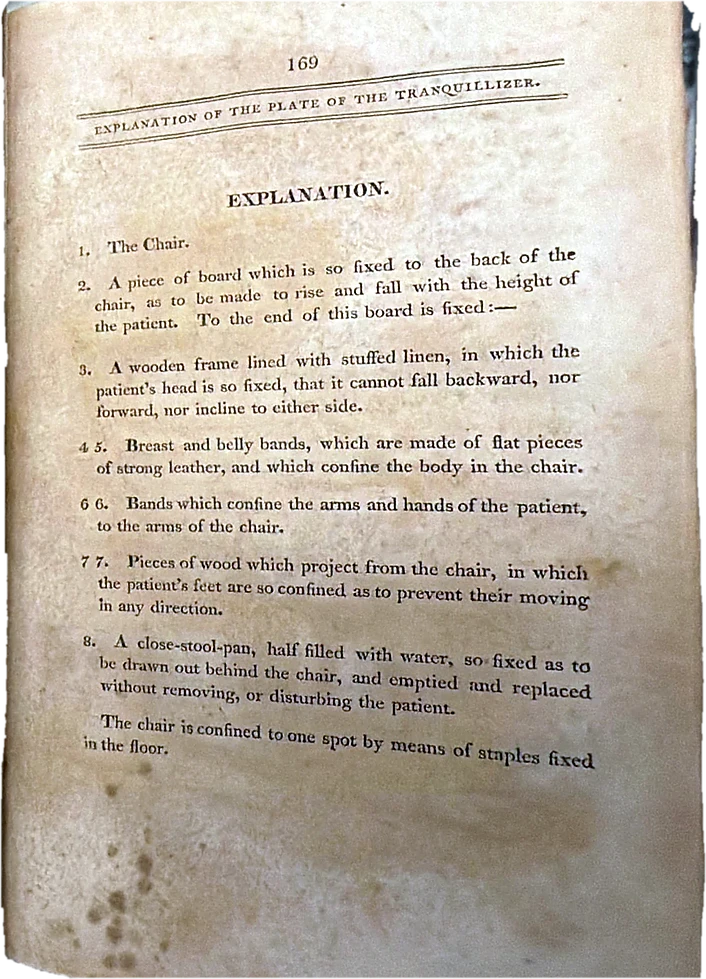
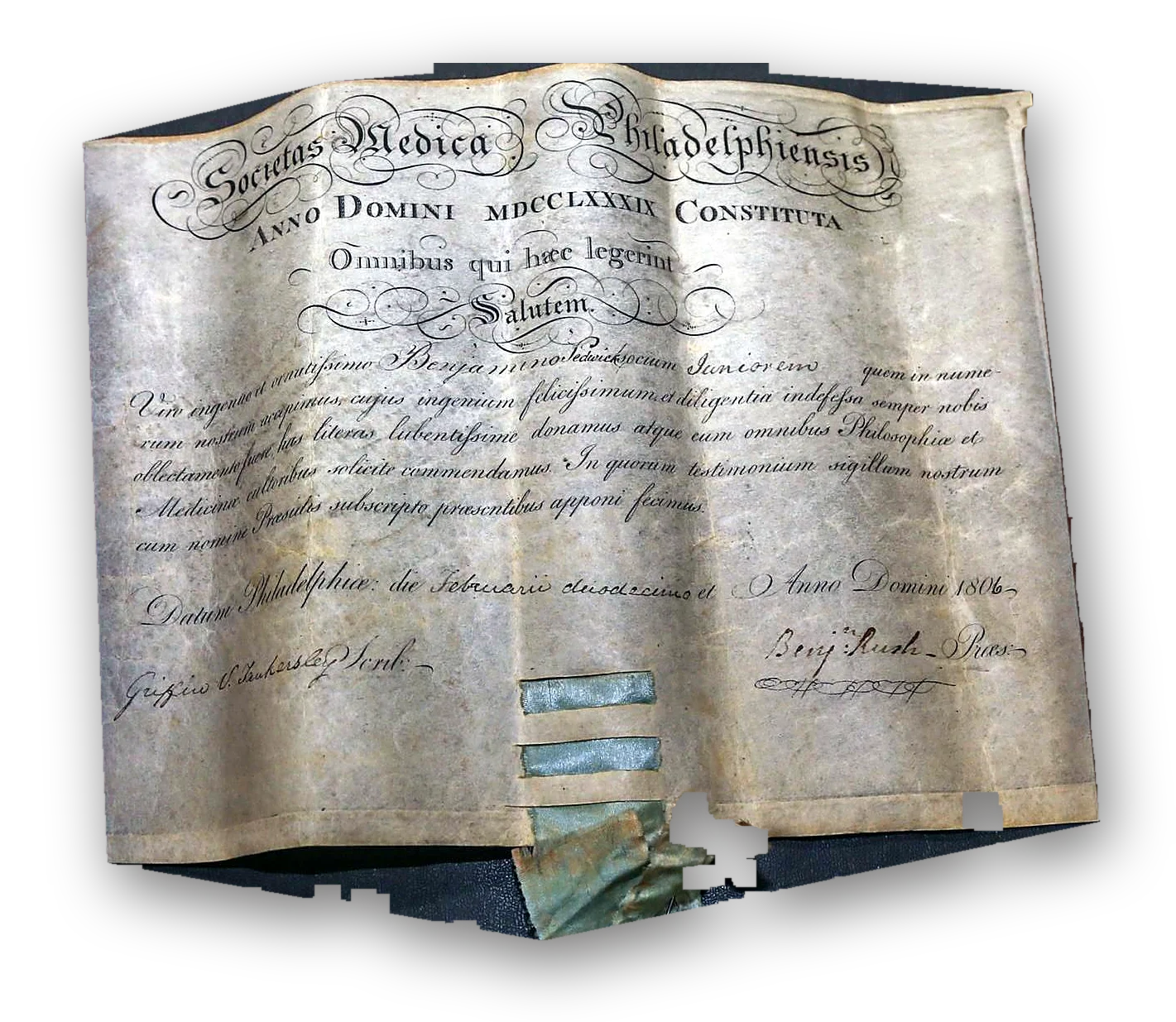
Benjamin Rush was a physician first and a reformer by the same impulse. He believed that disease had one underlying cause and that society had a few, and he went after both with the same confidence. In the space of forty years he founded the first free dispensary in America to treat the poor, campaigned against slavery and against capital punishment and against all public punishment, argued that women should be educated, attacked tobacco and strong drink, and insisted that madness was a disease of the body to be treated rather than a visitation to be endured.
His reforming life began in a building Franklin had paid for. Rush joined the staff of the Pennsylvania Hospital in 1769, the year he came home from Edinburgh, and served it without a fee for the rest of his life. The free dispensary, the arguments about punishment and slavery and drink, and the treatment of the insane in the Hospital's cells all grew out of that appointment. The room before this one is where the Hospital was built.
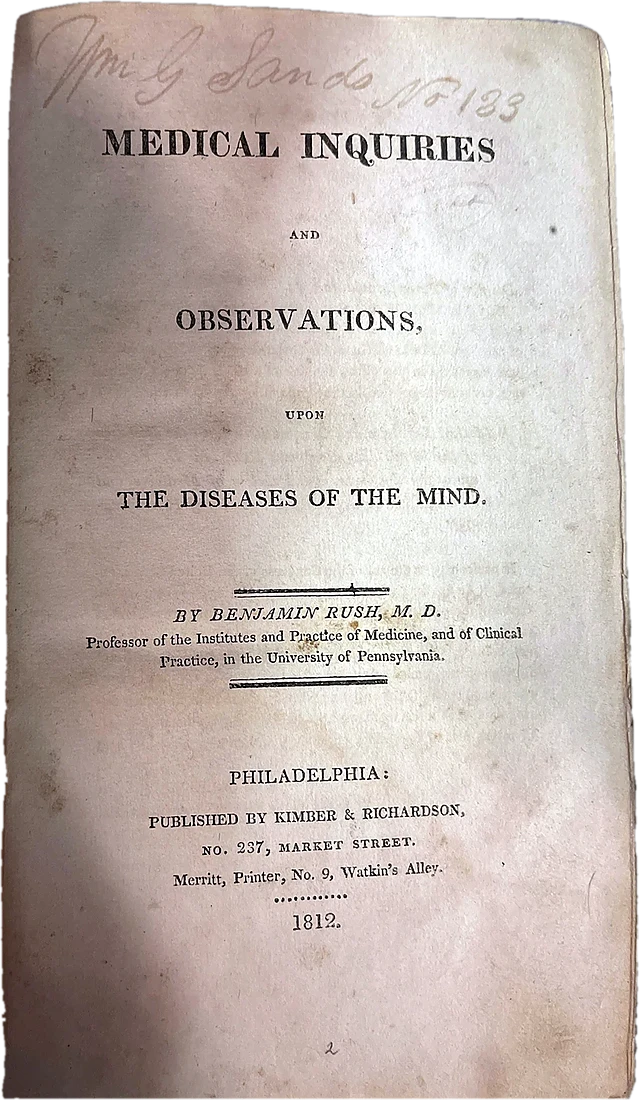
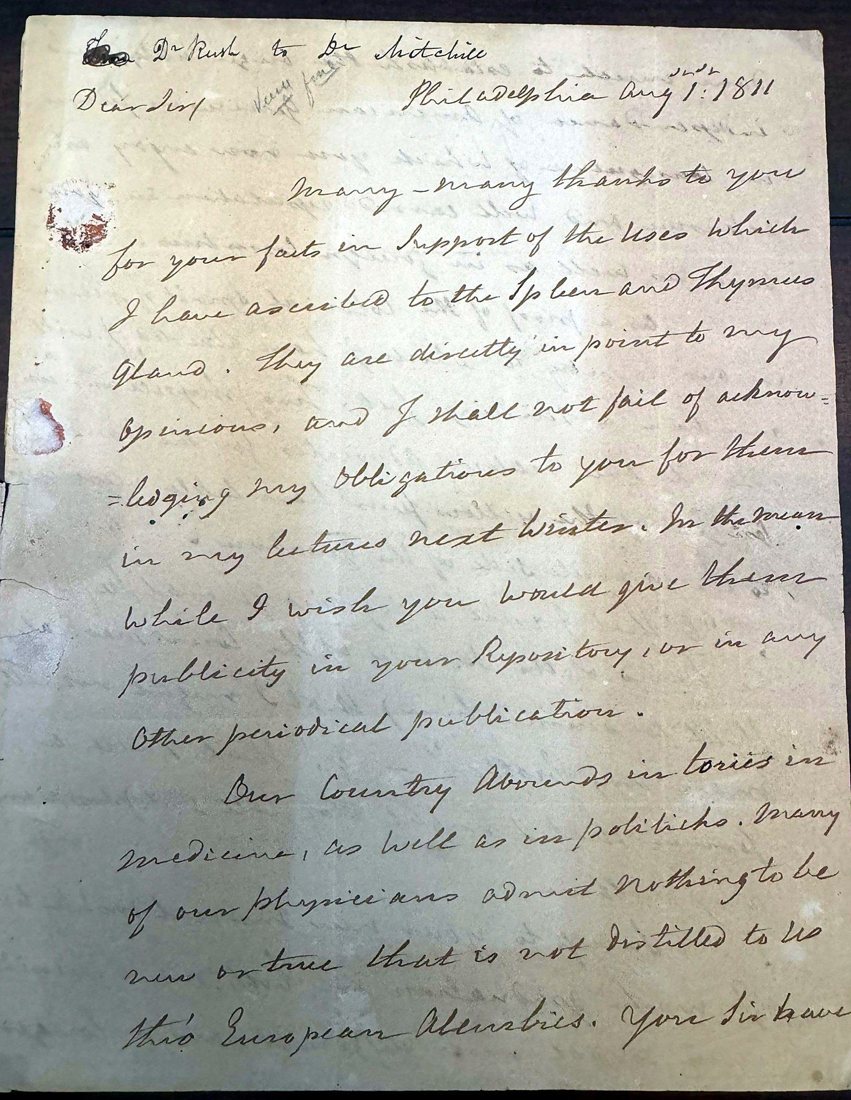
He was also a signer of the Declaration of Independence, Surgeon General of the middle department of the Continental Army, a founder of Dickinson College, and the man who in 1812 patched up the long quarrel between John Adams and Thomas Jefferson by writing to each of them until they wrote to each other. His Medical Inquiries and Observations upon the Diseases of the Mind, published in 1812, was the first American textbook of psychiatry and stood alone for seventy years.
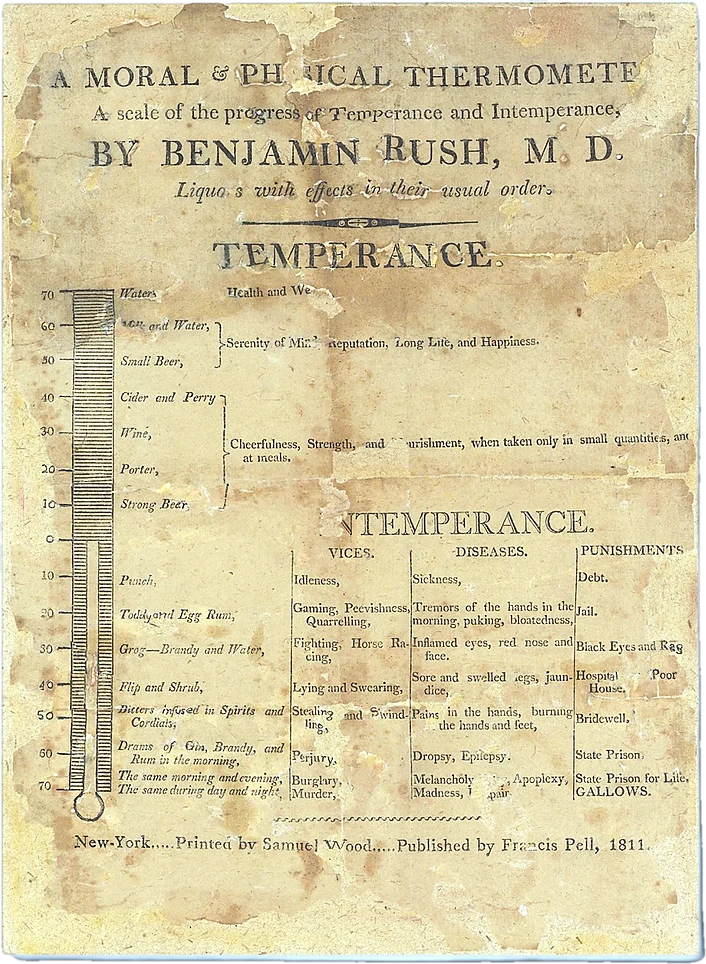
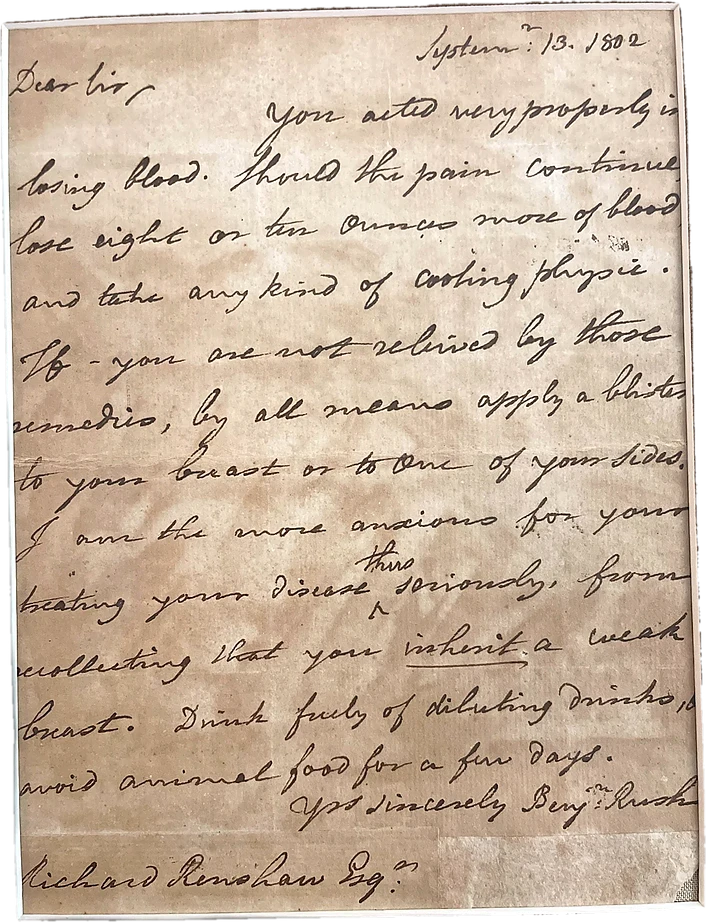
He was wrong about a great deal, and heroically so. He bled his patients past the point his colleagues could stomach and defended the practice to the end of his life. But the Moral and Physical Thermometer in this room, a printed scale running from water and milk at the top, through beer and wine and punch and grog, down to delirium, the poorhouse and the gallows, is recognisably the ancestor of every public health campaign since.
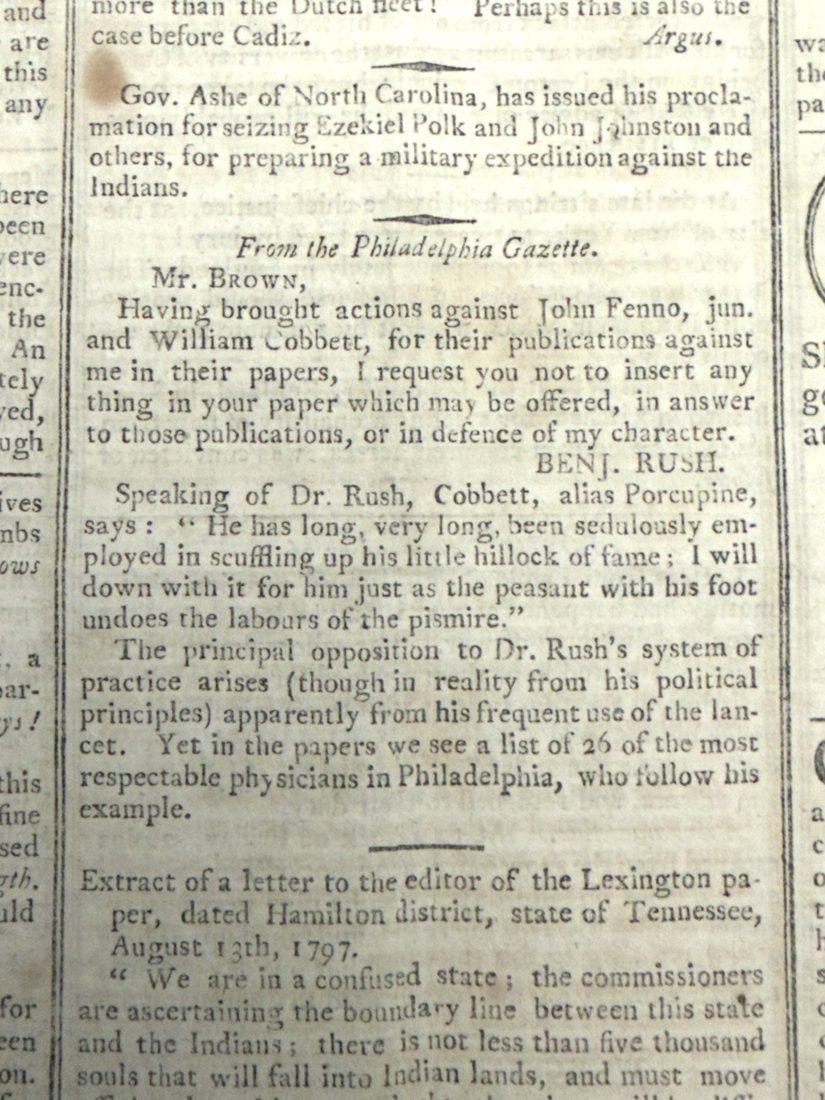
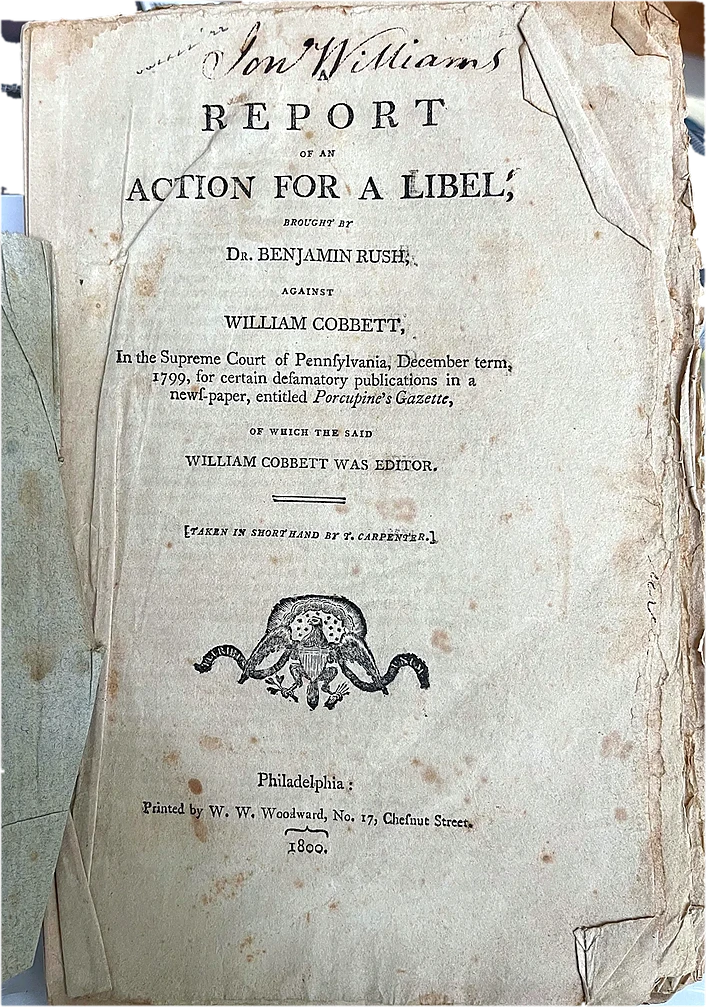
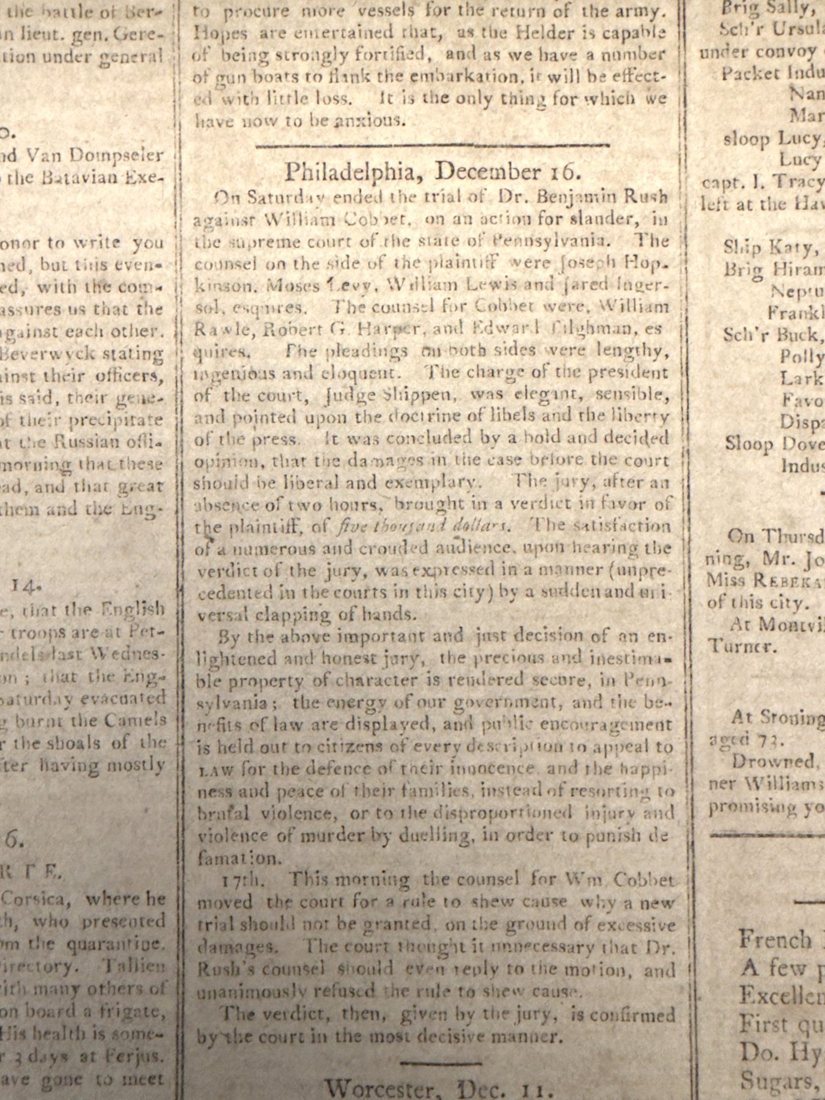
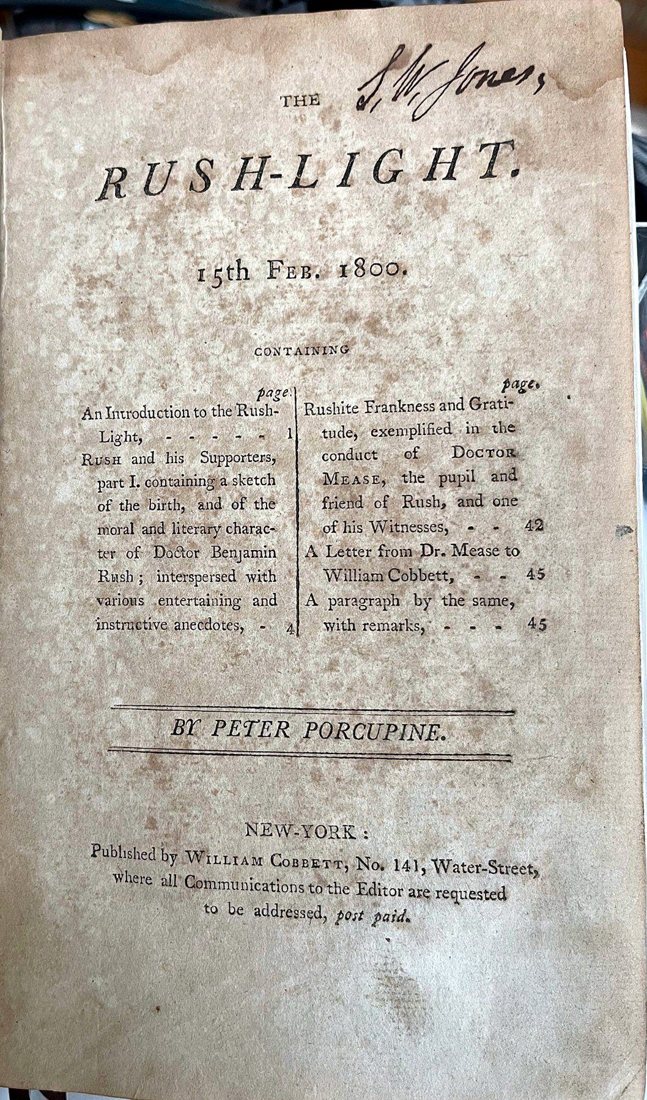
The certainty that carried him also brought him to court. William Cobbett, an English pamphleteer writing in Philadelphia as Peter Porcupine, spent the autumn of 1797 telling the city that Rush was killing his patients, and Rush, who had answered his critics in print for twenty years, decided this time to answer in court instead. That quarrel has a section of its own at the end of this room, with both sides of it and two newspapers that followed the case from Connecticut.
Rush died in April 1813, twenty-three years after Franklin. He had outlived his mentor by almost exactly the span he had known him. He had been right about some things: that yellow fever was not contagious, that drunkenness was a disease, that criminals could be reformed. He had been wrong about others: the bleeding, and the taxonomy of madness. He had been certain about all of them.