
The Assembly Fight of 1764
The Paxton Boys, the Proprietors, and the Road to London
IN the winter of 1763–64 a band of Scots-Irish frontiersmen from Paxton township murdered twenty Conestoga Indians under the protection of the Pennsylvania government, and then marched on Philadelphia to finish the job. Franklin met them at Germantown with a delegation and talked them into going home. It was the beginning of the most bitter year in Pennsylvania politics. The Paxton affair became a proxy war between the Assembly, which Franklin led, and the Proprietors, whom he had come to despise. By the autumn Franklin had lost his Assembly seat in a savage election and been sent to London to petition for the province to be taken from the Penns and made a royal colony.
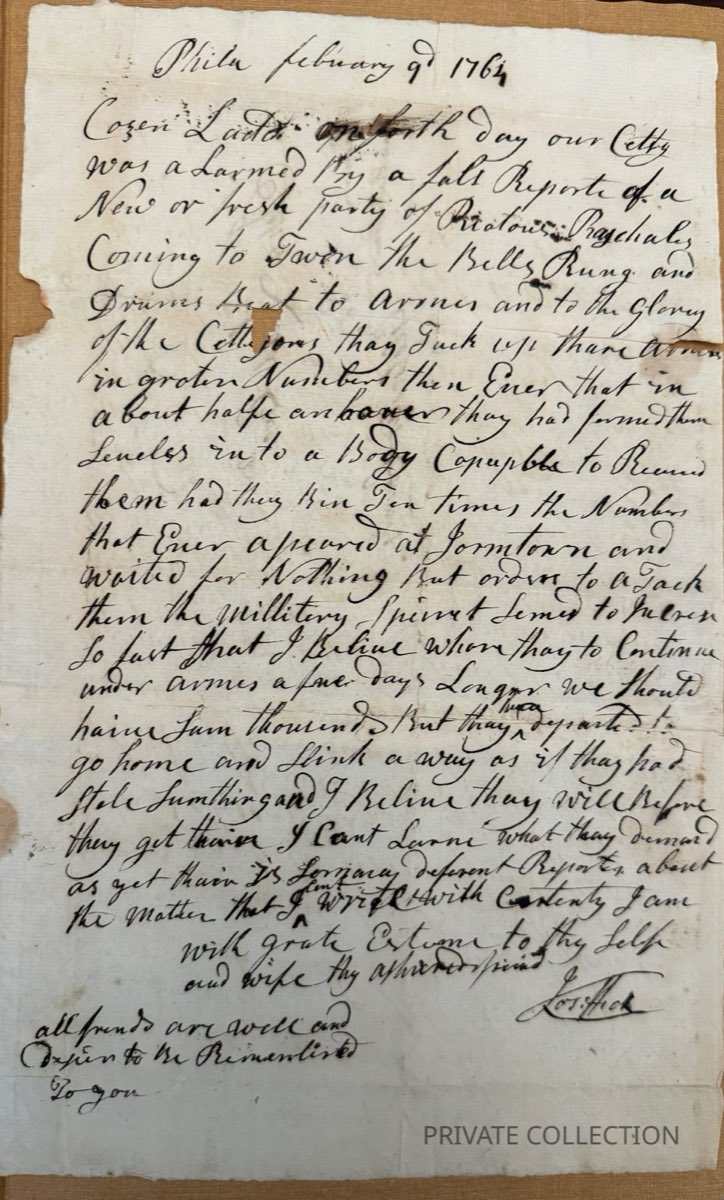
[The Paxton Boys] An Eyewitness Report on the Paxton Massacre
An eyewitness account, in a single folio sheet, of the frontier rising that opened the crisis of 1764. Franklin's own Narrative of the Late Massacres was the Assembly party's answer; this is the raw material it answered. Housed in a custom morocco-backed slipcase.
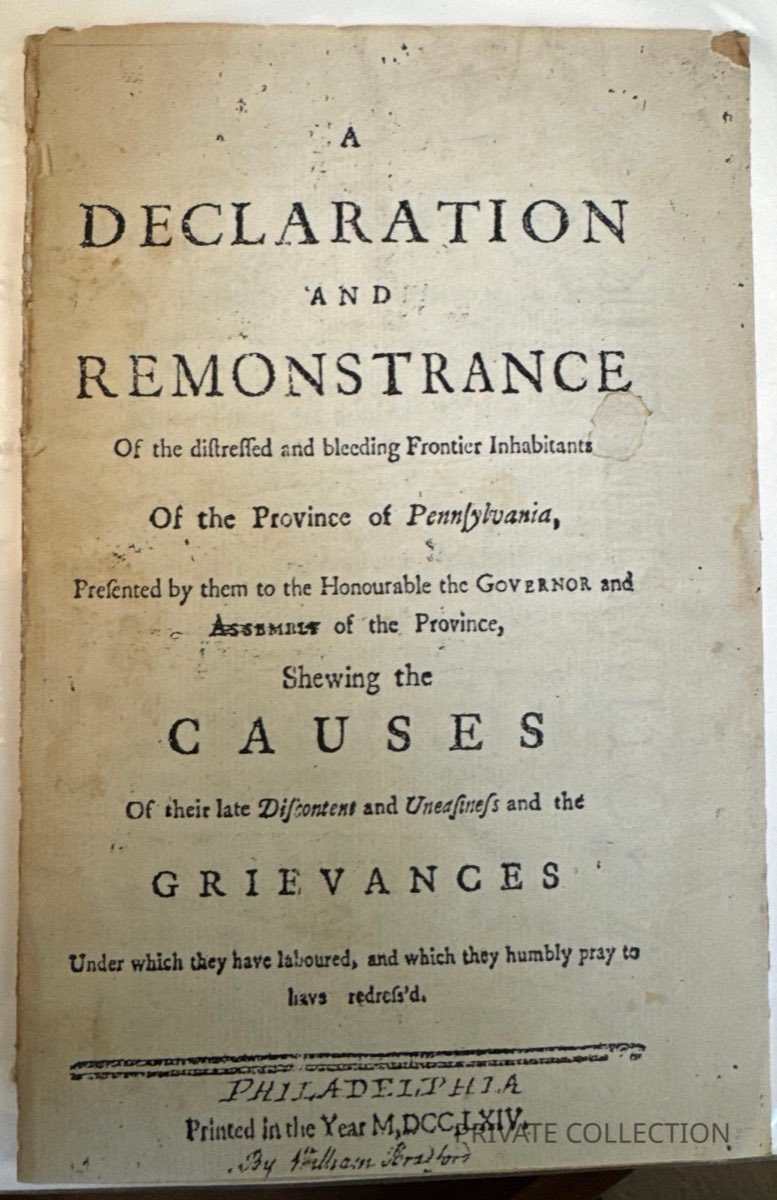
A Declaration and Remonstrance of the Distressed and Bleeding Frontier Inhabitants of the Province of Pennsylvania
The Paxton men's own statement of grievances, presented to the Assembly after Franklin turned them back at Germantown. It attacks the Quaker Assembly's protection of Indians and its indifference to the frontier — the argument that would cost Franklin his seat in October.
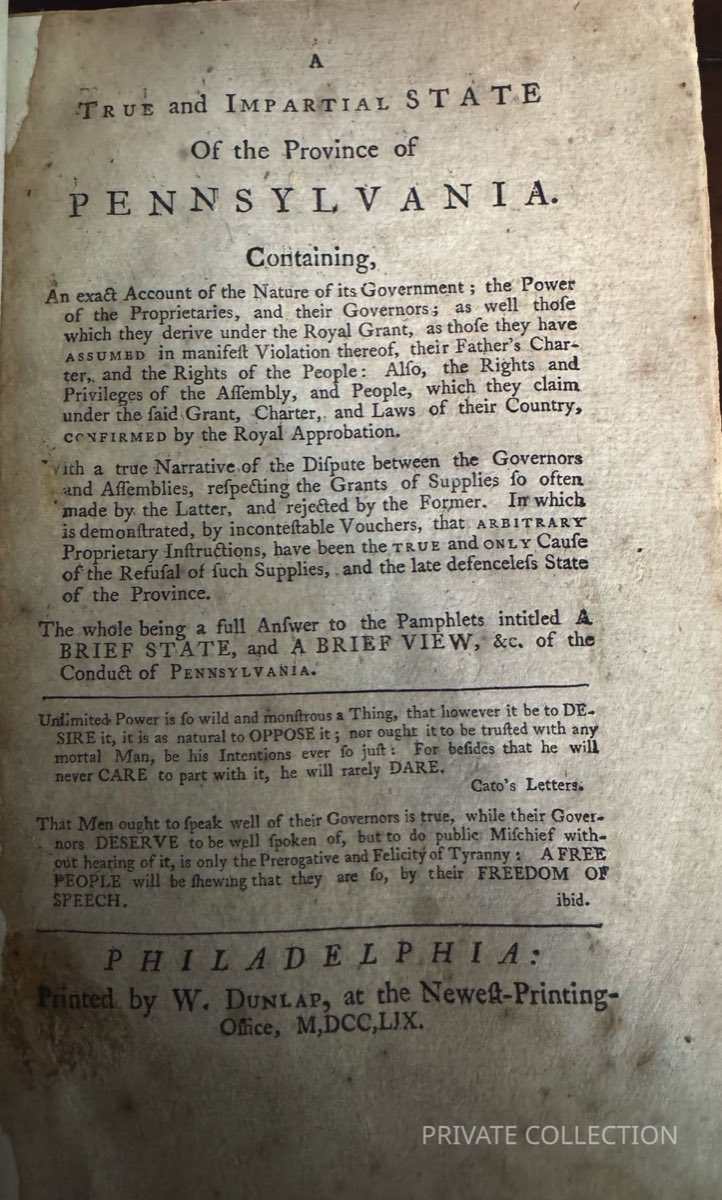
A True and Impartial State of the Province of Pennsylvania
The Assembly party's case against proprietary government, attributed by contemporaries to Franklin, to Galloway, or to both. Whoever held the pen, the argument is Franklin's: that the Penns taxed the province while exempting their own estates and treated the Assembly as a nuisance. It is the political ground on which the fight of 1764 was fought.
Galloway's speech of May 1764 for royal government, with Franklin's preface against the Penns, opens the next catalog: Franklin carried the petition it argued for to London that autumn, and arrived to find Parliament passing the Stamp Act. The Revolution, as this collection tells it, begins there — in Catalog IV.
He arrived in London to petition against the Penns, and found the Stamp Act instead.