
Printer to the Province
The Assembly, the Meeting, and the Great Awakening, 1735–1748
A colonial press lived on three kinds of customer: the government, which paid for laws and forms; the religious societies, which paid for tracts and paid promptly; and the private client with a bond to sign or a book to publish. Between 1735 and 1748 Franklin's shop served all three, and served them well enough that at forty-two he could hand the daily work to a partner and walk away rich. The paper of those years is the ordinary paper of a province — rare now, in most cases, precisely because it was ordinary then.
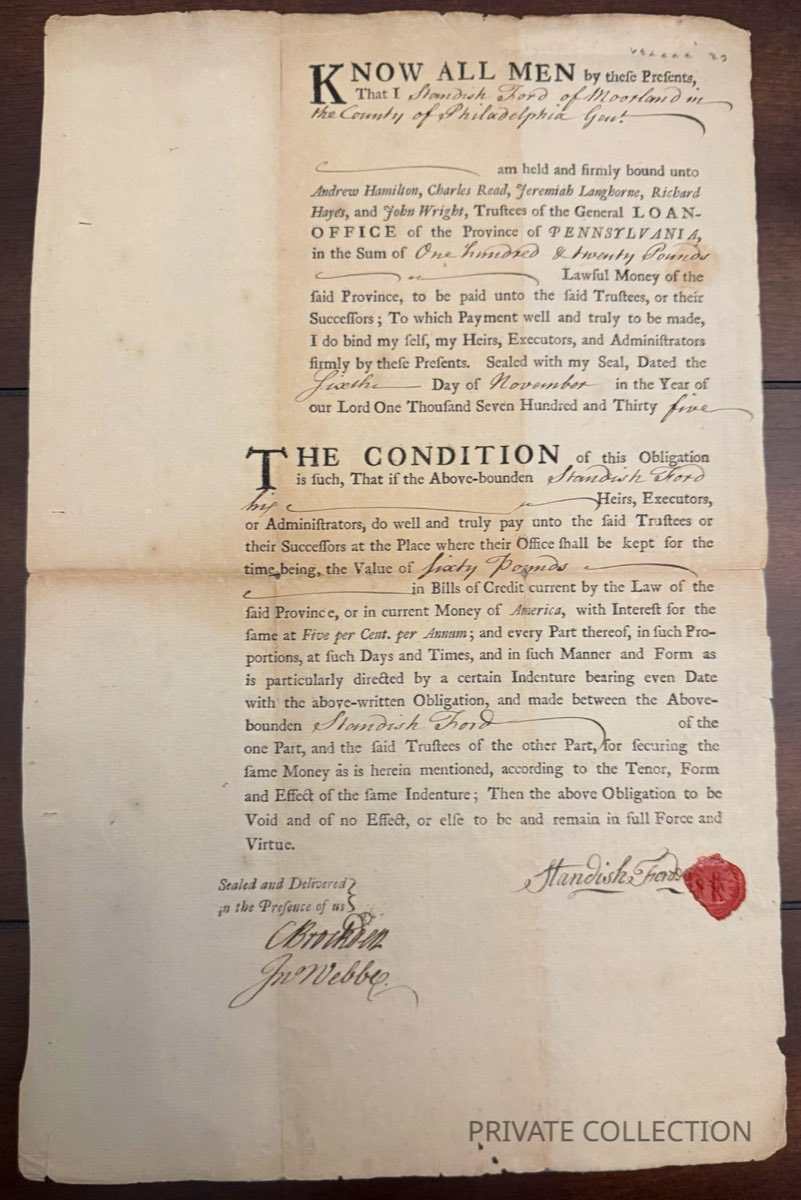
Know All Men by These Presents … (Mortgage Bond of the General Loan Office)
The same bond form as the Drinker mortgage of 1729, in a later state, by which Standish Ford of Moorland borrowed £120 from the Loan Office. Witnessed by Charles Brockden, Recorder of Deeds and Clerk of the Loan Office, and by John Webbe, the lawyer who would soon quarrel with Franklin over the General Magazine. Two states of one form, six years apart, from a press that printed them by the ream.
The Great Awakening reached Philadelphia in November 1739 in the person of George Whitefield, and Franklin — who admired the preacher, doubted the doctrine, and could estimate a crowd to the thousand — became his printer. He ran Whitefield's letters in the Gazette and reprinted them as pamphlets; when the critics complained that no Philadelphia printer would print anything against the evangelist, Franklin printed the critics. The press was neutral, and neutrality paid.
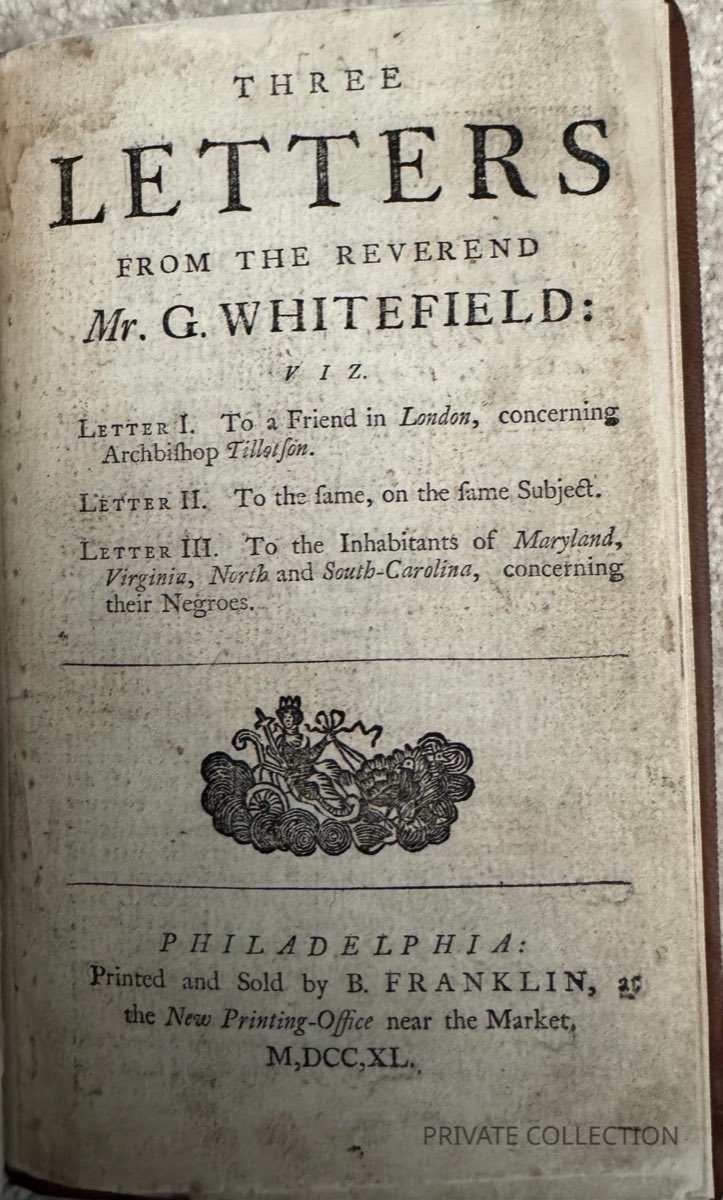
Three Letters from the Reverend Mr. G. Whitefield
The three letters Franklin ran in the Pennsylvania Gazette of April 10–24, 1740, and then as a pamphlet: on Archbishop Tillotson, who Whitefield said knew no more of Christianity than Mahomet; on justification; and to the slaveholders of the southern colonies. Franklin printed Alexander Garden's reply the next year to disprove the charge that Whitefield had 'engag'd all the Printers.' The auction record shows four copies, one since 1920.
The Assembly's printing was the foundation of the business, and its monument is the folio of 1742: the charters of the province and city, and all the laws then in force, ordered by the Assembly and printed in an edition of one hundred and twenty copies. The Baptist Association's confession of the next year shows the Meeting's kind of work at its most durable — two small books bound together in the original calf, as they left the shop.
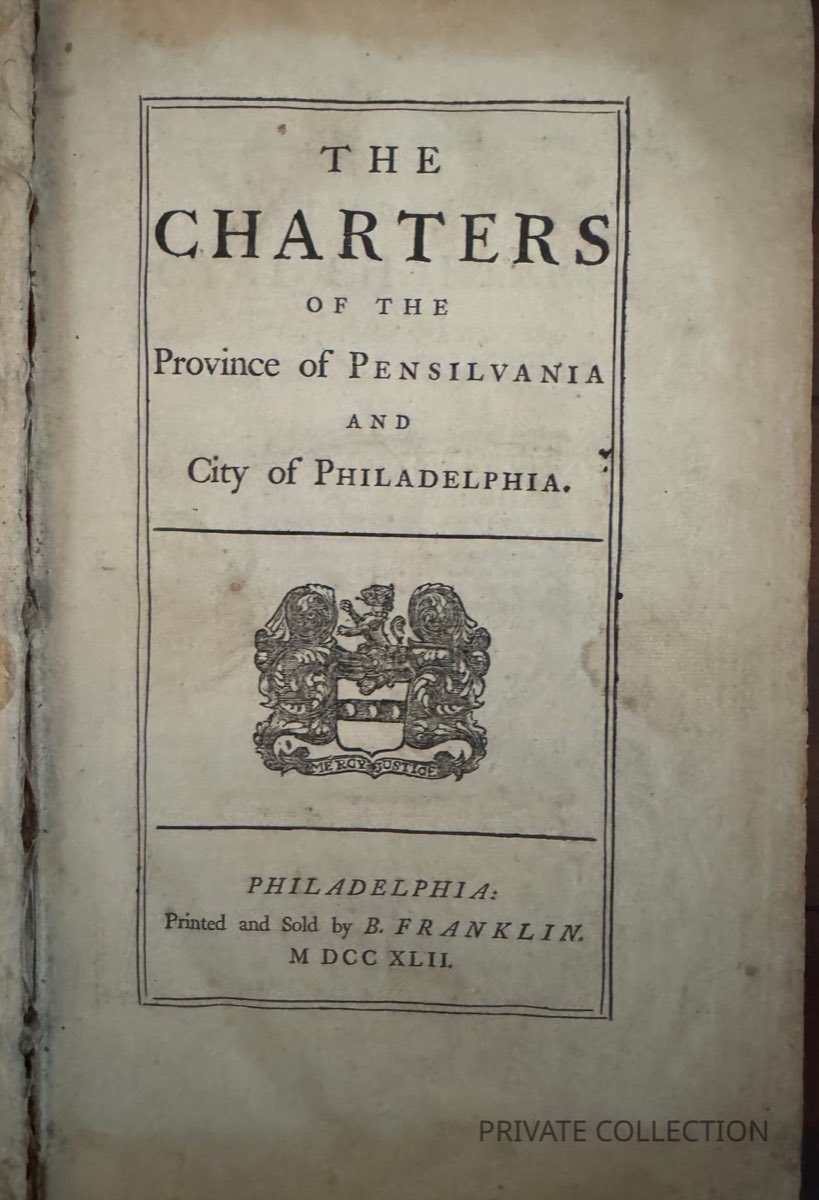
The Charters of the Province of Pensilvania and City of Philadelphia · A Collection of All the Laws of the Province · An Appendix
Franklin's printing of the constitution of Pennsylvania — 'documents in which English concepts of liberty and self-government had been planted' — published by order of the Assembly. A very rare association copy, with an owner's inscription of 1754 and the provenance of Zachariah Poulson, Jr., the Revolutionary-era printer whose yellow fever almanac the collection holds in Catalog I. A second, disbound copy of the Charters is also in the collection.
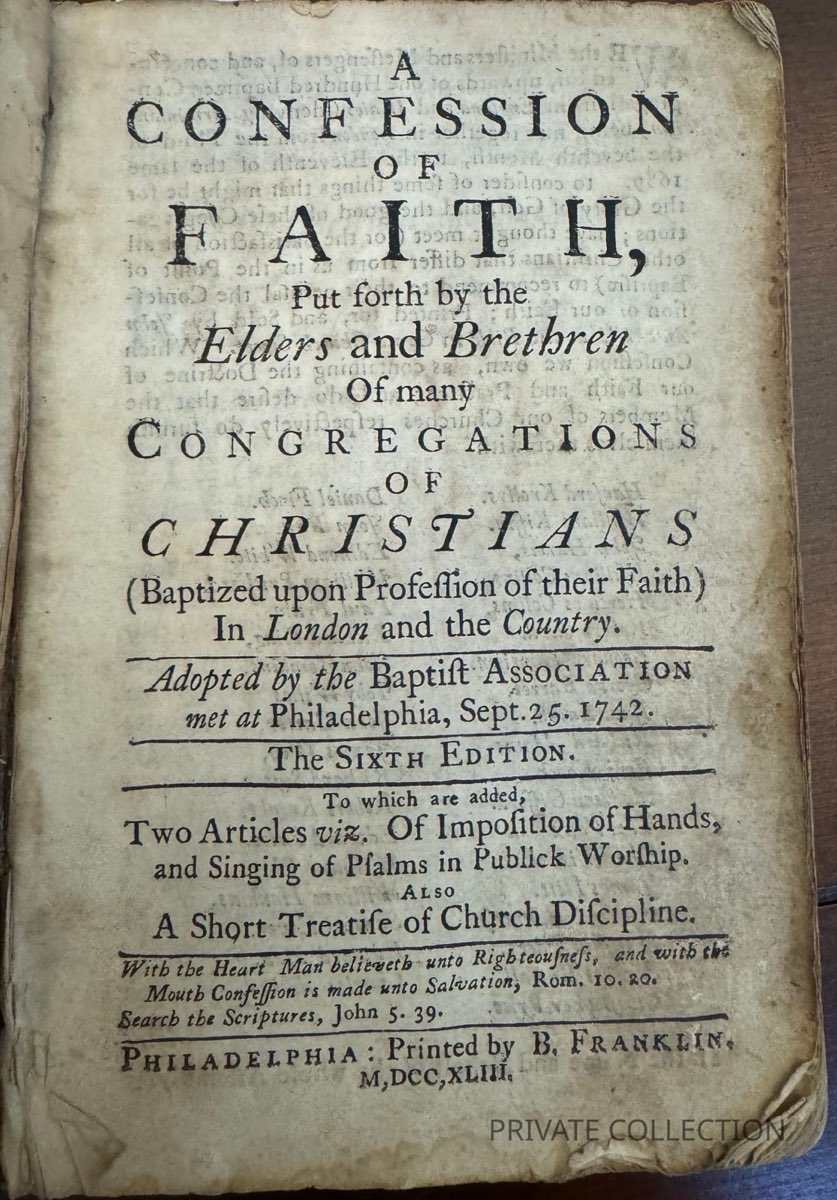
A Confession of Faith … [with] A Short Treatise of Church Discipline
The London Baptist Confession of 1689 as adopted by the Philadelphia Association in September 1742, with the treatise on discipline commissioned at the same meeting and written by Benjamin Griffith of Perkasie. Two early Franklin imprints as issued; the last copies at auction were in 2008 and 2009, and before that the 1980s.
What Franklin chose to print for himself, rather than for a customer, tells you what he valued. In 1744 he issued the first classical text published in the colonies for its own sake, James Logan's translation of Cicero on old age, and set it with a care he gave to nothing else. A year later he printed the first medical treatise written and published in America. Both were, in the commercial sense, failures. Both were the point.
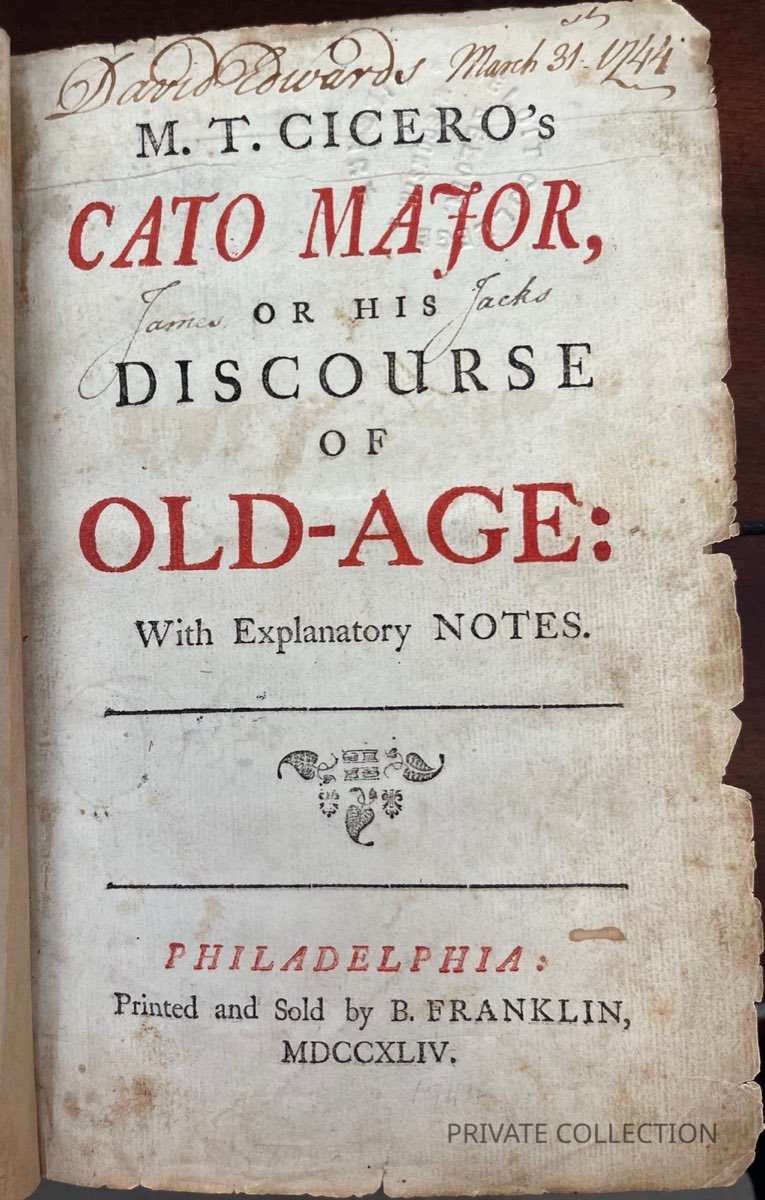
M. T. Cicero's Cato Major, or His Discourse of Old Age
Franklin's most celebrated piece of printing and the first classical translation published in America, in red and black. Logan, the Penns' secretary and the most learned man in the province, made the translation; Franklin's preface calls the book 'a happy Omen, that Philadelphia shall become the Seat of the American Muses.' This copy carries the eighteenth-century ownership inscription of David Edwards.
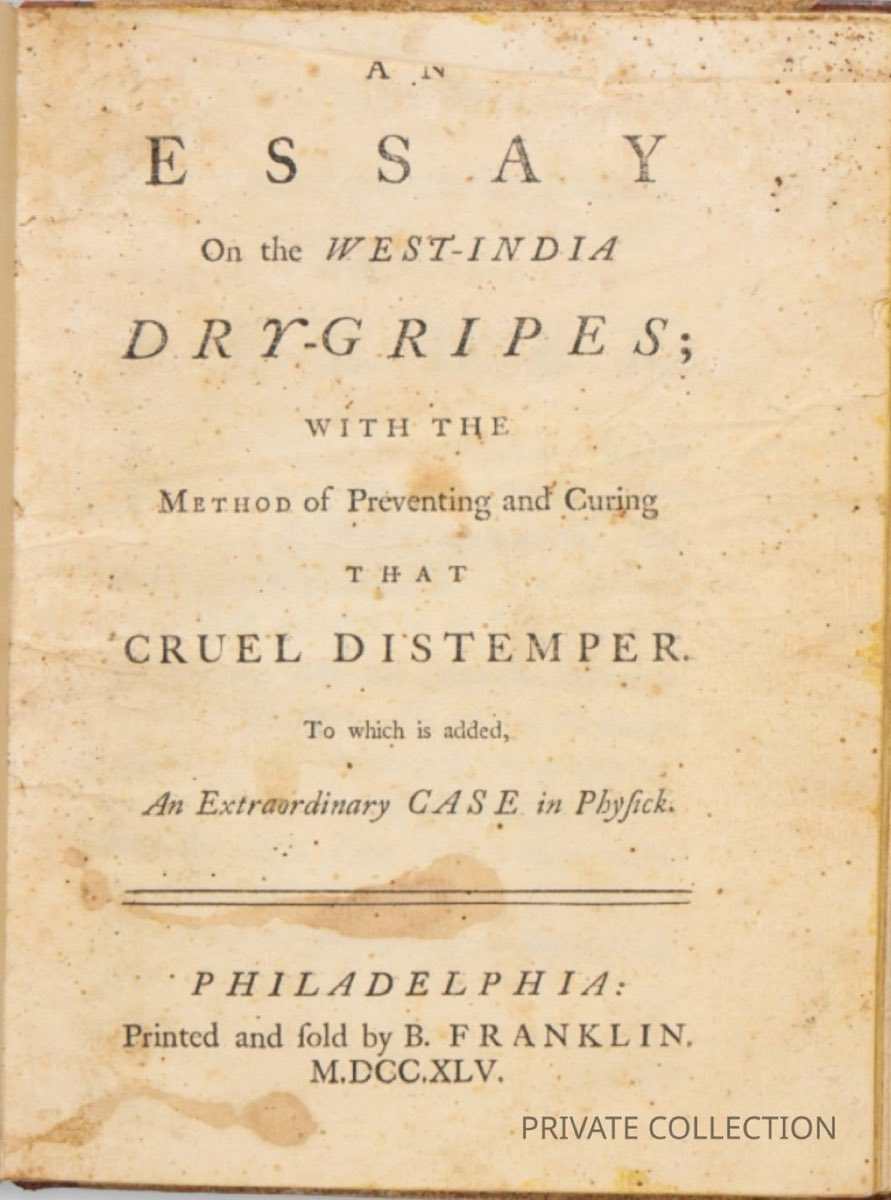
An Essay on the West-India Dry-Gripes; with the Method of Preventing and Curing that Cruel Distemper
The first medical treatise written and printed in America, on the colic caused — as Cadwalader rightly suspected — by lead in the stills that made Caribbean rum. Cadwalader would sign the Pennsylvania Hospital's first promissory notes six years later and teach Rush's generation; here he is a young physician and Franklin is his printer.
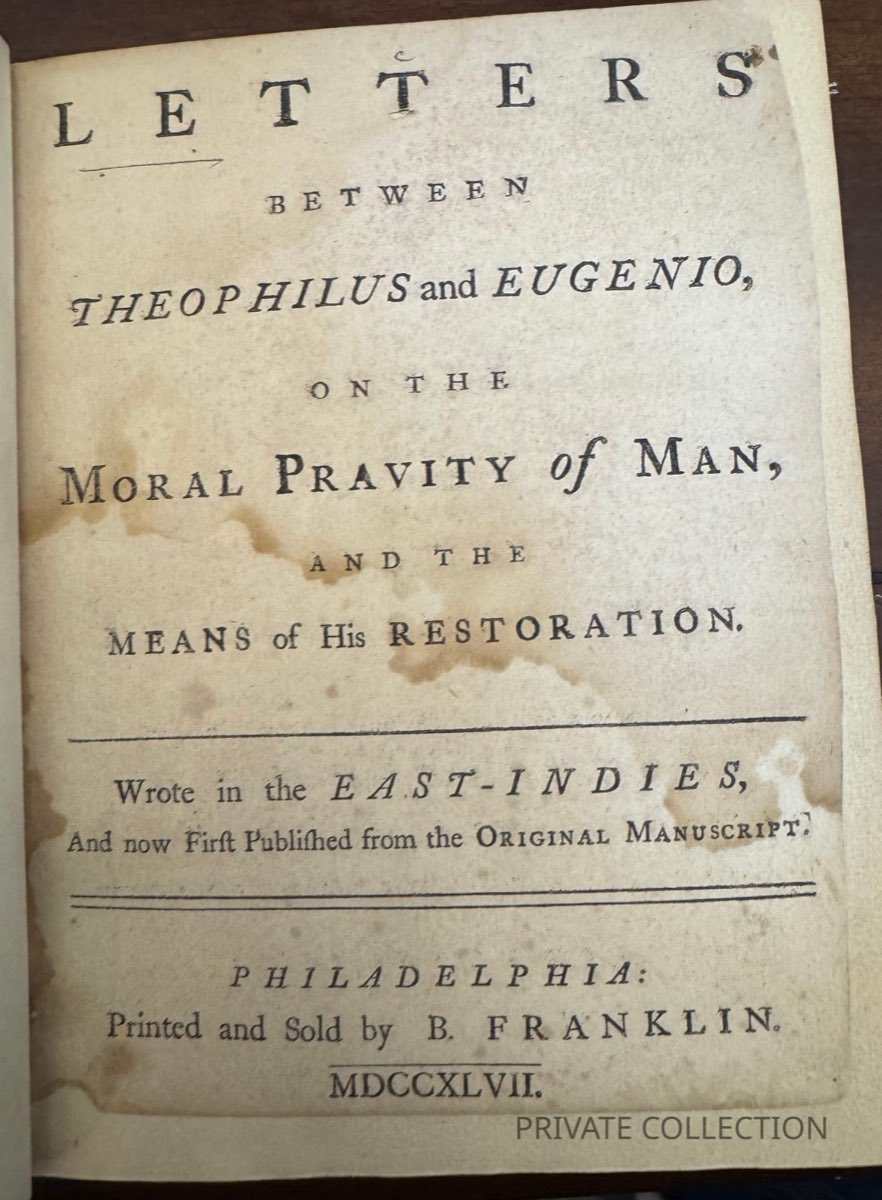
Letters between Theophilus and Eugenio on the Moral Pravity of Man, and the Means of His Restoration
A theological dialogue 'wrote in the East-Indies, and now first published from the original manuscript' — one of the stranger titles Franklin printed on his own account in the last year before he took a partner. With an early bookplate.
Paper was the other half of the trade, and Franklin's genius as a businessman shows most clearly in how he secured it. He backed mills, dealt in rags, and sold paper to printers up and down the coast, so that competitors came to depend on him for the one thing none of them could make. A legal release signed by 'Anthony Newhouse, Papermaker' in 1747 puts a name to the supply behind every imprint in this catalog.
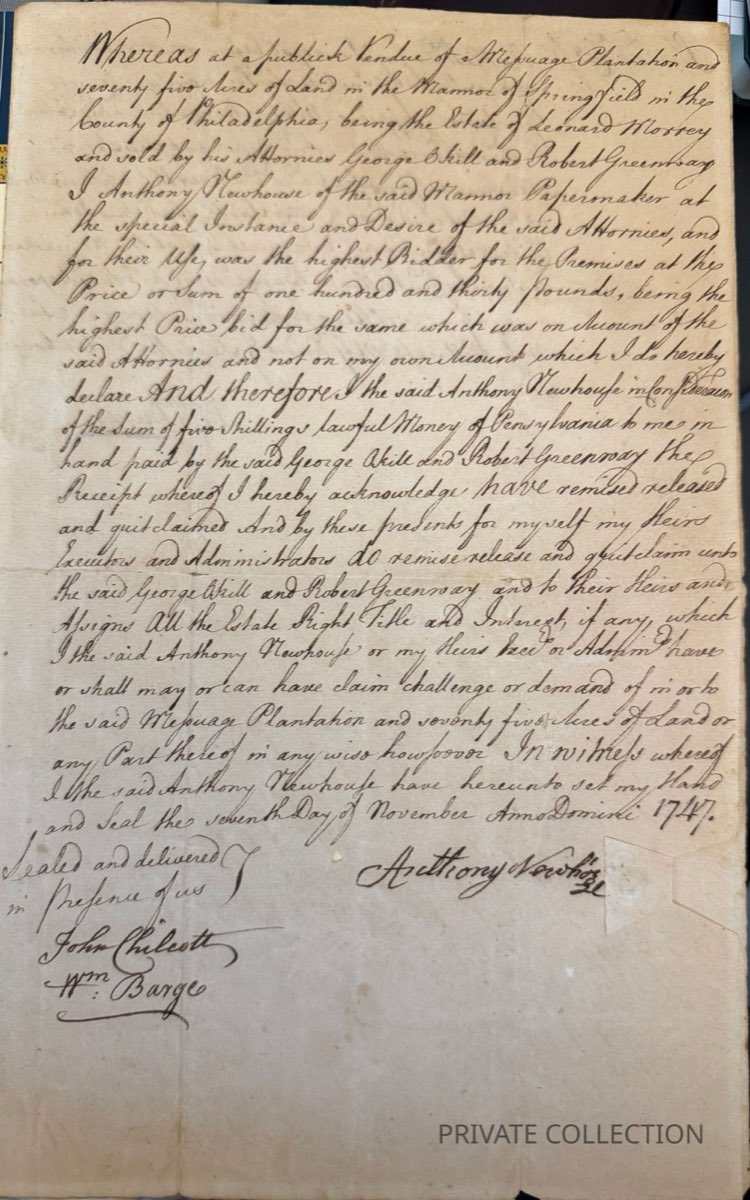
Document Signed, 'Anthony Newhouse, Papermaker'
A legal release signed by the papermaker whose mill supplied Franklin's press. Paper was the scarcest and dearest input of colonial printing, and Franklin's hold on its supply was a larger part of his fortune than any book he set.
In 1748 Franklin took David Hall into partnership and withdrew from the daily work of the shop. Two of the last things issued under his name alone were an English schoolbook he rewrote for American readers and the final laws he printed for New Jersey before William Bradford took that work away.
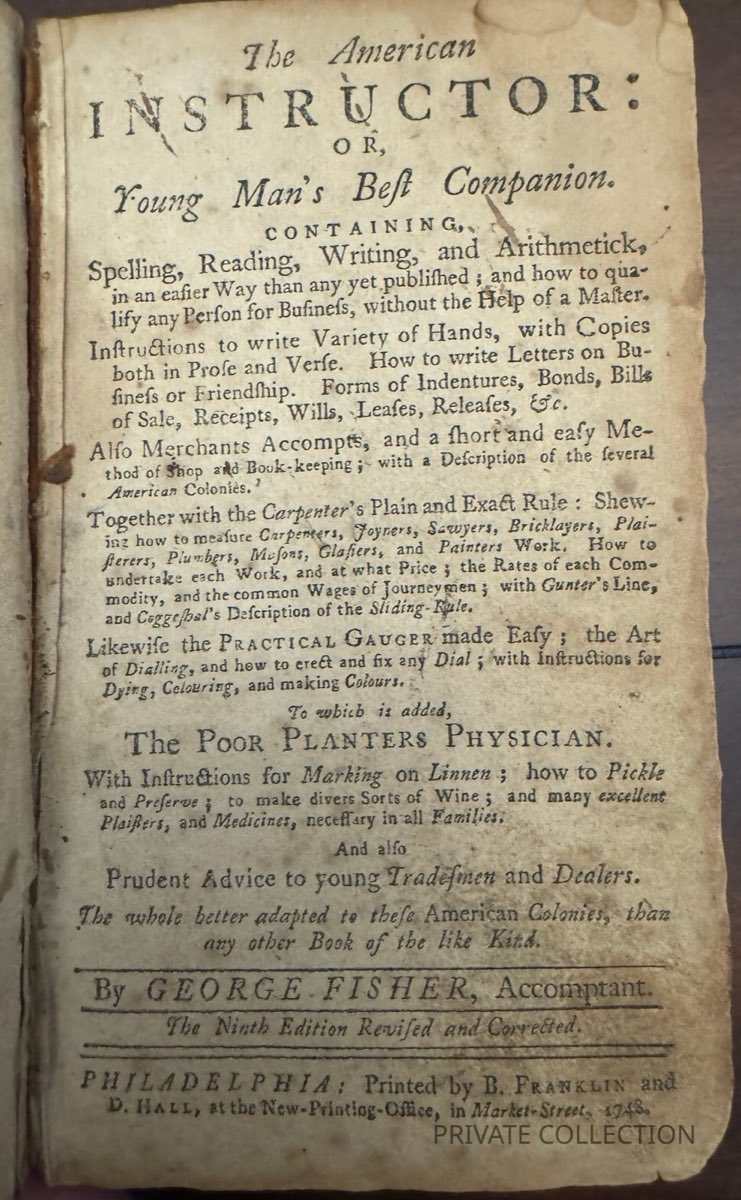
The American Instructor: or, Young Man's Best Companion … To Which Is Added, The Poor Planter's Physician
Fisher's handbook of spelling, writing, arithmetic, and letter-forms, which Franklin 'undertook to modify … to suit the needs of an American reading public,' adding a domestic medical guide. Miller lists nineteen copies, WorldCat one; three at auction since 1949, one of them this copy, in its original blind-ruled calf identified as the work of Franklin's binder Stephen Potts.
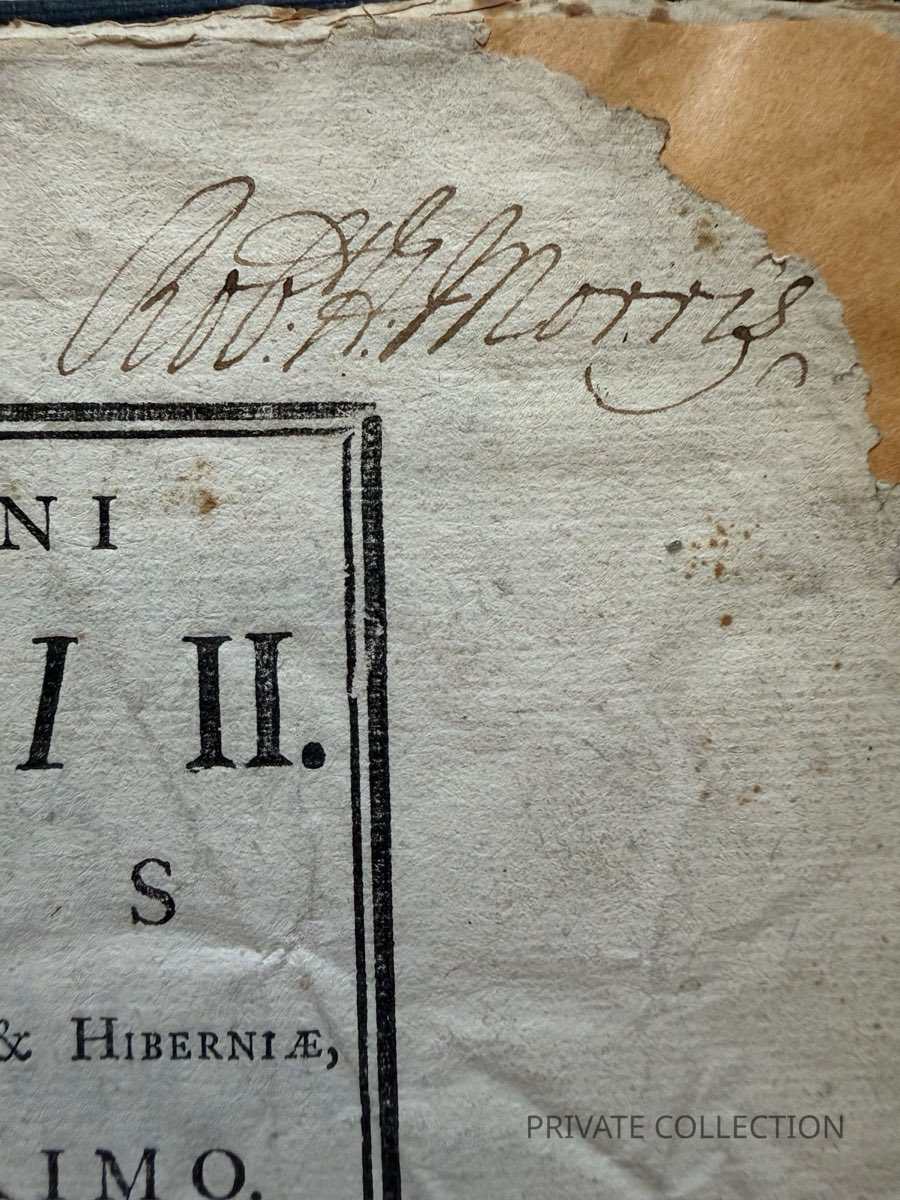
Anno Regni Georgii II … At a General Assembly of the Colony of New-Jersey, 1747
Sixteen acts, among them the pardon of the 'Clinker Lot Right Men' of the 1746 land riots and an Act in Support of the Government authorizing payment of the colony's printer — named in the text as B. Franklin. The last official printing Franklin did for New Jersey. In a custom slipcase.