
The Physician's Shelf
What a Philadelphia Doctor Read, 1719–1808
THE collection holds the books that stood on a Philadelphia physician's shelf in Rush's lifetime — not the famous ones only, but the working library: the herbal and the dispensatory, the treatise on army diseases and the manual of gunshot wounds, the surgery with plates, the report on animal magnetism, the poem on preserving health that Franklin printed for the trade. Two of them are firsts of a particular kind. The Pharmacopoeia Londinensis of 1720 is the first full-length medical book printed in the American colonies. John Jones's remarks on wounds and fractures, of 1775, is the first full-length medical book written in them.
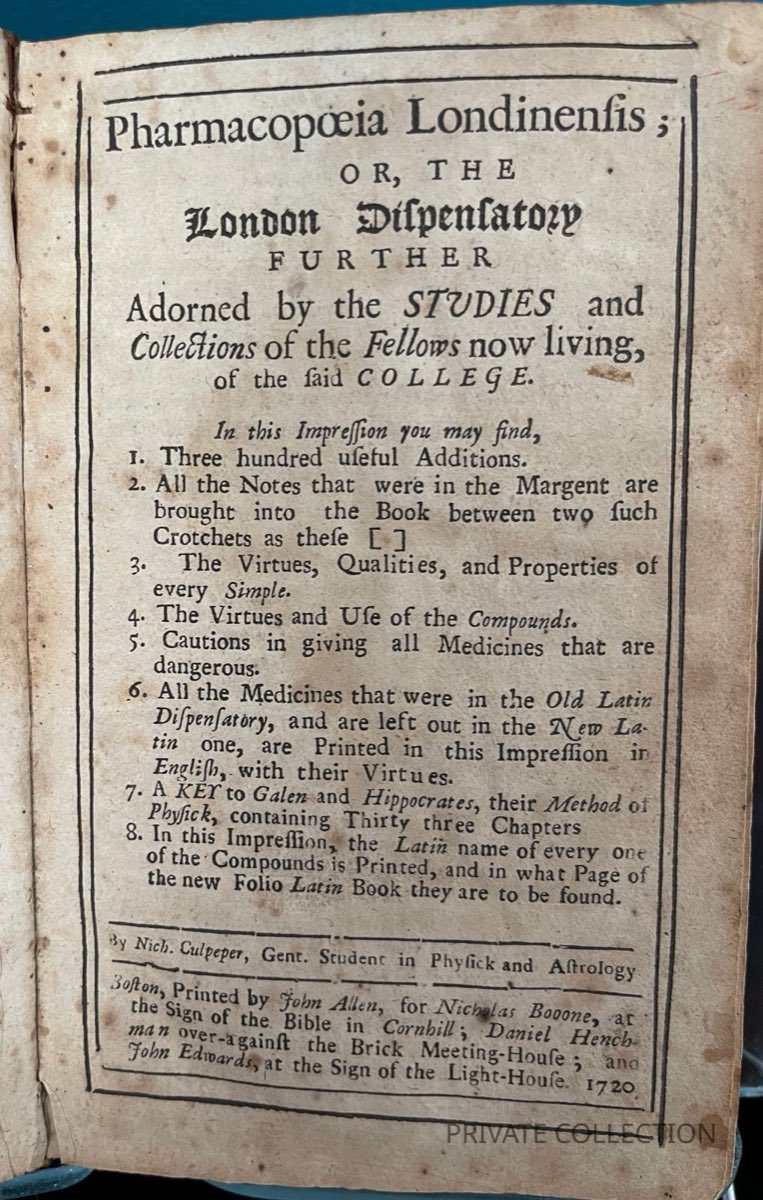
Pharmacopoeia Londinensis; or, The London Dispensatory
The first full-length medical book printed in the American colonies, and the first herbal printed in North America: Culpeper's English translation of the College of Physicians' pharmacopoeia, with his own irreverent notes, reissued in Boston for a country that had no physicians' college and few physicians. Rare in the trade — four copies traced in fifty years. The starting point of American medical printing, on the shelf a century later of a profession that had outgrown it.
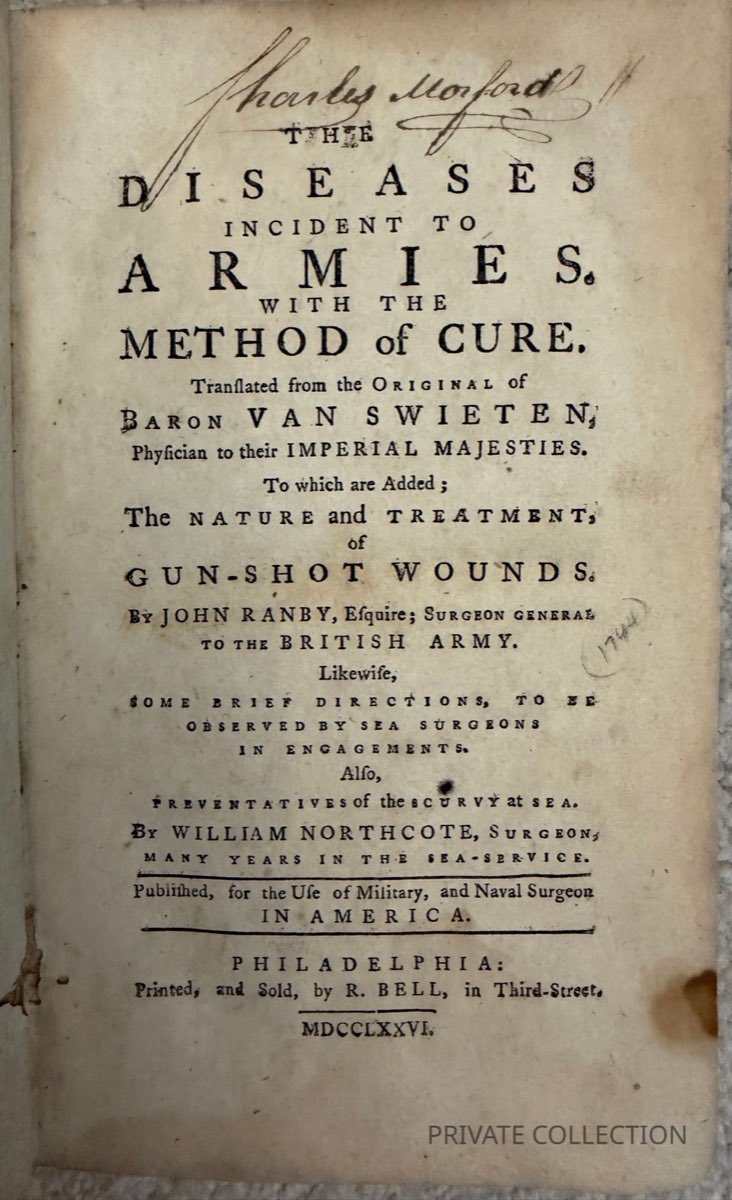
The Diseases Incident to Armies, with the Method of Cure … To Which Are Added, The Nature and Treatment of Gun-Shot Wounds … [with extracts from John Jones]
Bell's field manual for the surgeons of the new army, issued in the first year of the war: van Swieten on the diseases of armies, translated, with the treatment of gunshot wounds, directions for sea surgeons, and preventives of the scurvy, and with a separate title for extracts from John Jones's Plain Concise Practical Remarks on the Treatment of Wounds and Fractures of 1775 — the first full-length medical book written in the colonies. Jones, professor of surgery at King's College, was Rush's friend and colleague; the two names on this title, van Swieten's and Jones's, are the two poles of the collection's medical story.
The first medical book printed in the colonies, and the first written in them, a shelf apart.
The army made the surgeon. Sir John Pringle's Observations on the Diseases of the Army of 1752 — the collection holds the first edition beside the American edition Rush annotated in Chapter VI — laid down the sanitation of camps and hospitals that Rush would enforce as Surgeon General in 1777. William Hey's surgery, reprinted in Philadelphia with plates engraved by Benjamin Tanner, is the surgical text of the generation after; the treatise on gunshot wounds beside it passed through the hands of a Civil War surgeon.
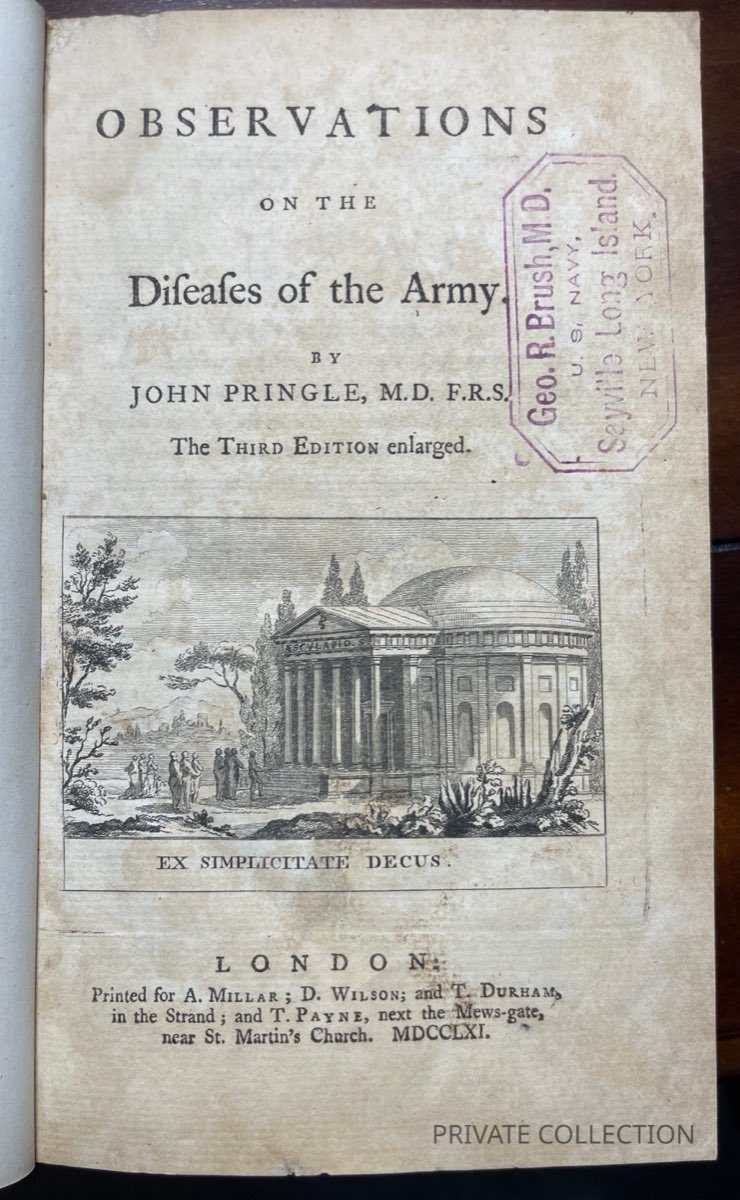
Observations on the Diseases of the Army in Camp and Garrison
The founding text of military medicine in its first edition: Pringle, physician-general to the British army in the 1740s, on the ventilation of barracks, gaols, hospitals, and ships, and on the fevers of camps. It was because of this book that foot soldiers were issued blankets. The collection holds it in the edition Rush read as a student and in the edition he edited (Chapter VI).
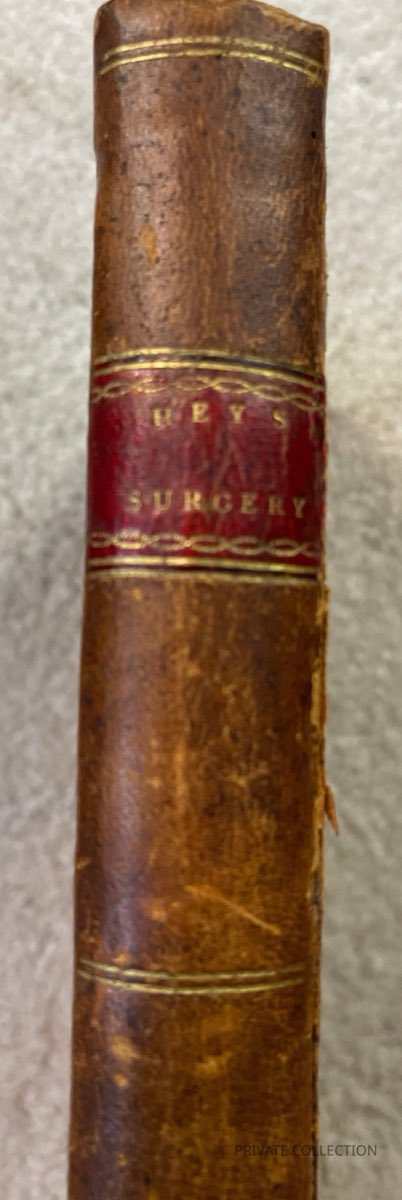
Practical Observations in Surgery, Illustrated with Cases and Plates
The Leeds surgeon's casebook — the operation for hernia, the excision of the knee, the treatment of fractures — in its first American edition, and the first edition with plates by an American engraver. Contemporary tree calf; an excellent copy of an early American surgical text.
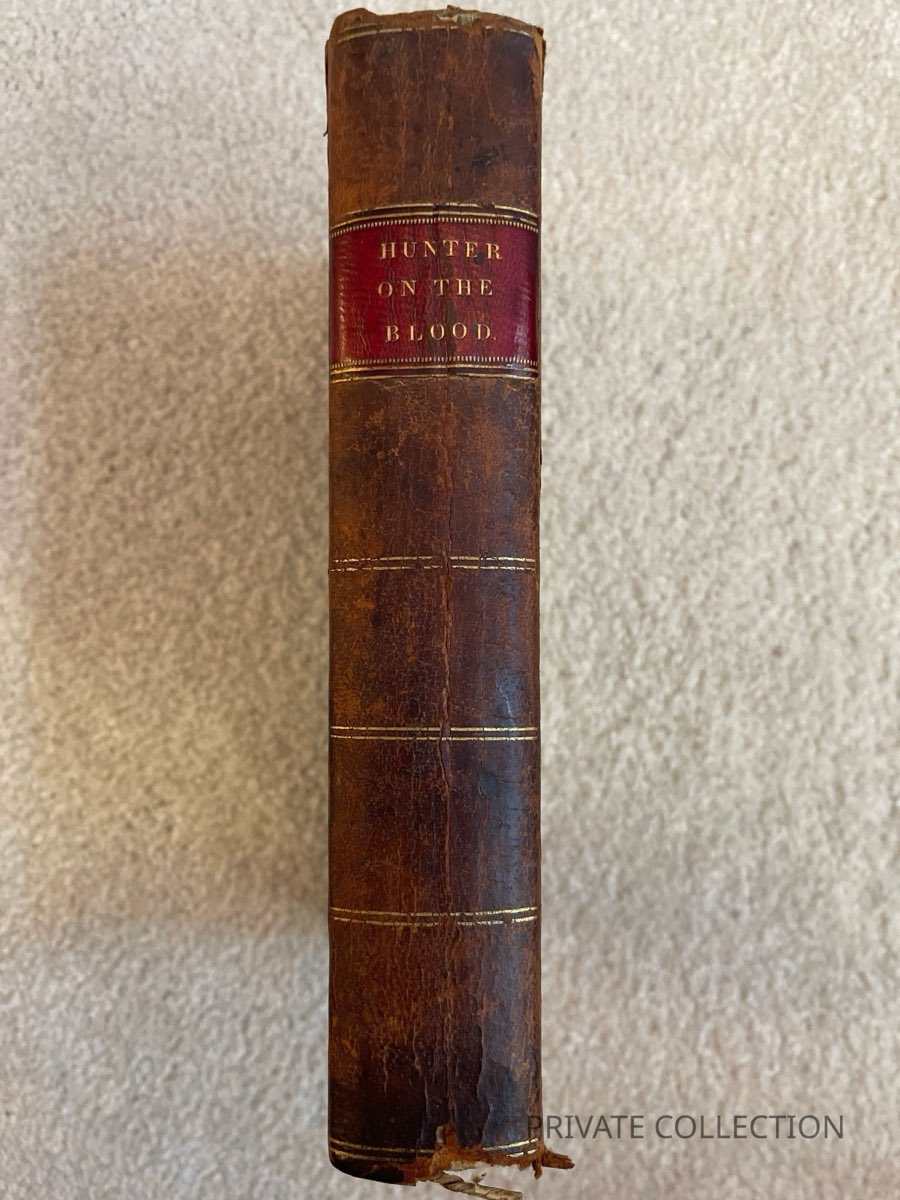
A Treatise on Diseases of the Blood and Gun-Shot Wounds
A treatise on the blood and on gunshot wounds, inscribed to Madison Mills, M.D., by a physician whose signature has not been deciphered. Mills served as a surgeon in the Civil War; the book is the surgeon's shelf carried forward two generations from Bell's manual of 1776.
The materia medica was the physician's other science, and Philadelphia made it American. Benjamin Smith Barton, Rush's colleague at the University, collected the native plants into the first American materia medica in 1798 and kept enlarging it; Samuel Stearns's American Herbal of 1801 did the same for New England, and an apothecary's manuscript recipe book of 1808 shows what a working pharmacist actually compounded. Behind them stands Samuel Garth's Dispensary, the mock-epic of physicians against apothecaries that every eighteenth-century doctor knew by heart, and John Armstrong's Art of Preserving Health, the medical poem Franklin thought worth reprinting in 1745.
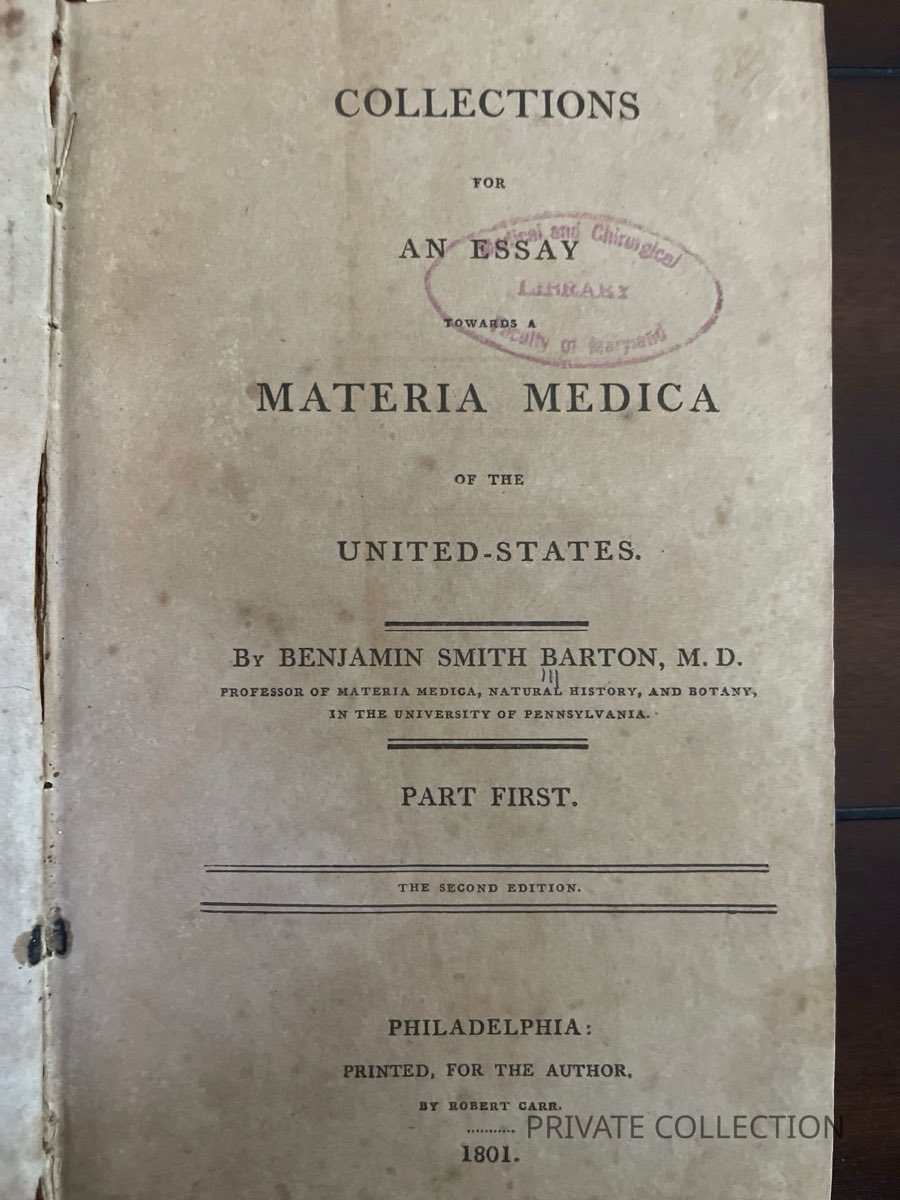
Collections for an Essay Towards a Materia Medica of the United States
Barton's native materia medica in its enlarged form — 'basically a different book,' as he says in the preface, from the first parts of 1798 and 1801–04. Barton held the chair of materia medica, natural history, and botany at the University beside Rush; his Collections are the first systematic attempt to make an American pharmacopoeia out of American plants. Scarce imprint.
Collections for an Essay Towards a Materia Medica of the United States, Parts First and Second — bound with Rush's Six Introductory Lectures
Barton's first and second parts bound by a contemporary owner with Rush's Six Introductory Lectures of the same year: the two Philadelphia professors a student would have heard in the same term, kept in one volume as he kept them.
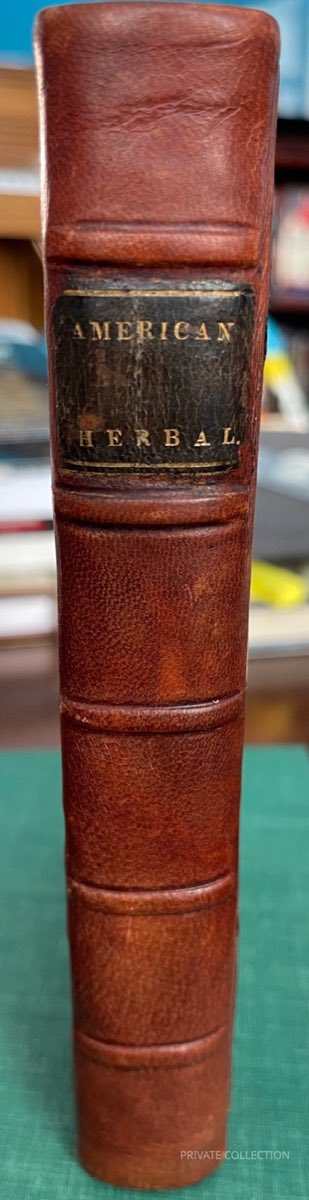
The American Herbal, or Materia Medica
A very rare early American work of medical botany: the virtues of the mineral, vegetable, and animal productions of North and South America 'so far as they are known,' by the astronomer and almanac-maker Samuel Stearns. The New England answer to Barton's Philadelphia project, published the same year.
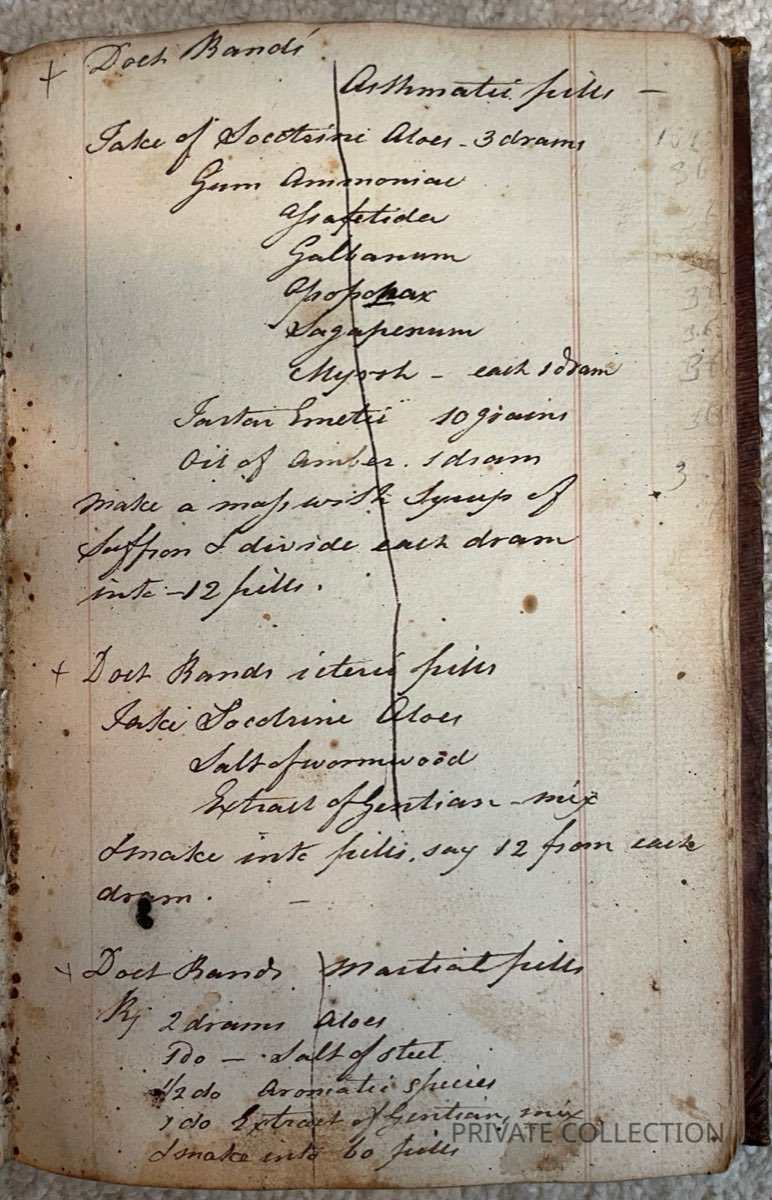
Manuscript Recipe Book of Medicines Not Included in the First Massachusetts Pharmacopoeia
The working formulary of Ephraim Eliot, first president of the Massachusetts Pharmaceutical Society: the medicines a Boston apothecary compounded that the new pharmacopoeia of 1808 left out, written recto and verso and ruled through as they were used. Contemporary full leather. The materia medica as it was practised rather than printed.
The Dispensary: A Poem, in Six Cantos
Garth's mock-Homeric war between the physicians and the apothecaries over the London dispensary for the poor, first circulated in 1699 and reprinted for a century — Harvey summoned from the Elysian fields in the sixth canto to settle it. The physician's satire on his own profession, on the shelf of a Philadelphia doctor who had founded a dispensary himself.
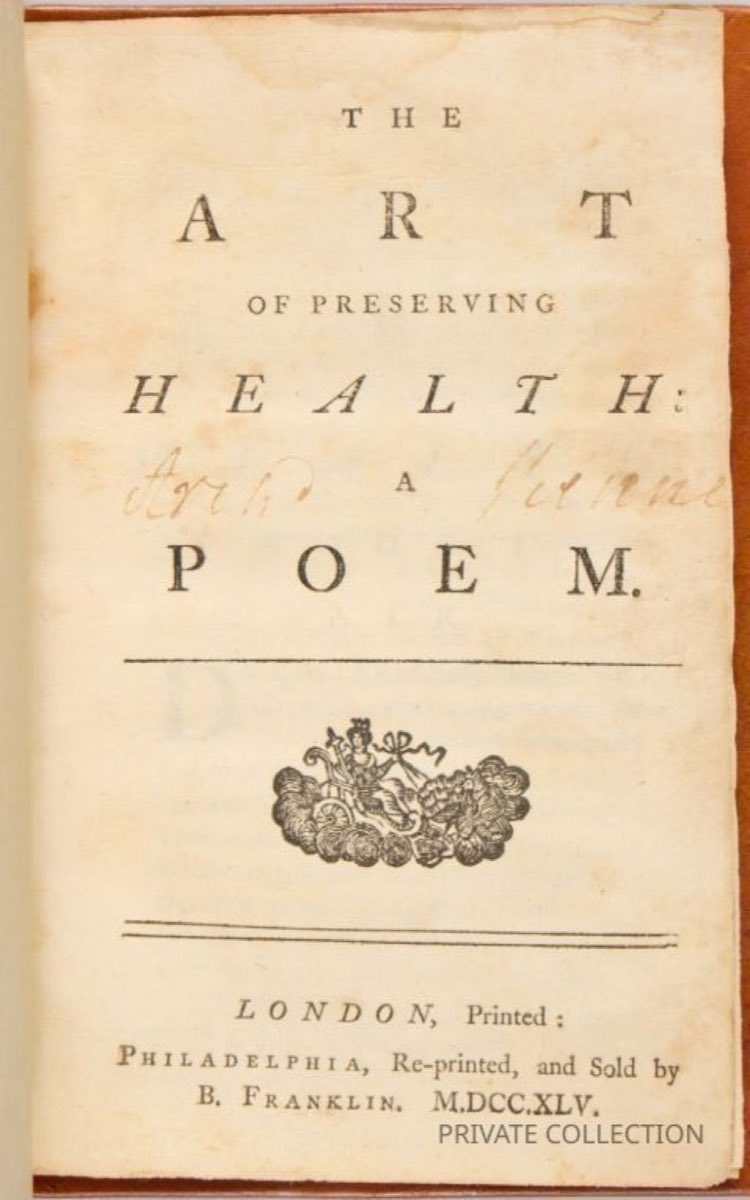
The Art of Preserving Health: A Poem
Armstrong's blank-verse treatise on air, diet, exercise, and the passions — the most popular medical poem of the century — reprinted by Franklin the year he printed Cadwalader's Dry-Gripes. Complete with all four section titles and Franklin's woodcut ornaments. Medicine as a gentleman's reading, from the press that also printed it as a science.
Two more things a Philadelphia physician of the 1780s read. In 1784 Louis XVI appointed a royal commission — Franklin, then minister at Passy, presiding — to examine Mesmer's animal magnetism, and its reports destroyed the doctrine in a season; the collection holds the pamphlets of that inquiry in their original wrappers. And the Medical Repository, the first American medical journal, founded in New York in 1797, in which Rush, Physick, Bartram, and Ramsay all published, and whose editor Mitchill received the letter on the 'tories in medicine' that appears in Catalog V.
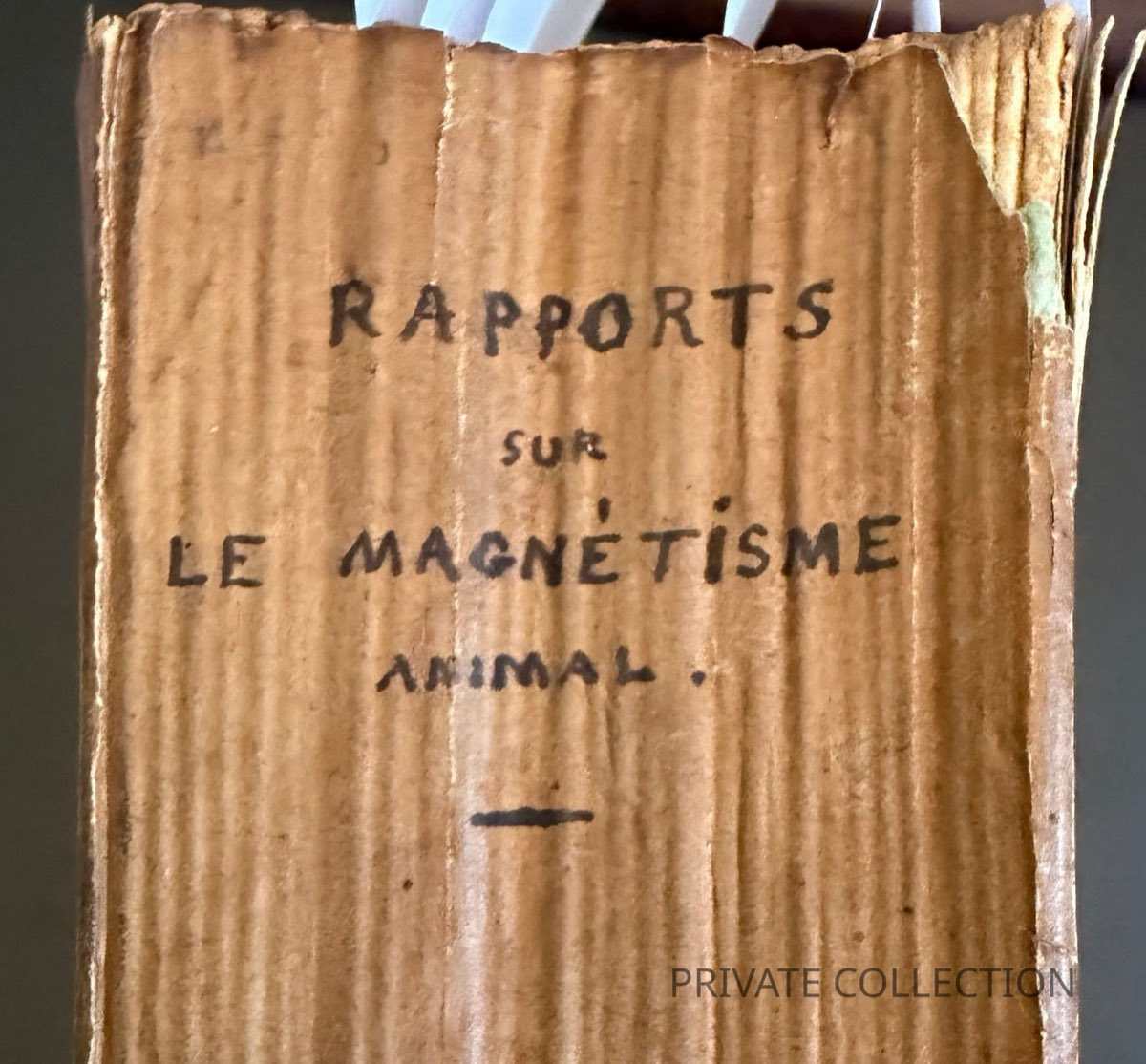
Sammelband of Pamphlets on Animal Magnetism: the Royal Commission of 1784
The pamphlets of the two commissions Louis XVI appointed in 1784 to investigate Mesmer's 'magnetic fluid' — the first of them chaired by Benjamin Franklin, with Lavoisier and Guillotin among its members — which found no fluid and attributed the cures to imagination. The first controlled trial in the history of medicine, in the pamphlets that reported it, and Franklin's last scientific act.
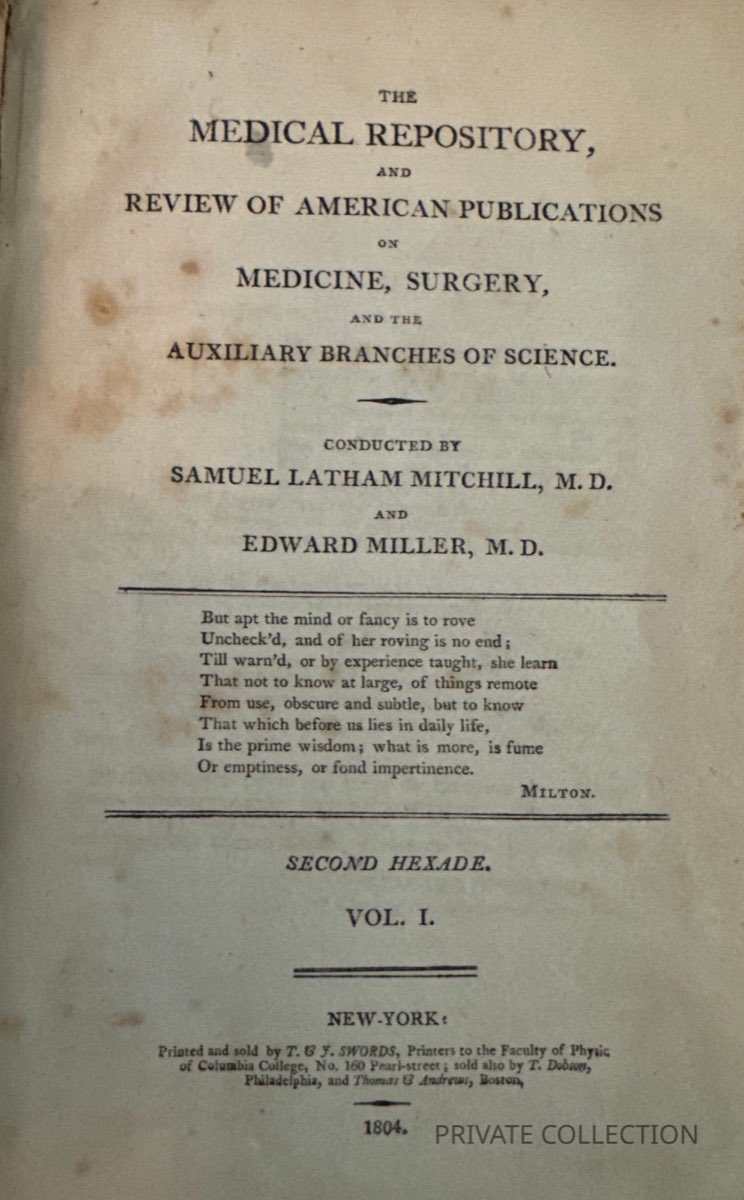
The Medical Repository, Second Hexade, Volume I
The first American medical journal, in a volume containing articles by William Bartram, Philip Syng Physick, Benjamin Rush, David Ramsay, John Redman Coxe, and William Patterson, and a eulogy of Joseph Priestley. The Philadelphia medical world writing for the nation.
Medical Sketches, in Two Parts
John Moore's essays on the practice of medicine, in a copy signed on the title page by Charles Cotesworth Pinckney — the South Carolina signer of the Constitution and twice Federalist candidate for president. A statesman's medical reading, from the generation that read medicine as general literature.
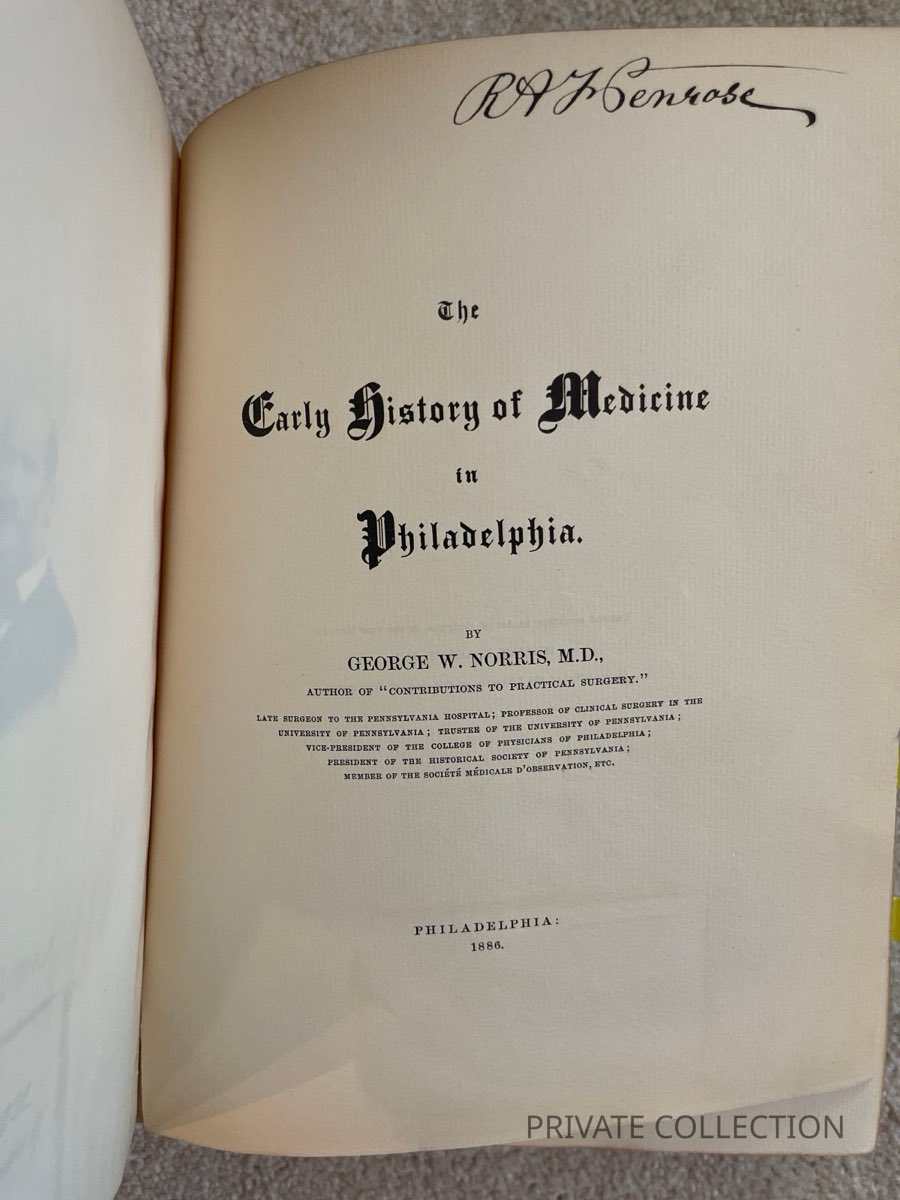
The Early History of Medicine in Philadelphia
The first history of the subject of this catalog, by the son of a Philadelphia physician, in an edition of 125 copies. Norris's book is where the story told here was first told; the collection holds it as the shelf's last volume.