
The Repeal
Franklin before the Commons, and the Night Boston Lit the Tree, 1766
ON February 13, 1766, Benjamin Franklin stood at the bar of the House of Commons for four hours and answered a hundred and seventy-four questions about America. Many had been planted by friends; the hostile ones he turned. Asked whether the colonies could pay the tax, he explained that they could not. Asked whether they would submit to a modified one, he said they would not. Asked what would happen if a military force were sent to enforce it, he gave the answer that was printed and reprinted from London to Charleston and that this catalog takes as its motto: 'They cannot force a man to take stamps who chuses to do without them. They will not find a rebellion; they may indeed make one.'
Five weeks later the Act was repealed. Parliament saved its face with a Declaratory Act, passed the same day, asserting its right to bind the colonies 'in all cases whatsoever' — the clause that would be remembered when the celebrations were over. The collection holds the repeal as Parliament printed it, and the print that London bought by the thousand to laugh at it.
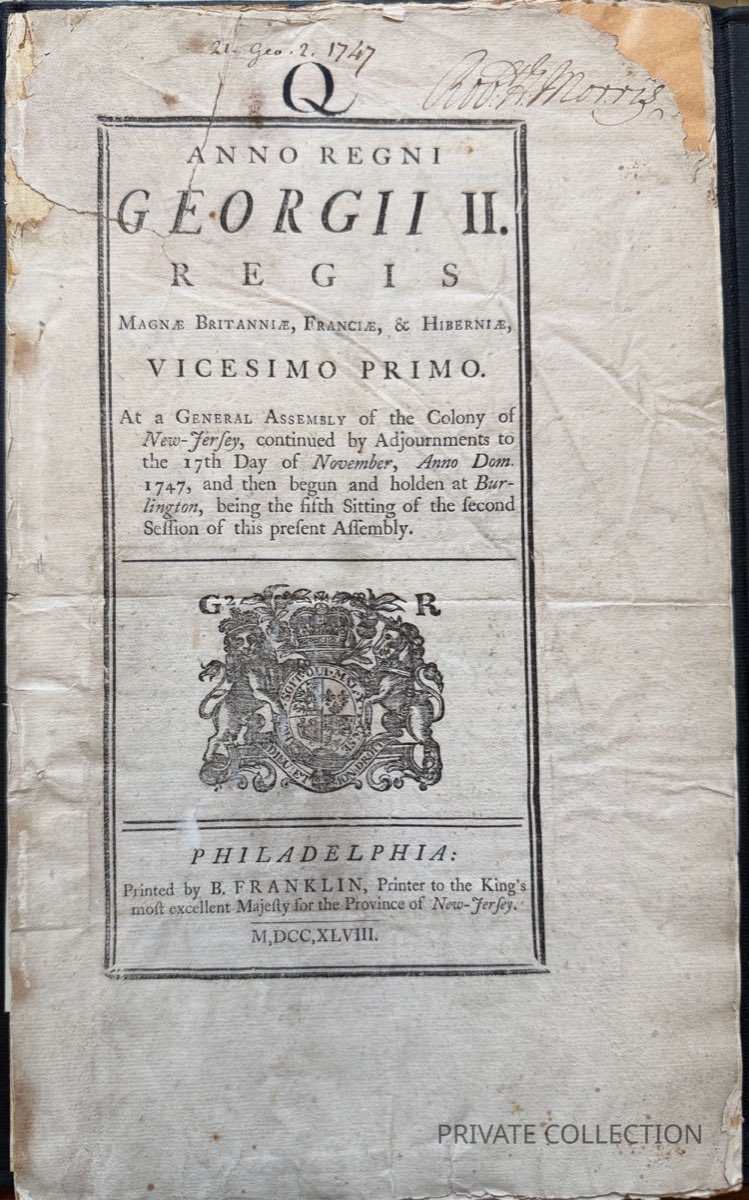
Anno Regni Georgii III … An Act to Repeal an Act … for Granting and Applying Certain Stamp Duties … in the British Colonies and Plantations in America
The repeal, as enacted: the official folio printing of the Act that undid the Stamp Act, pages 243–244 of the session, with its printed cover. A fine copy in a custom clamshell case. The Declaratory Act that accompanied it is the reason the celebration in the next chapter was premature by ten years.
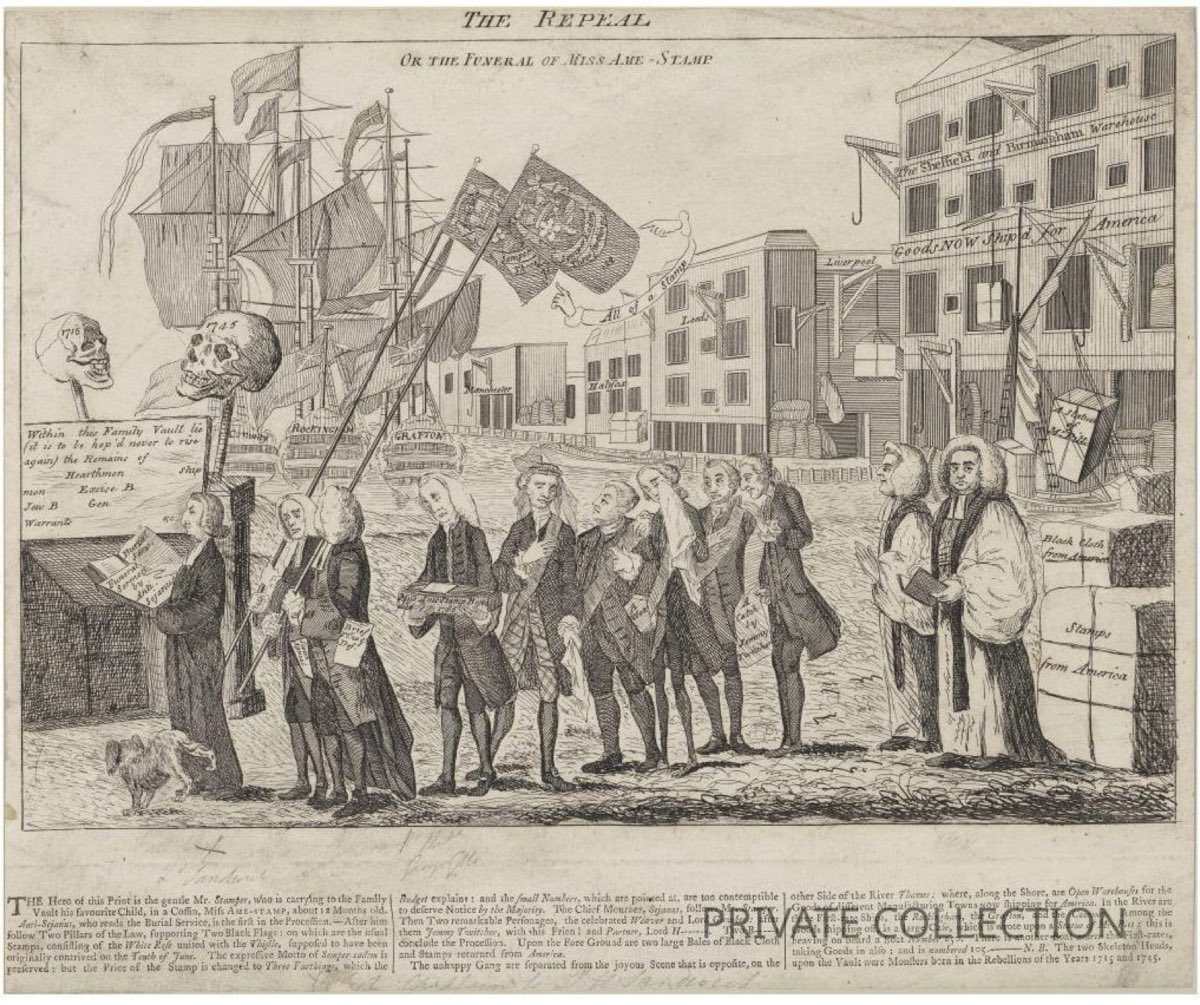
The Repeal, or the Funeral of Miss Americ-Stamp
'One of the most famous and popular political satires commenting on the Stamp Act' (Dolmetsch). Grenville carries the child's coffin of the Act to the family vault while Bute and the bishops mourn; in the harbor behind them, ships loaded with the goods America had refused prepare to sail. Wilson was a painter, an electrical experimenter, and Franklin's friend and rival; his print sold thousands in a fortnight and was pirated at once.
The news reached Boston in May, and the town hung lanterns in the great elm at the corner of Essex and Orange streets that had been, since the previous August, the Liberty Tree. The Boston Gazette of May 19 described the illumination: the tree strung with lanterns, an obelisk of oiled paper lit from within on the Common, its four sides painted with the story of the Act and its repeal, fireworks and church bells until midnight. The obelisk burned before the night was out. The collection holds one of the lanterns, and the only record of what the obelisk looked like.
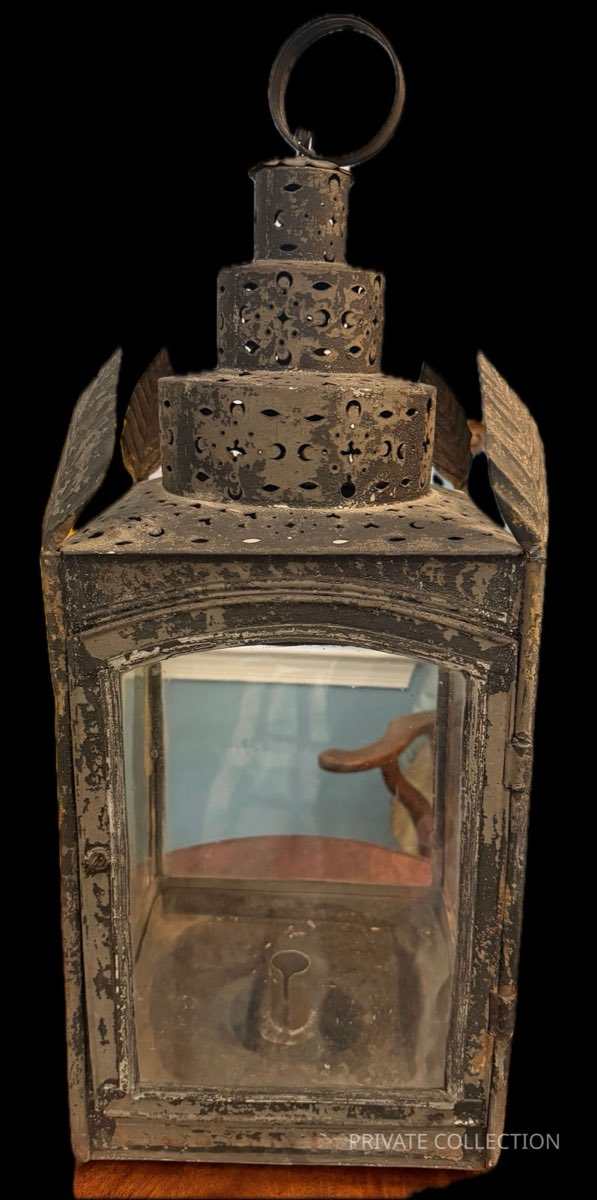
Liberty Tree Lantern
A glass lantern with elm-leaf finials that hung on Boston's Liberty Tree in the illumination for the repeal of the Stamp Act. A very rare surviving lantern, expert-examined; the finials refer to the tree itself. It is the single most evocative object in the collection, and the one visitors ask to see first.
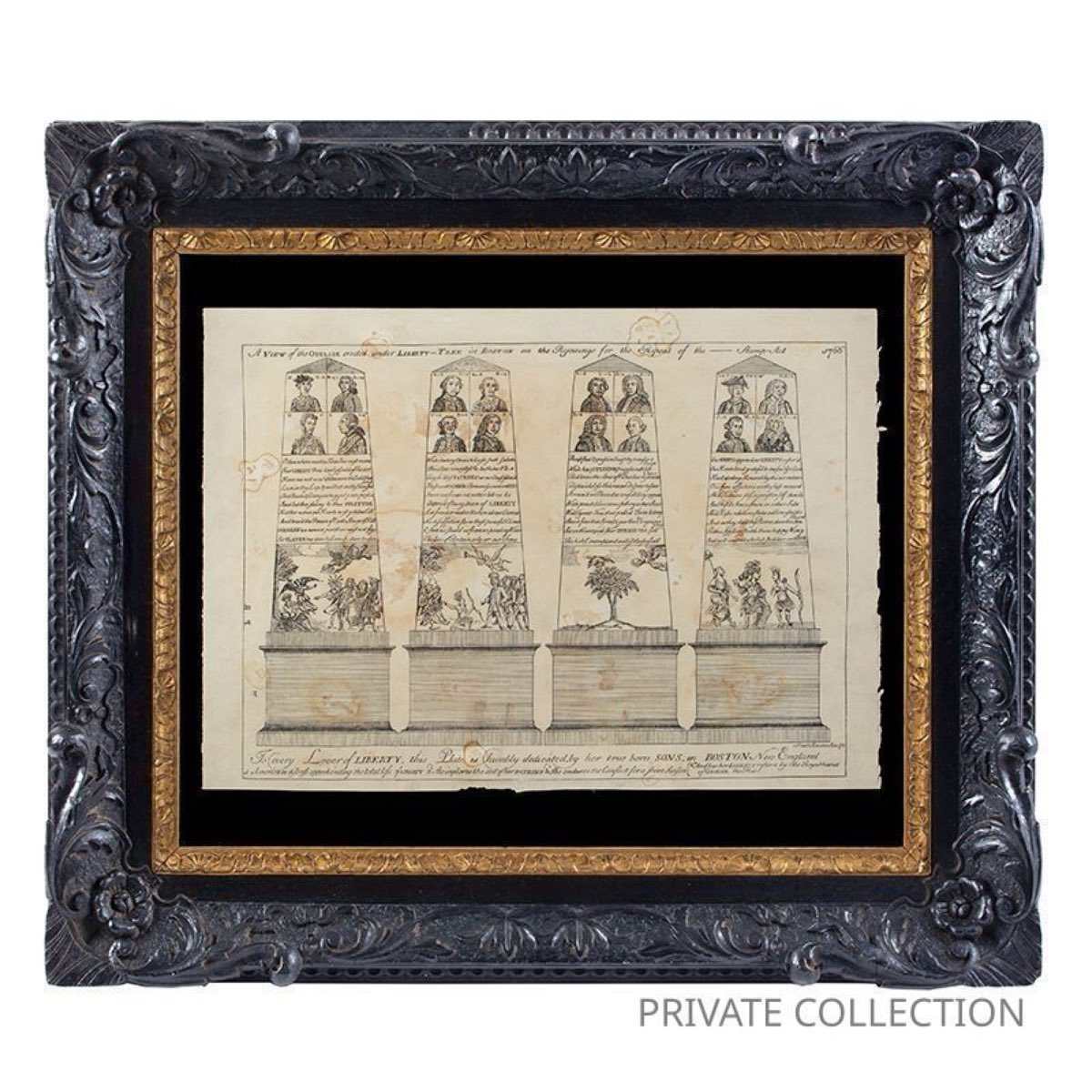
A View of the Obelisk Erected under Liberty-Tree in Boston on the Rejoicings for the Repeal of the Stamp Act
Revere's engraving of the four painted sides of the paper obelisk lit on the Common on the night the lantern hung in the tree — Revere reportedly helped decorate it. Only one impression from Revere's own day survives, at the American Antiquarian Society; the plate is at Harvard, and this impression was pulled from it in 1881 by Child & Crane. From the Winfield Robbins print collection. The two objects belong to a single evening.
The obelisk burned before the night was out. The lantern did not.