
The Assembly, the Stamp, and the Lantern
Franklin in Politics, 1764–1776
IN the winter of 1763–64 a band of Scots-Irish frontiersmen from Paxton township murdered twenty Conestoga Indians under the protection of the Pennsylvania government, and then marched on Philadelphia to finish the job. Franklin met them at Germantown with a delegation and talked them into going home. It was the beginning of the most bitter year in Pennsylvania politics. The Paxton affair became a proxy war between the Assembly, which Franklin led, and the Proprietors, whom he had come to despise. By the autumn Franklin had lost his Assembly seat in a savage election and been sent to London to petition for the province to be taken from the Penns and made a royal colony.
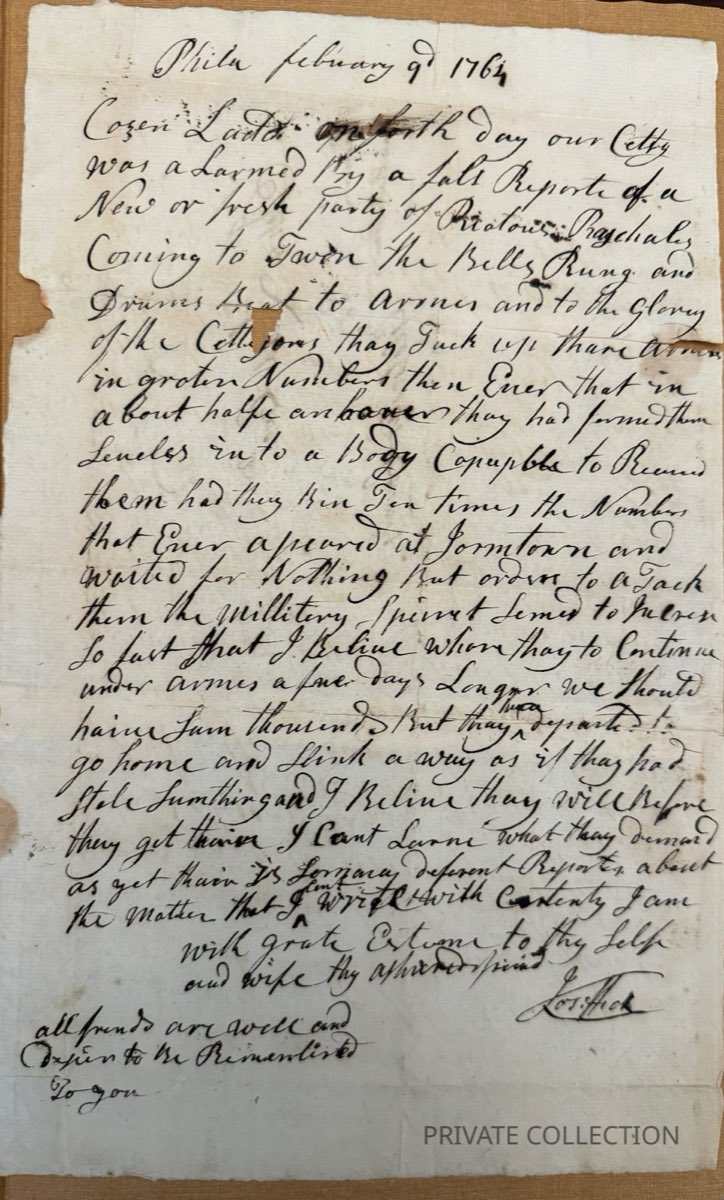
[The Paxton Boys] An Eyewitness Report on the Paxton Massacre
An eyewitness account, in a single folio sheet, of the frontier rising that opened the crisis of 1764. Franklin's own Narrative of the Late Massacres was the Assembly party's answer; this is the raw material it answered. Housed in a custom morocco-backed slipcase.
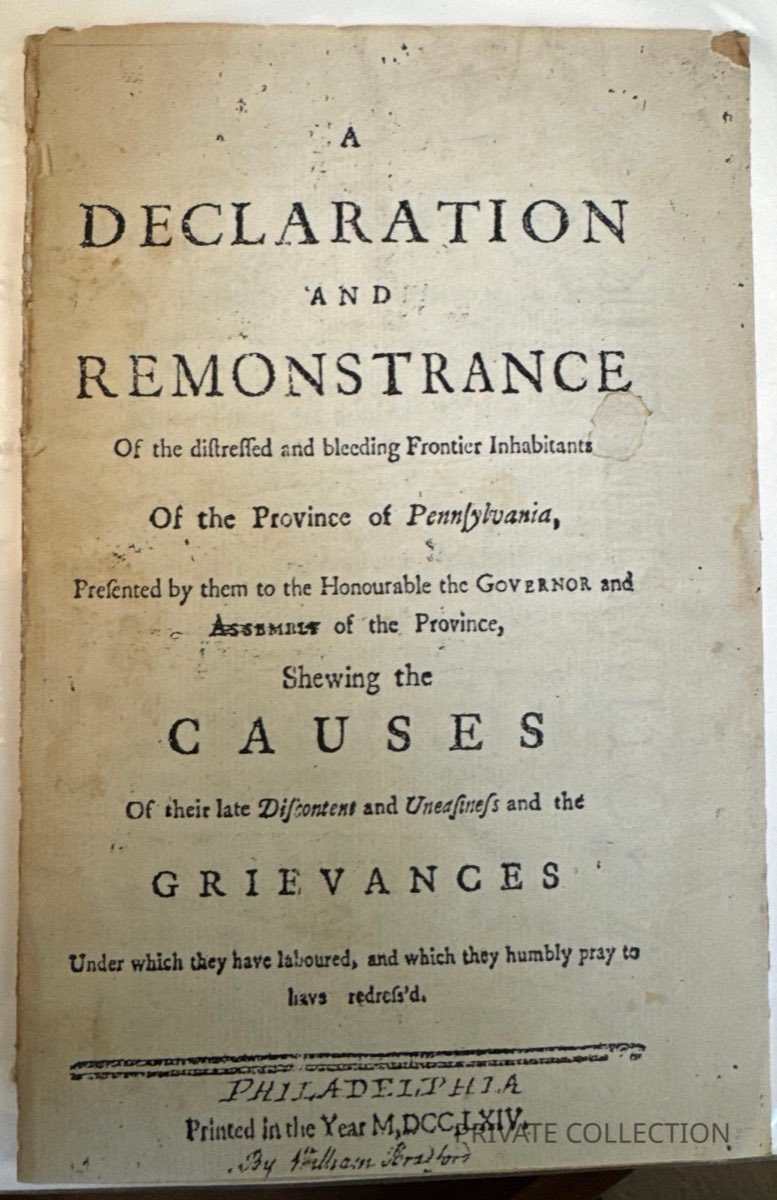
A Declaration and Remonstrance of the Distressed and Bleeding Frontier Inhabitants of the Province of Pennsylvania
The Paxton men's own statement of grievances, presented to the Assembly after Franklin turned them back at Germantown. It attacks the Quaker Assembly's protection of Indians and its indifference to the frontier — the argument that would cost Franklin his seat in October.
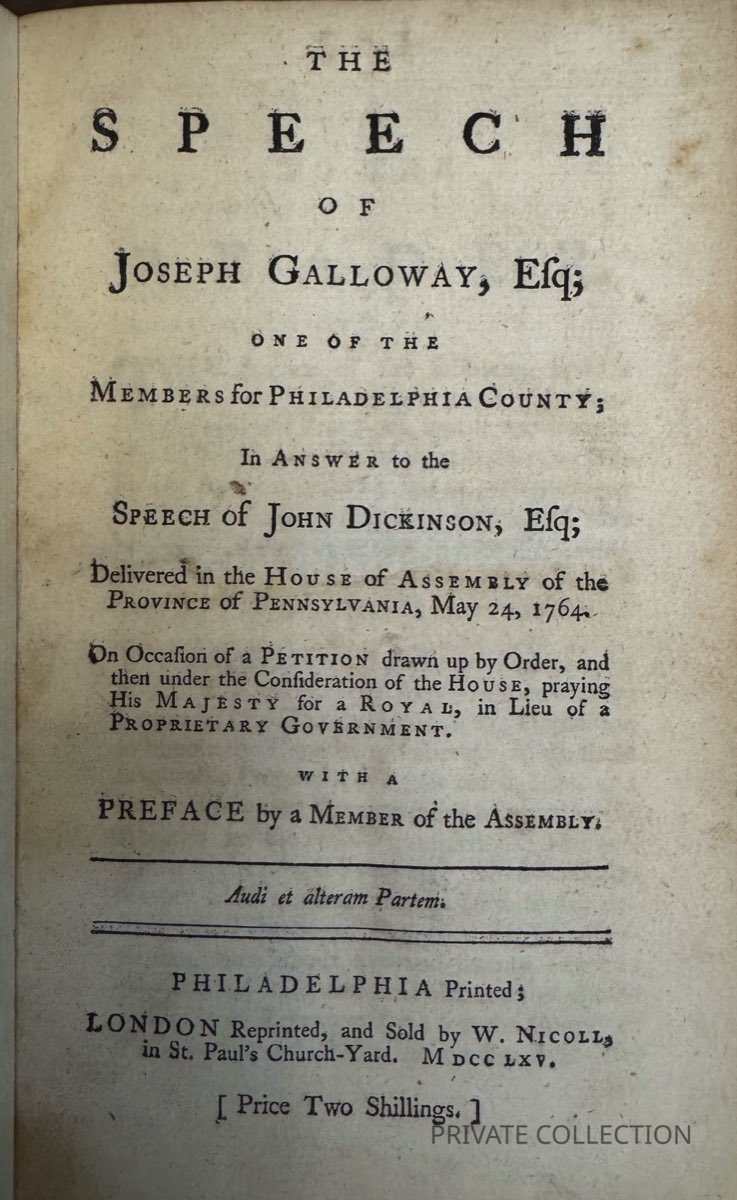
The Speech of Joseph Galloway, Esq.
Galloway's Assembly speech of May 1764 in favour of royal government, printed with a preface by Franklin that was, in effect, his manifesto against the Proprietors. Galloway was Franklin's closest political ally in these years; a decade later he would be a Loyalist and Franklin would never speak to him again.
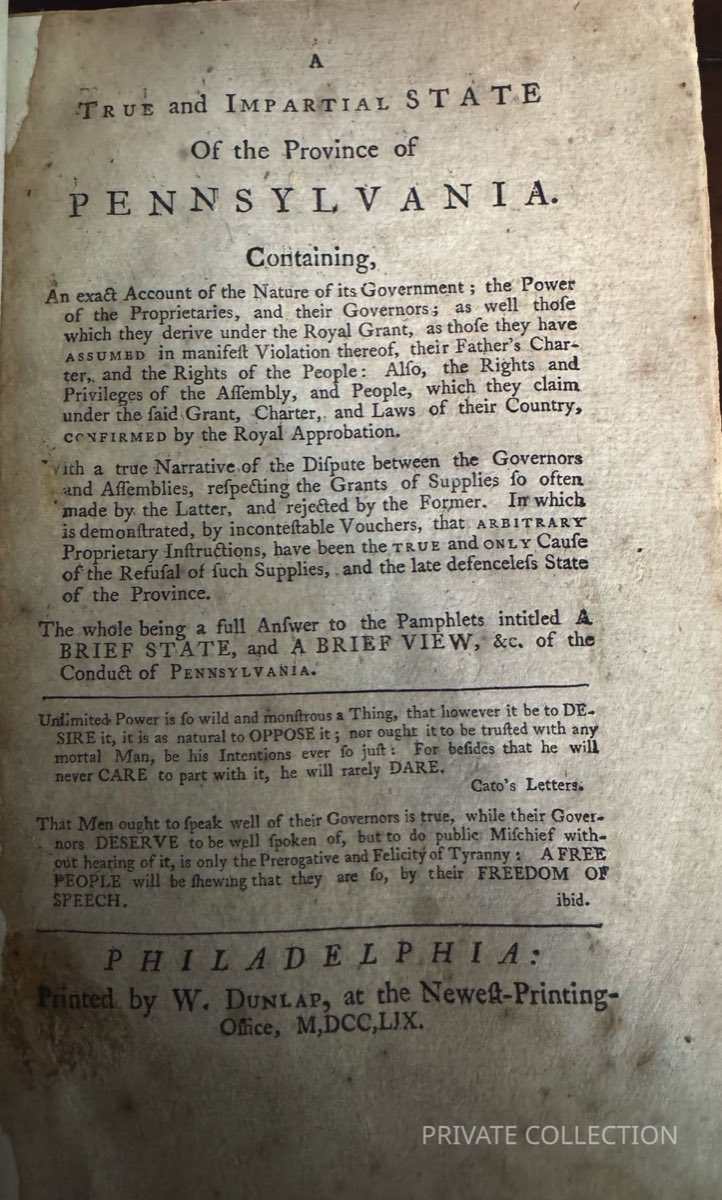
A True and Impartial State of the Province of Pennsylvania
The Assembly party's case against proprietary government, attributed by contemporaries to Franklin, to Galloway, or to both. Whoever held the pen, the argument is Franklin's: that the Penns taxed the province while exempting their own estates and treated the Assembly as a nuisance. It is the political ground on which the fight of 1764 was fought.
Franklin reached London in December 1764 to find Parliament preparing something far larger than a Pennsylvania quarrel. The Stamp Act, passed the following March, laid a tax on every legal document, newspaper, almanac, and pack of cards in the colonies, to be paid with embossed stamps from London. Franklin, who thought resistance futile, recommended a friend for the Philadelphia stamp distributorship and nearly lost his house to a mob for it. Then, as the colonies exploded, he found his footing. In February 1766 he stood for four hours before the House of Commons and answered a hundred and seventy-four questions, and his examination — printed, reprinted, and read everywhere — did more than any other single document to bring the Act down.
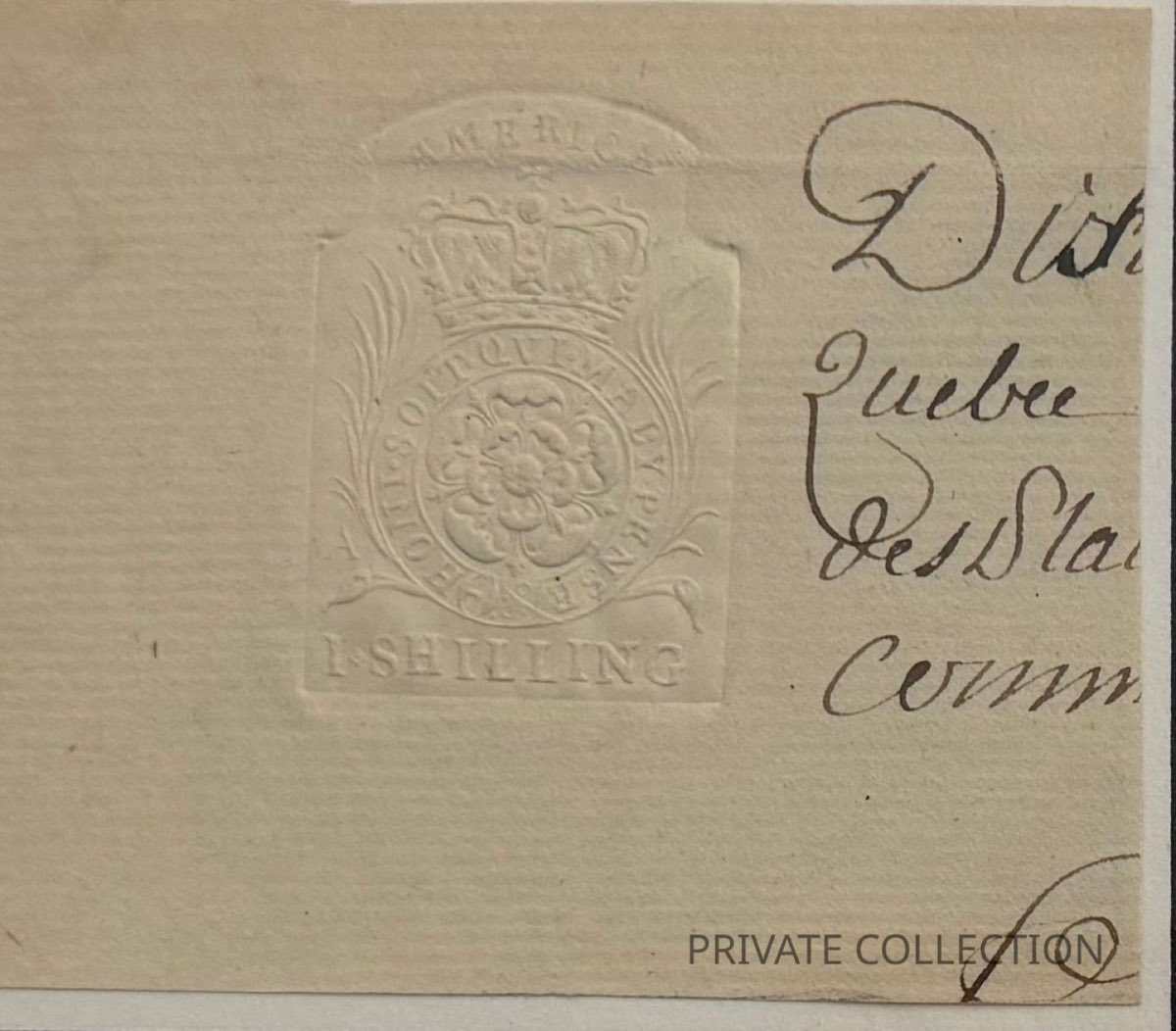
American Tax Stamp, One Shilling
The thing itself: an embossed revenue stamp of the one-shilling denomination, one of approximately twenty examples known. The Act required these to be impressed on the paper of colonial documents; almost none were ever used, because almost no colonist would touch them. Scarcer than any Franklin imprint in the collection.
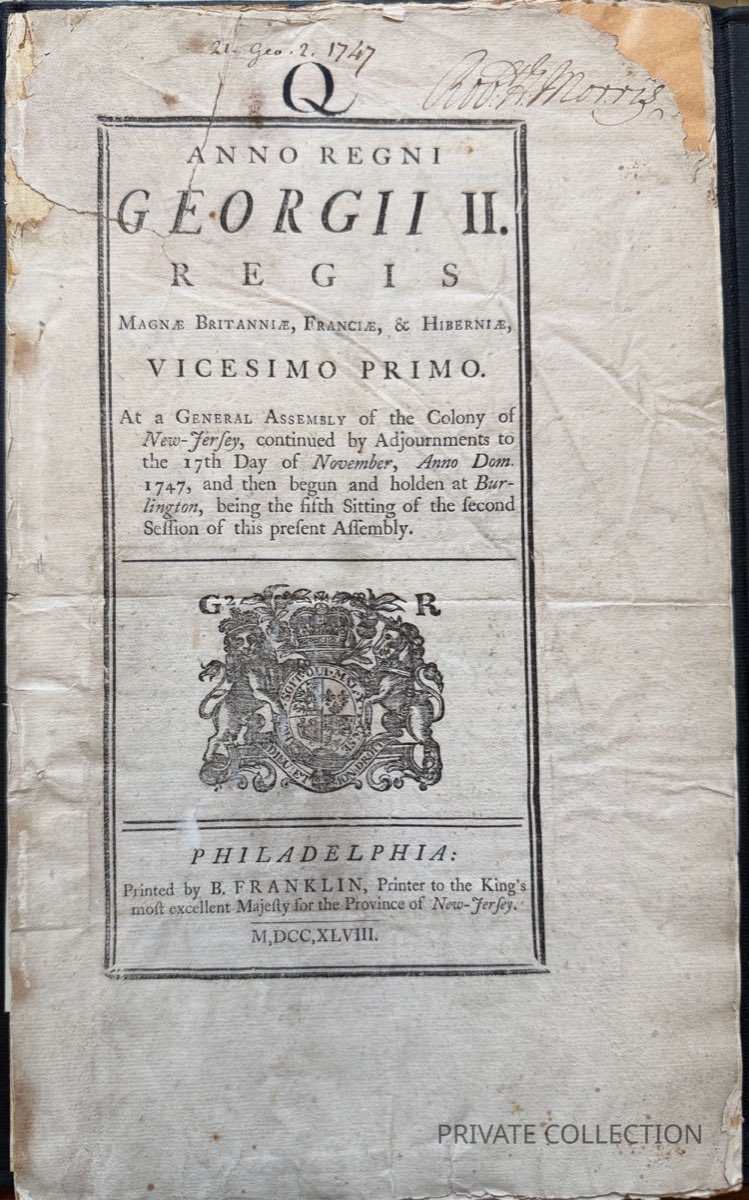
Anno Regni Georgii III: An Act to Repeal an Act … for Granting Certain Stamp Duties
The repeal, as enacted, in the official session printing. The Act's single clause undid the Stamp Act; the Declaratory Act passed the same day reserved Parliament's right to bind the colonies 'in all cases whatsoever,' and the collection's copy is a reminder that the celebration of 1766 was premature by a decade.
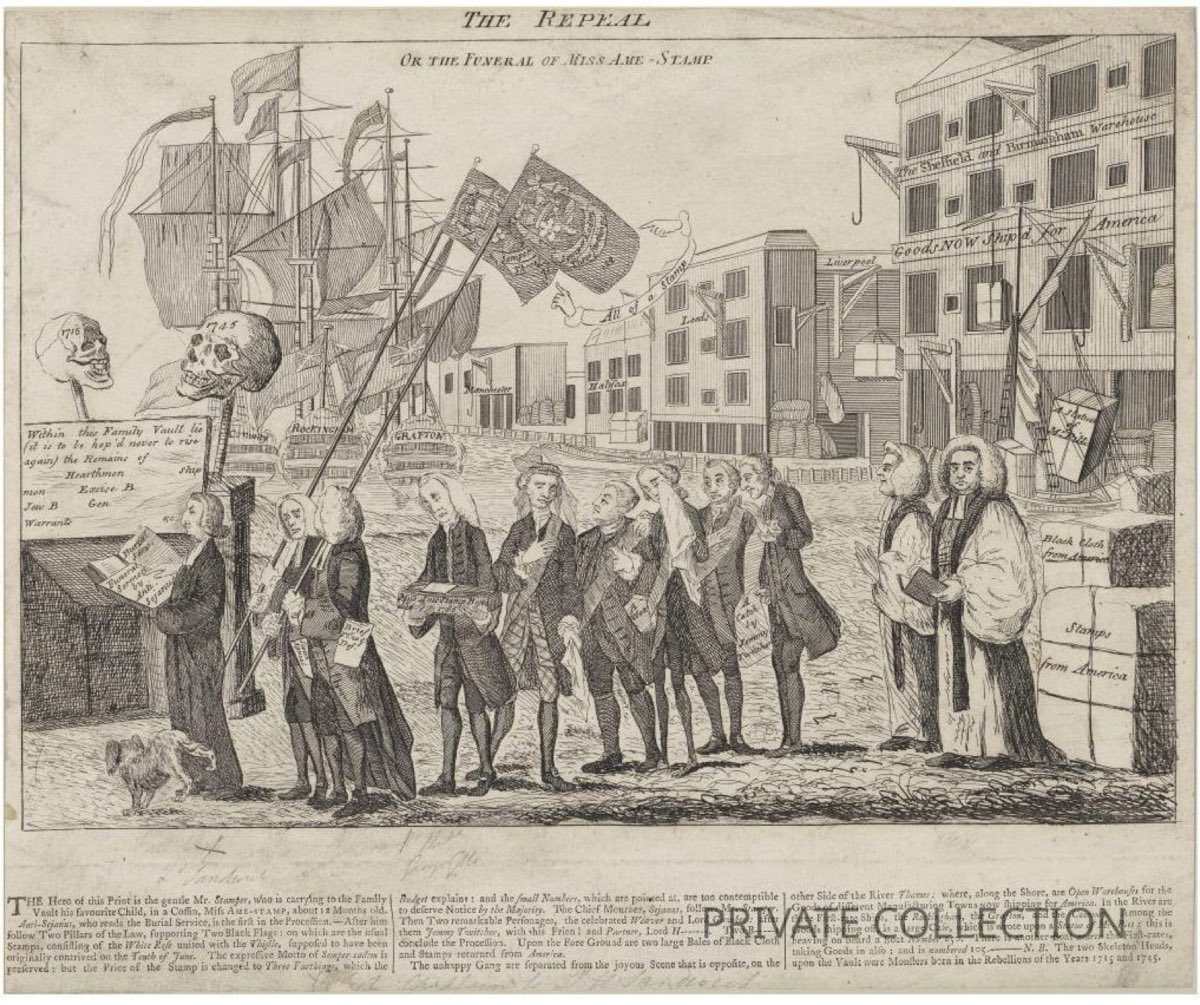
The Repeal, or the Funeral Procession of Miss Americ-Stamp
The most famous satirical print of the crisis. Wilson, a painter and Franklin's friend and electrical rival, shows the Act's supporters carrying a child's coffin to a vault while ships in the background prepare to sail for America with the trade the repeal has restored. It sold thousands in a fortnight and was pirated at once; the collection's impression is one of the early states.
Almost none of the stamps were ever used, because almost no colonist would touch them.
The news reached Boston in May 1766, and the town hung lanterns in the great elm at the corner of Essex and Orange streets that had become, since the previous August, the Liberty Tree. The illumination was one of the great public celebrations of the colonial era: the tree strung with lanterns, an obelisk of oiled paper lit from within on the Common, fireworks and church bells until midnight. Very few of the lanterns survive. One of them is in Wynnewood.
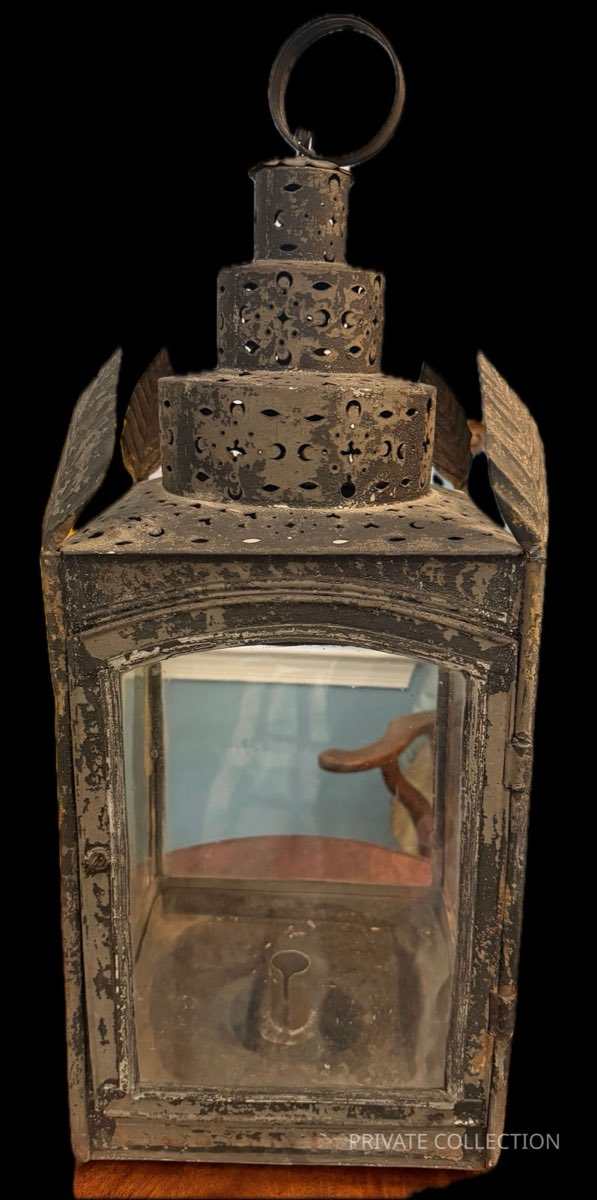
Liberty Tree Lantern
A glass lantern with elm-leaf finials that hung on Boston's Liberty Tree in the illumination for the repeal of the Stamp Act. A very rare surviving lantern, expert-examined; the elm-leaf finials refer to the tree itself. It is the collection's single most evocative object, and the one visitors ask to see first.
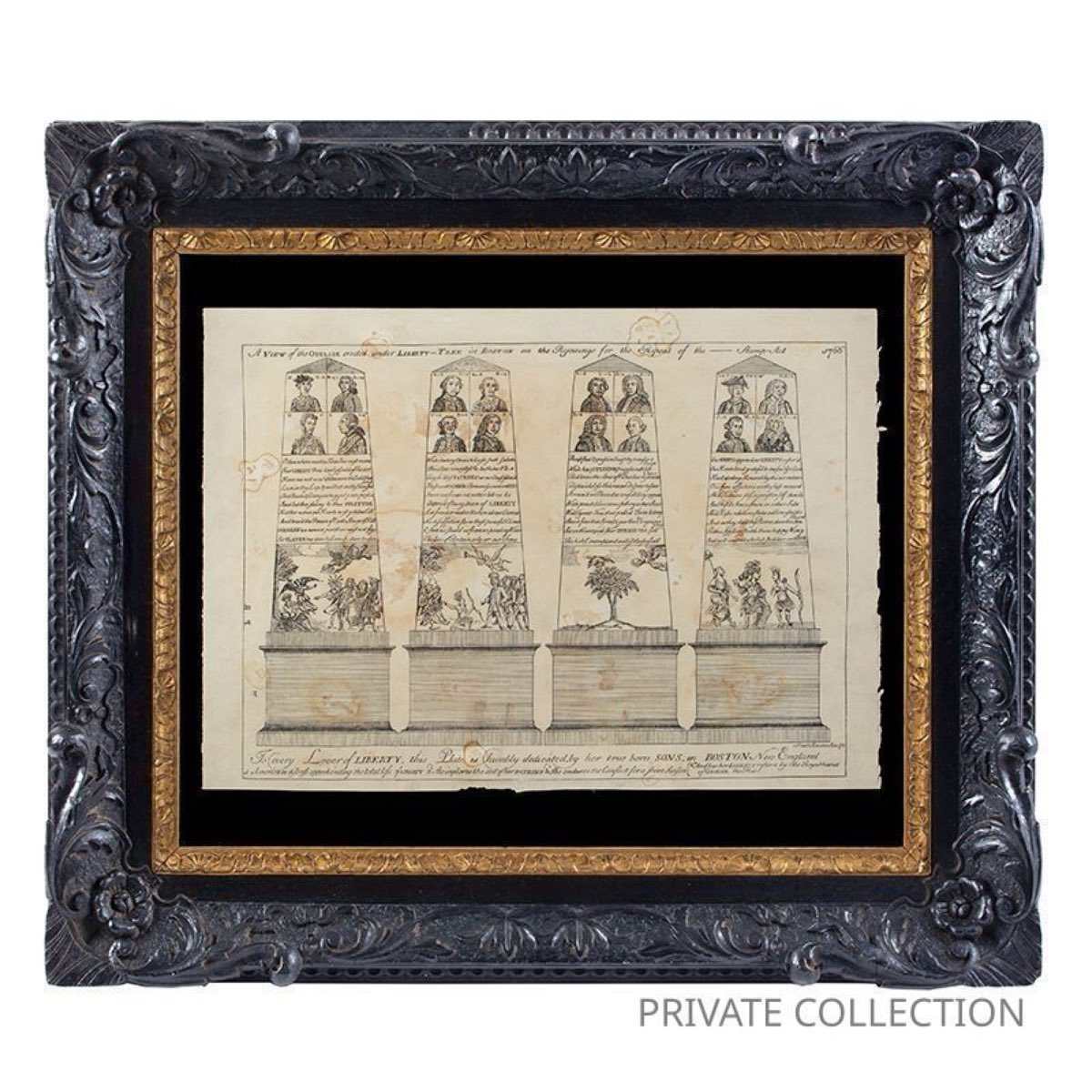
A View of the Obelisk Erected under Liberty-Tree in Boston on the Rejoicings for the Repeal of the Stamp Act
Revere's engraving of the paper obelisk lit on the Common the same night the lantern hung in the tree — the two objects belong to one evening. The obelisk itself burned before the celebration was over; Revere's plate, which he reportedly helped design, is the only record of what it looked like.
The reprieve lasted a year. The Townshend duties of 1767, the soldiers in Boston in 1768, the shooting in King Street in March 1770 — the collection follows the road from repeal to revolution through the documents that carried the news. Franklin, still in London as agent for four colonies, watched it all and wrote home; his son William, royal governor of New Jersey, watched it from the other side and chose the King. Two of William's letters are here, and the contrast between father and son is the quiet tragedy of the chapter.
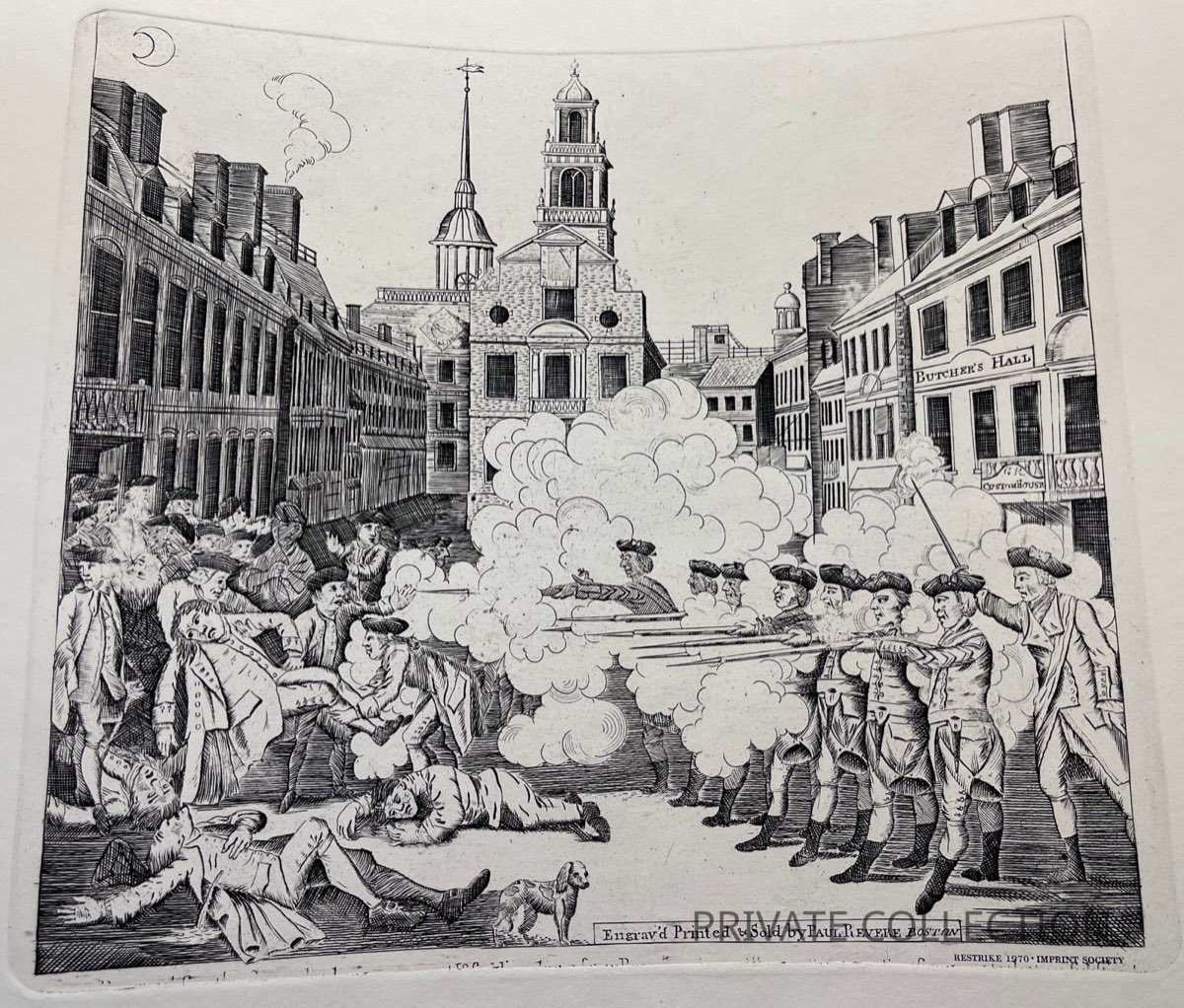
The Bloody Massacre Perpetrated in King-Street, Boston, on March 5th, 1770
The image that made the shooting in King Street into the Boston Massacre. Revere's engraving, copied from Henry Pelham, was propaganda of genius: the soldiers fire in a disciplined volley on command, the crowd is unarmed, and the Custom House bears the sign 'Butcher's Hall.' Franklin, in London, would spend the next four years trying to explain such images to a government that did not want to understand them.
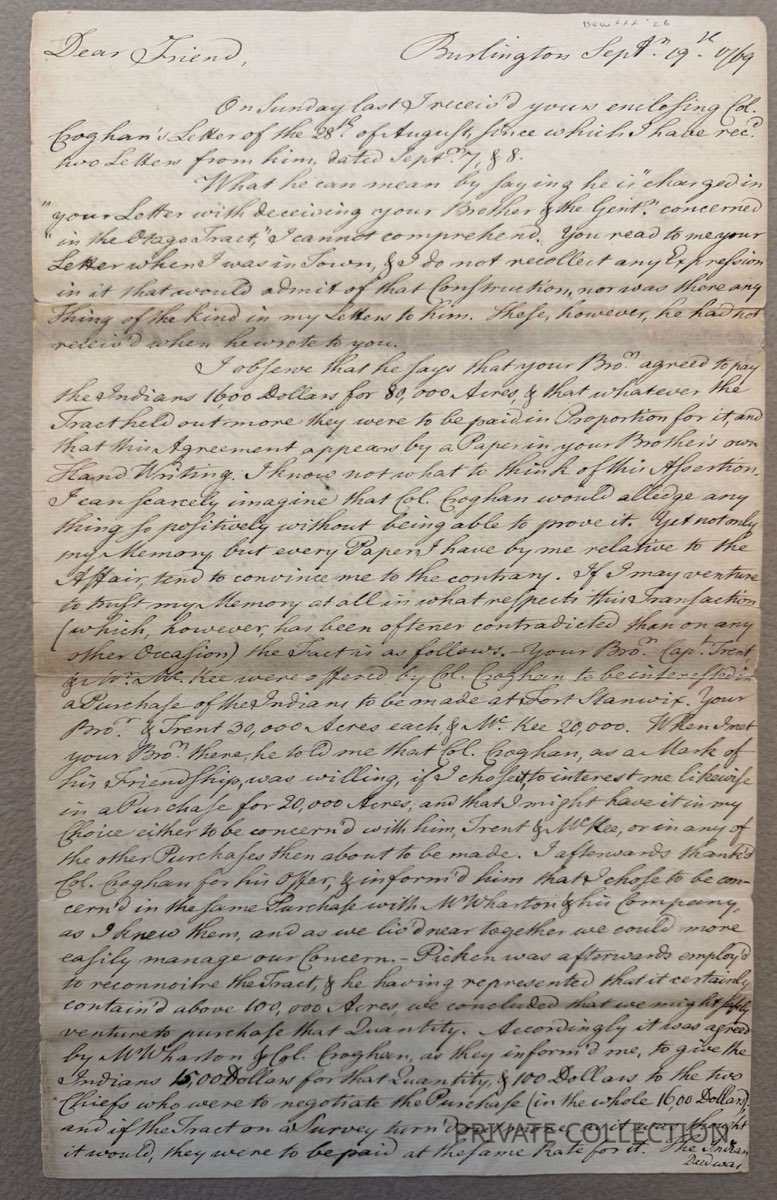
Autograph Letter Signed, to Thomas Wharton
William Franklin, royal governor of New Jersey and Benjamin's only surviving son, writes to the Philadelphia merchant Thomas Wharton — a member of the Indiana Company land venture in which father, son, and Wharton were all invested. The letter belongs to the last years in which the Franklins' interests ran together. By 1776 William was in a Connecticut jail and his father had stopped answering his letters.
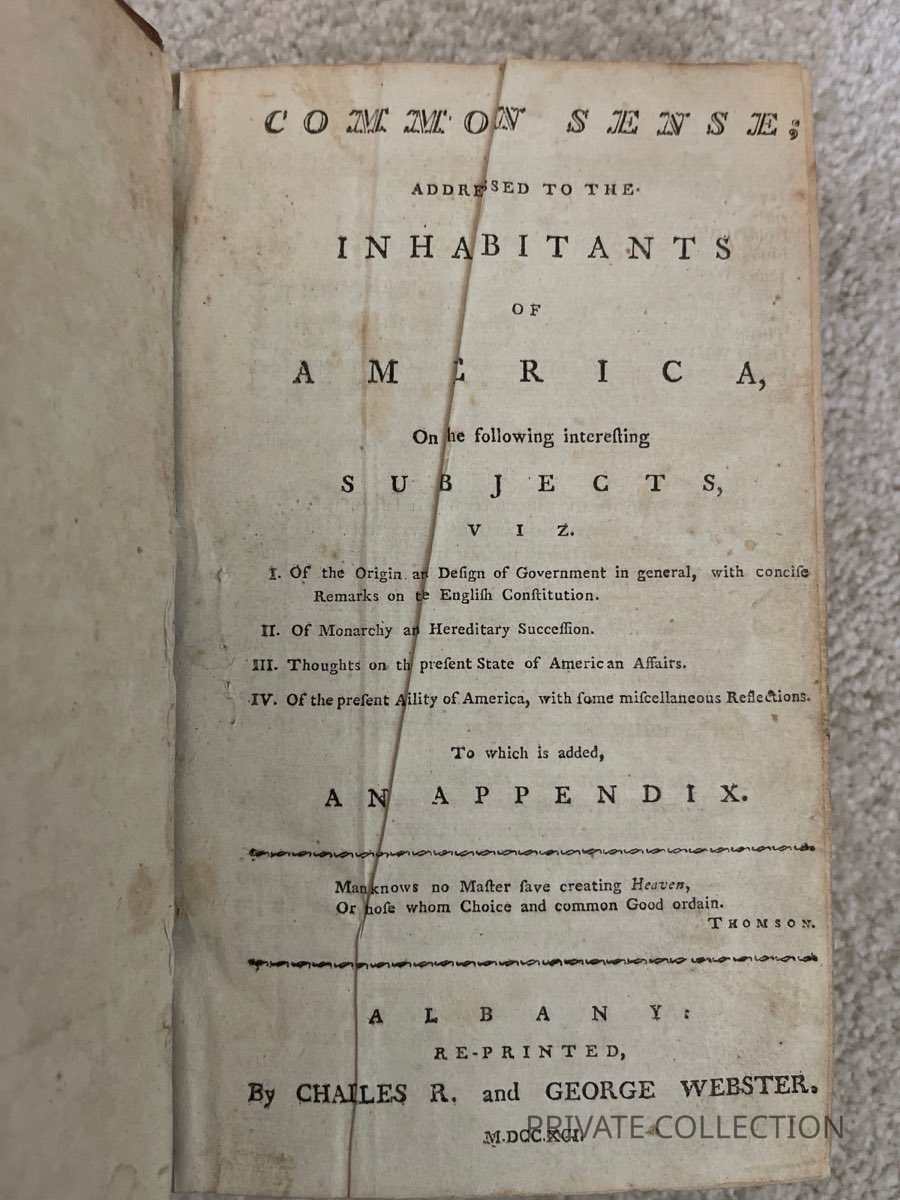
The Writings of Thomas Paine
Paine came to Philadelphia in 1774 carrying a letter of introduction from Franklin, the second such letter in this collection to change a life. Fourteen months later he published Common Sense. This collected edition of his writings gathers the pamphlet that turned a colonial quarrel into a demand for independence, with the Rights of Man that followed.
On the second of July 1776 Franklin and Rush — mentor and physician, sixty-nine and thirty — sat together in the Pennsylvania State House and voted for independence. The collection holds the Declaration in the Ormsby engraving after Trumbull's painting, and the journals of the Pennsylvania House in which it was entered with the Articles of Confederation. It also holds the Revolution as Europe imagined it: the hand-coloured vues d'optique in which French and German printmakers showed the statue of George III coming down in New York and the city in flames.
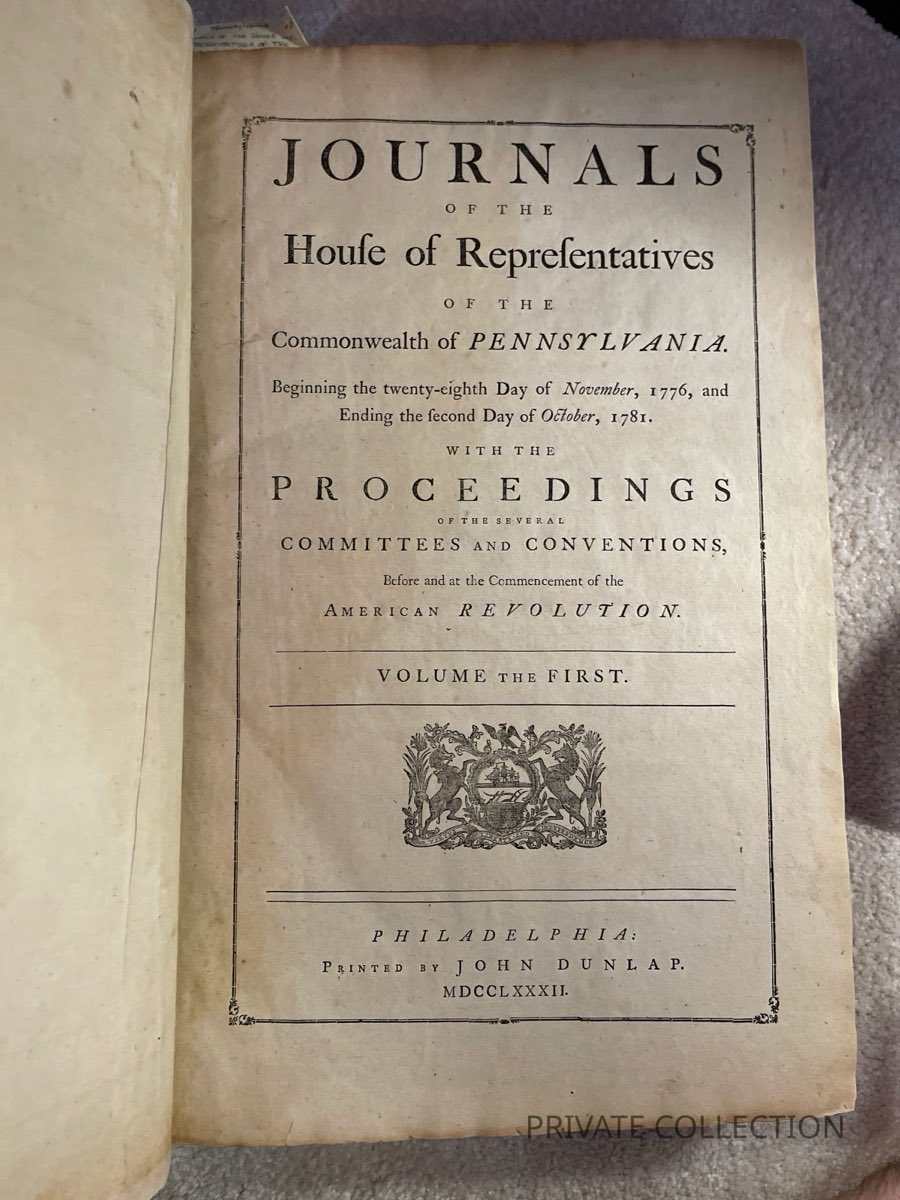
Journals of the House of Representatives of the Commonwealth of Pennsylvania, with the Declaration and Articles
The official record of the Pennsylvania Assembly containing the texts of the Declaration of Independence and the Articles of Confederation as the new state received them. The signers from Pennsylvania included both men this collection is built around.
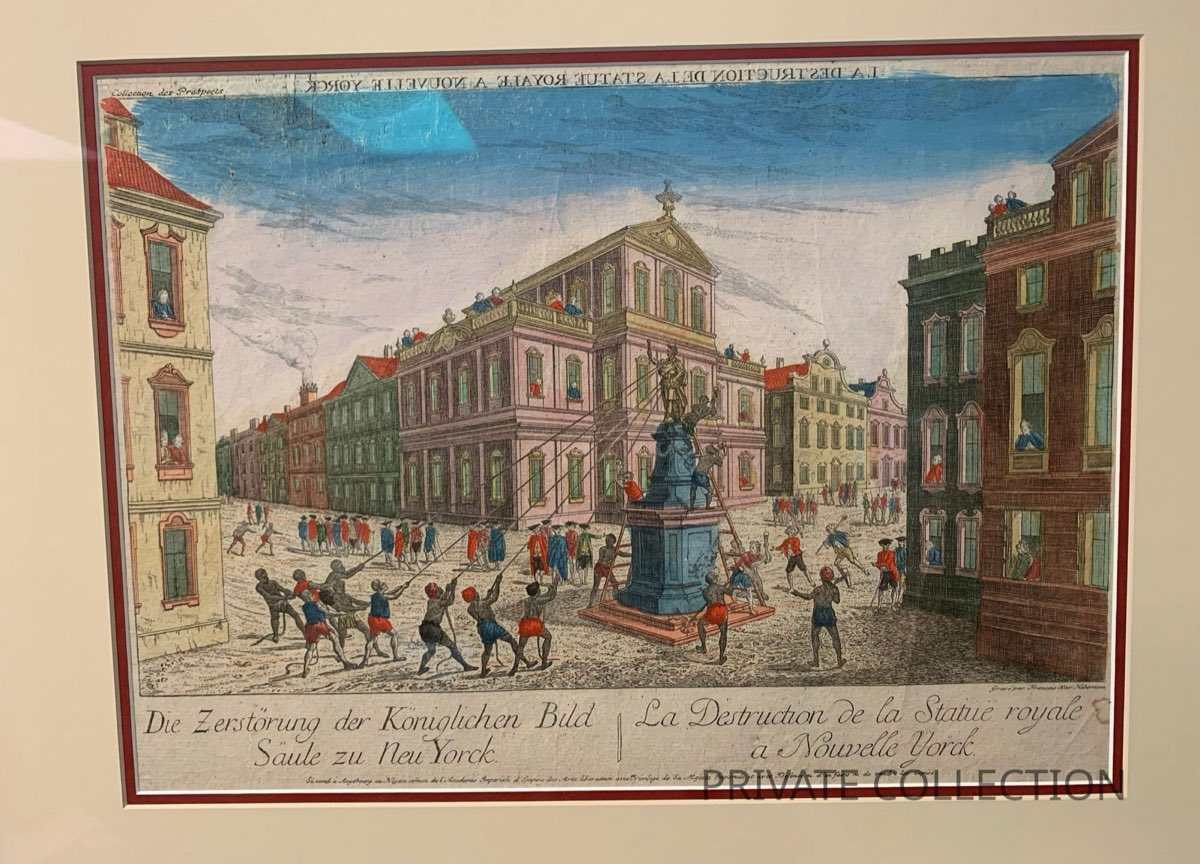
La Destruction de la Statue Royale à Nouvelle Yorck
A Parisian printmaker's imagining of the crowd pulling down the equestrian statue of George III on Bowling Green on July 9, 1776, after the Declaration was read to Washington's troops. The artist had never seen New York and gave it the look of a European capital; the enthusiasm is authentic. The collection holds three such views of the Revolution in New York.