
The Province and the Assembly Fight of 1764
Penn's Grant, the Frontier, the Paxton Boys, and the Road to London
IN the winter of 1763–64 a band of Scots-Irish frontiersmen from Paxton township murdered twenty Conestoga Indians under the protection of the Pennsylvania government, and then marched on Philadelphia to finish the job. Franklin met them at Germantown with a delegation and talked them into going home. It was the beginning of the most bitter year in Pennsylvania politics. The Paxton affair became a proxy war between the Assembly, which Franklin led, and the Proprietors, whom he had come to despise. By the autumn Franklin had lost his Assembly seat in a savage election and been sent to London to petition for the province to be taken from the Penns and made a royal colony.
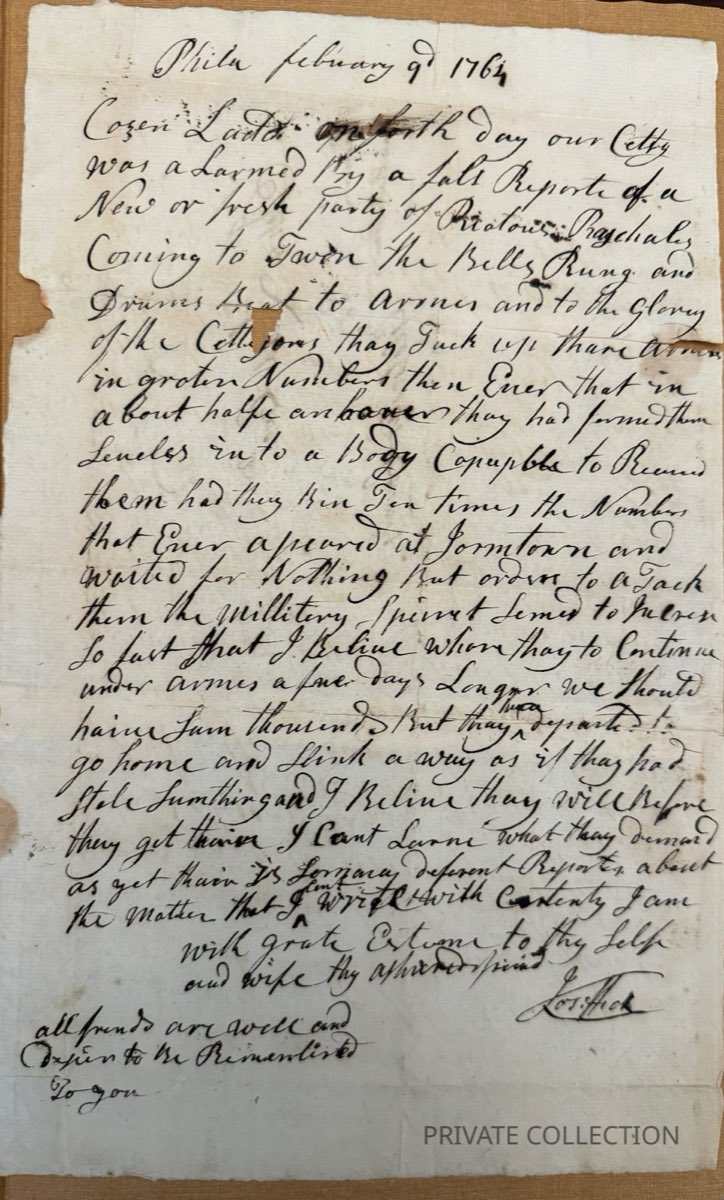
[The Paxton Boys] An Eyewitness Report on the Paxton Massacre
An eyewitness account, in a single folio sheet, of the frontier rising that opened the crisis of 1764. Franklin's own Narrative of the Late Massacres was the Assembly party's answer; this is the raw material it answered. Housed in a custom morocco-backed slipcase.
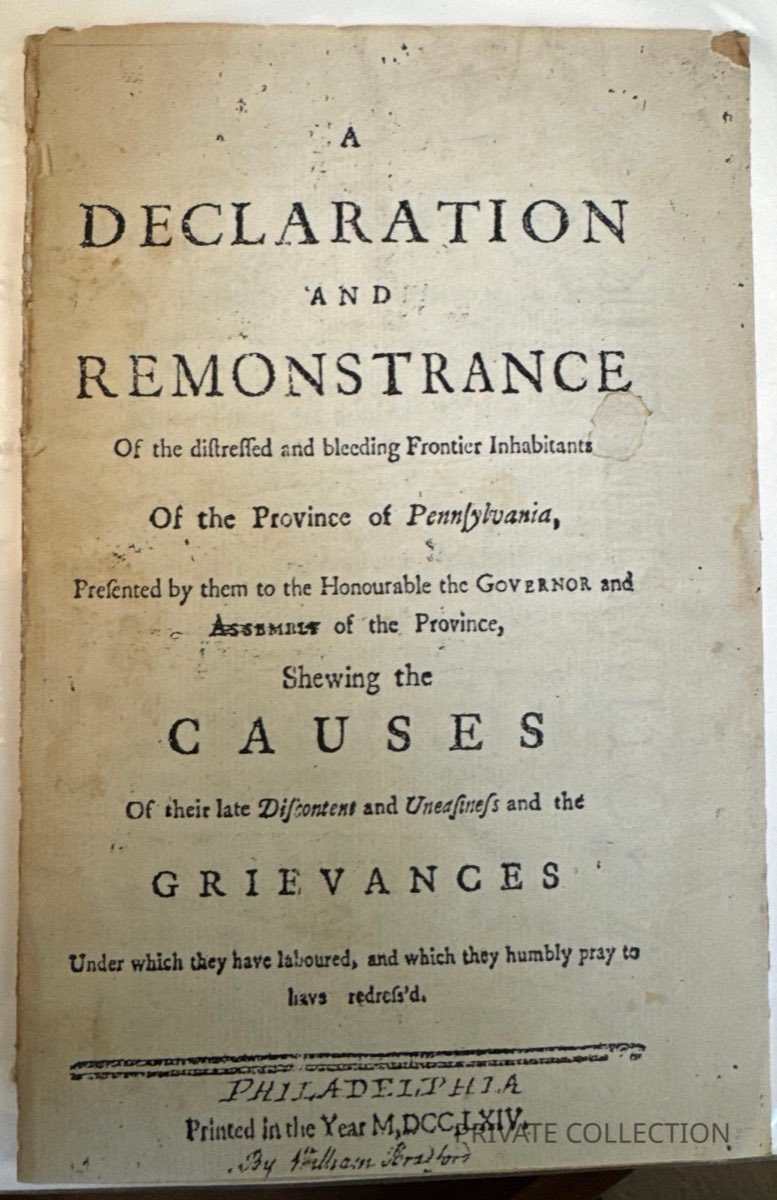
A Declaration and Remonstrance of the Distressed and Bleeding Frontier Inhabitants of the Province of Pennsylvania
The Paxton men's own statement of grievances, presented to the Assembly after Franklin turned them back at Germantown. It attacks the Quaker Assembly's protection of Indians and its indifference to the frontier — the argument that would cost Franklin his seat in October.
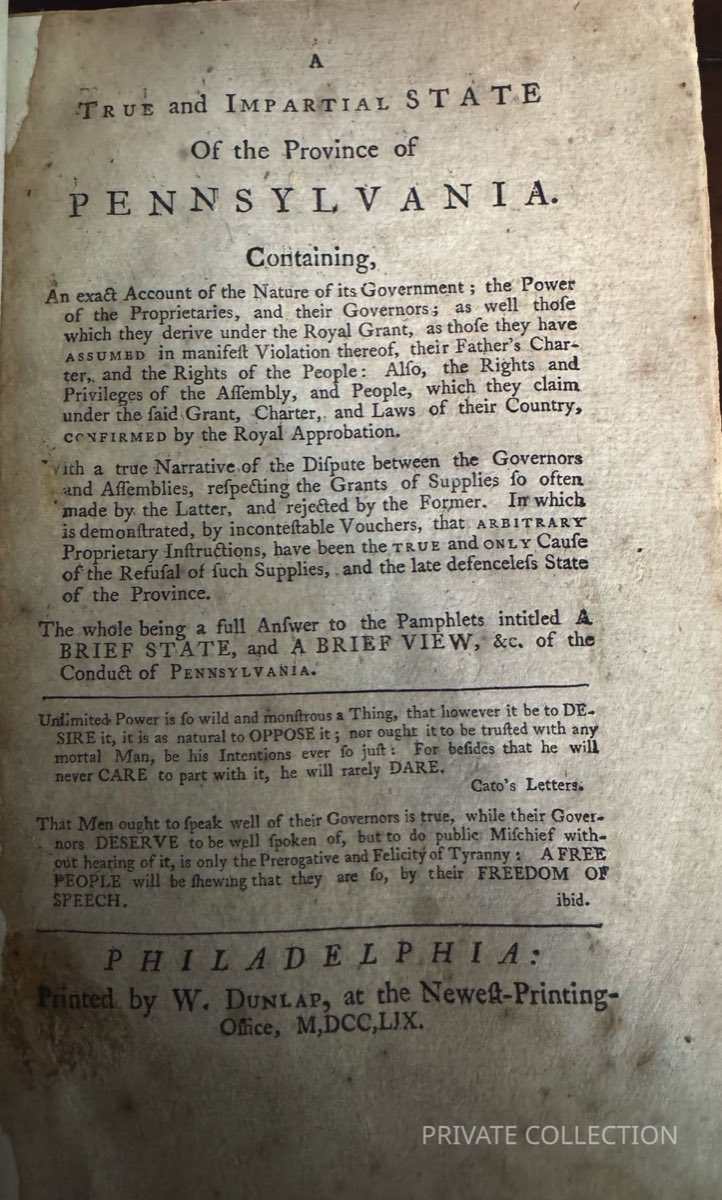
A True and Impartial State of the Province of Pennsylvania
The Assembly party's case against proprietary government, attributed by contemporaries to Franklin, to Galloway, or to both. Whoever held the pen, the argument is Franklin's: that the Penns taxed the province while exempting their own estates and treated the Assembly as a nuisance. It is the political ground on which the fight of 1764 was fought.
Galloway's speech of May 1764 for royal government, with Franklin's preface against the Penns, opens the next catalog: Franklin carried the petition it argued for to London that autumn, and arrived to find Parliament passing the Stamp Act. The Revolution, as this collection tells it, begins there — in Catalog IV.
He arrived in London to petition against the Penns, and found the Stamp Act instead.
The province Franklin fought over had a history he knew better than anyone, because his press had printed most of it. The collection holds its founding document — a land grant of 1684 signed by William Penn as first governor — and the histories that followed: Penn's own theology of 1674, Robert Proud's History of Pennsylvania, written by the Quaker schoolmaster who had watched the Revolution with dismay, Peter Kalm's account of the province in the 1740s, and the Indian-land pamphlets of Samuel Wharton in which the frontier speculation of the 1760s — Franklin's, his son's, and Wharton's — was argued before the world.
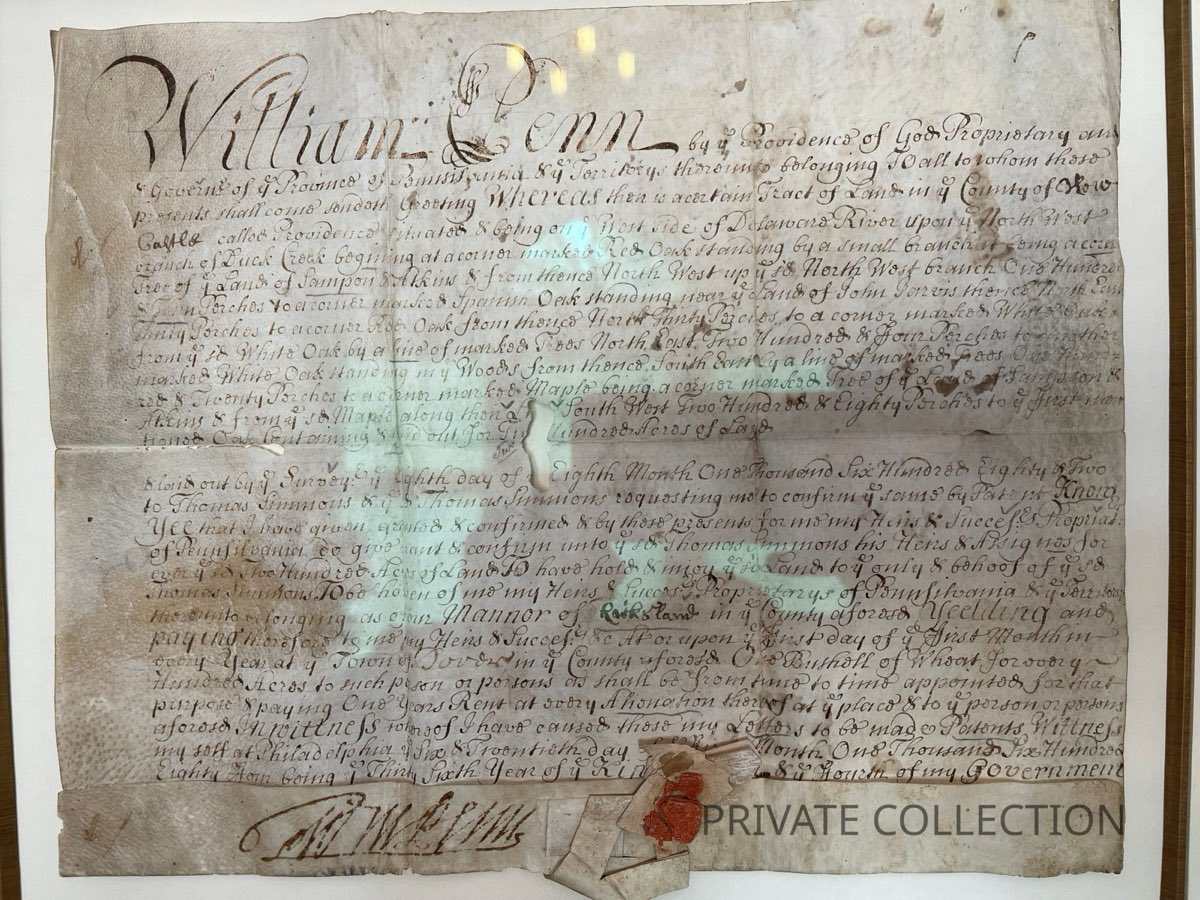
Land Grant Signed by William Penn as First Governor of Pennsylvania, to Thomas Simmons
A rare early Pennsylvania land grant signed by the founder as the new province's first governor, conveying a tract in Philadelphia county to Thomas Simmons, one of the earliest Quaker colonists — 'Know yee that I have given granted & confirmed …' The province as it was first parcelled, forty years before Franklin arrived.
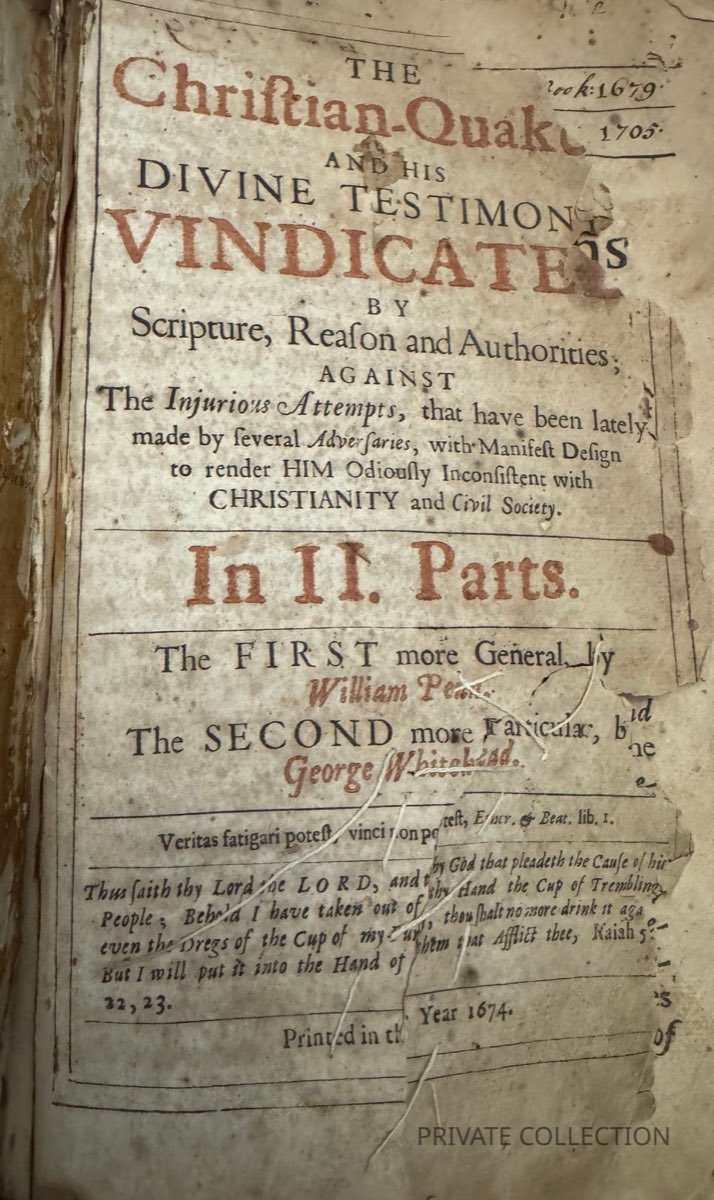
The Christian-Quaker, and His Divine Testimony
Penn's defence of Quaker Christianity against its Presbyterian critics, in the two-part first edition of 1673–74, eight years before he had a colony. The founder's theology, on the shelf beside his land grant.
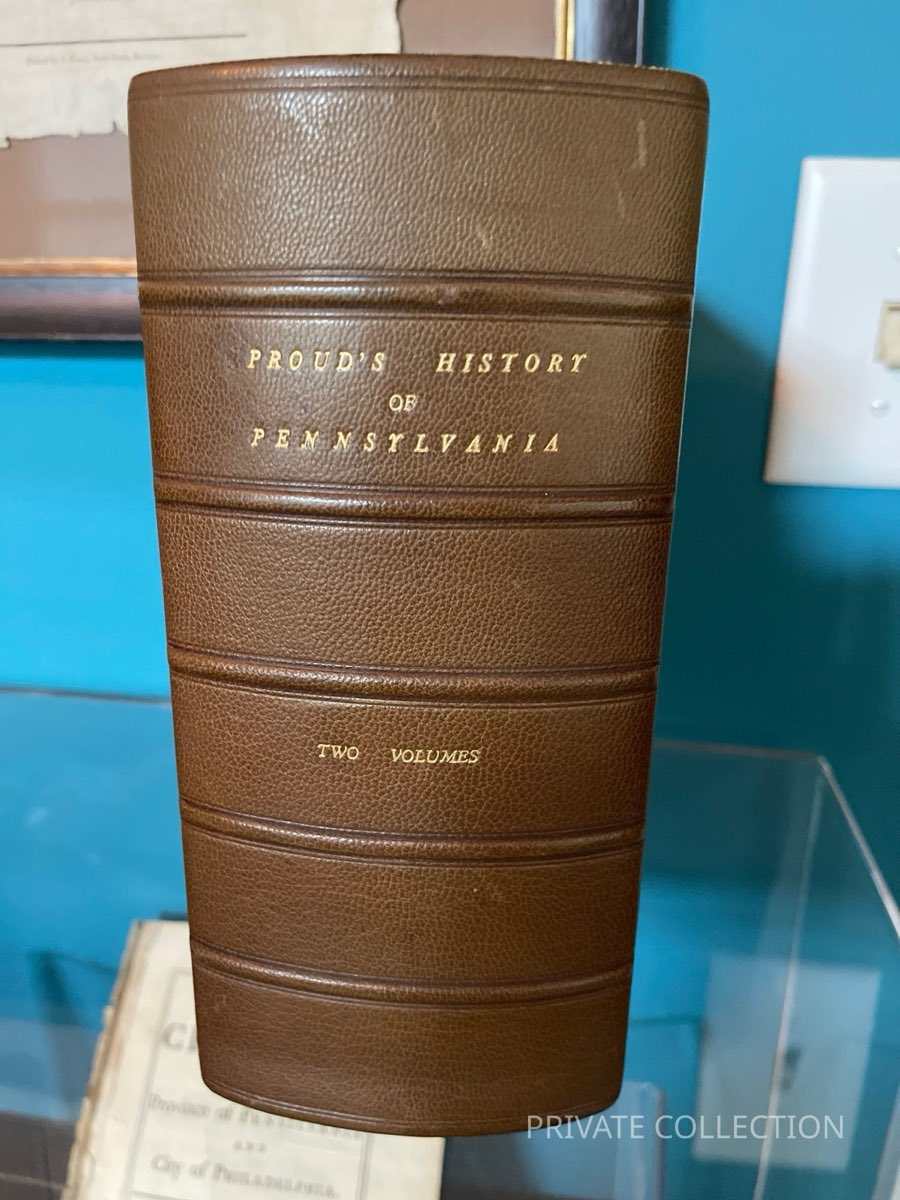
The History of Pennsylvania, in North America, from the Original Institution and Settlement of that Province under William Penn, in 1681, till after the Year 1742
The first full history of the province, by the Quaker schoolmaster of the Friends' Public School who taught Charles Brockden Brown and lost his pupils to the Revolution he abhorred. Proud's copy of Rutty's Liberty of the Spirit is in Catalog I; this is the book he spent the war writing.
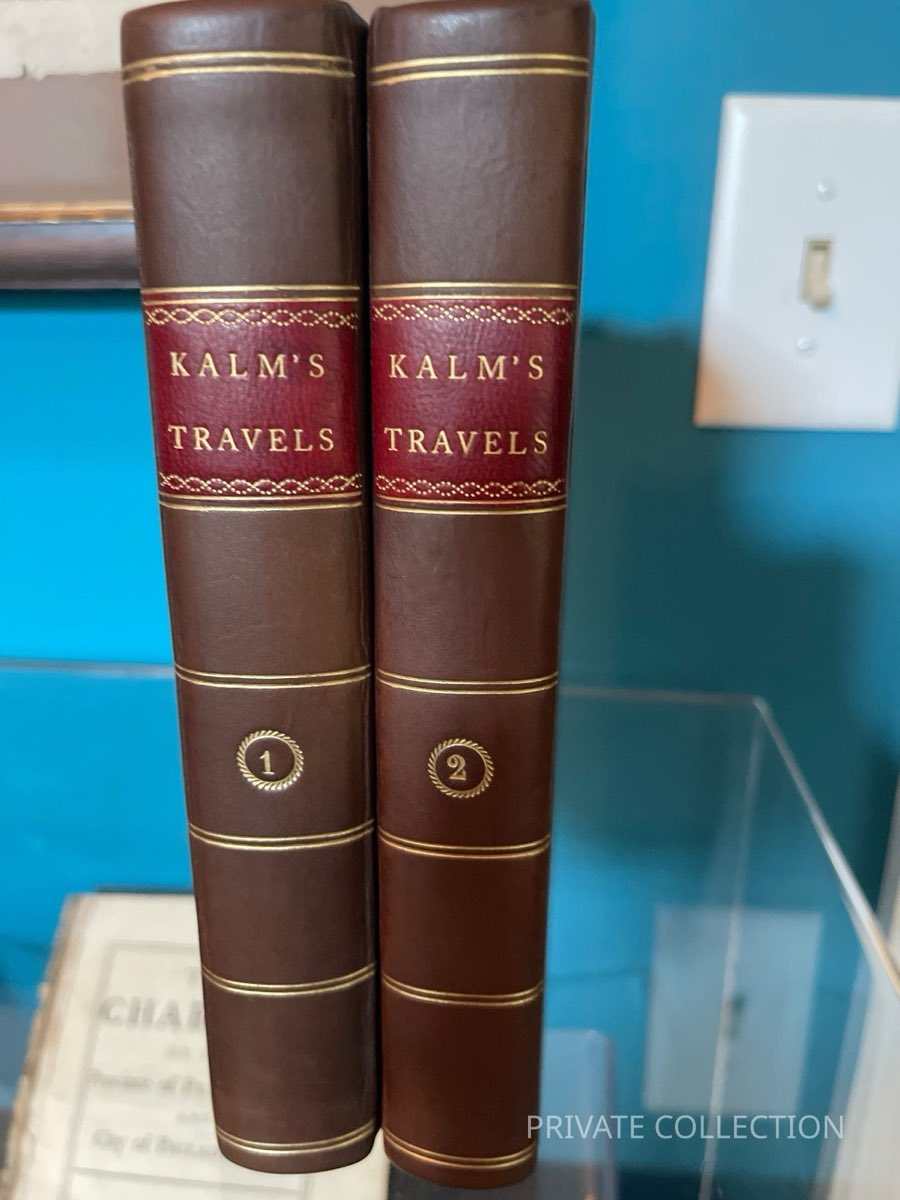
Travels into North America
The Swedish naturalist's account of his journey through the middle colonies in 1748–51 — Philadelphia, the Bartram garden, Franklin's stove, the Delaware Swedes — which remains the best description of the province at the moment Franklin retired from the press. Kalm dined with Franklin and reported his electrical experiments to Linnaeus.
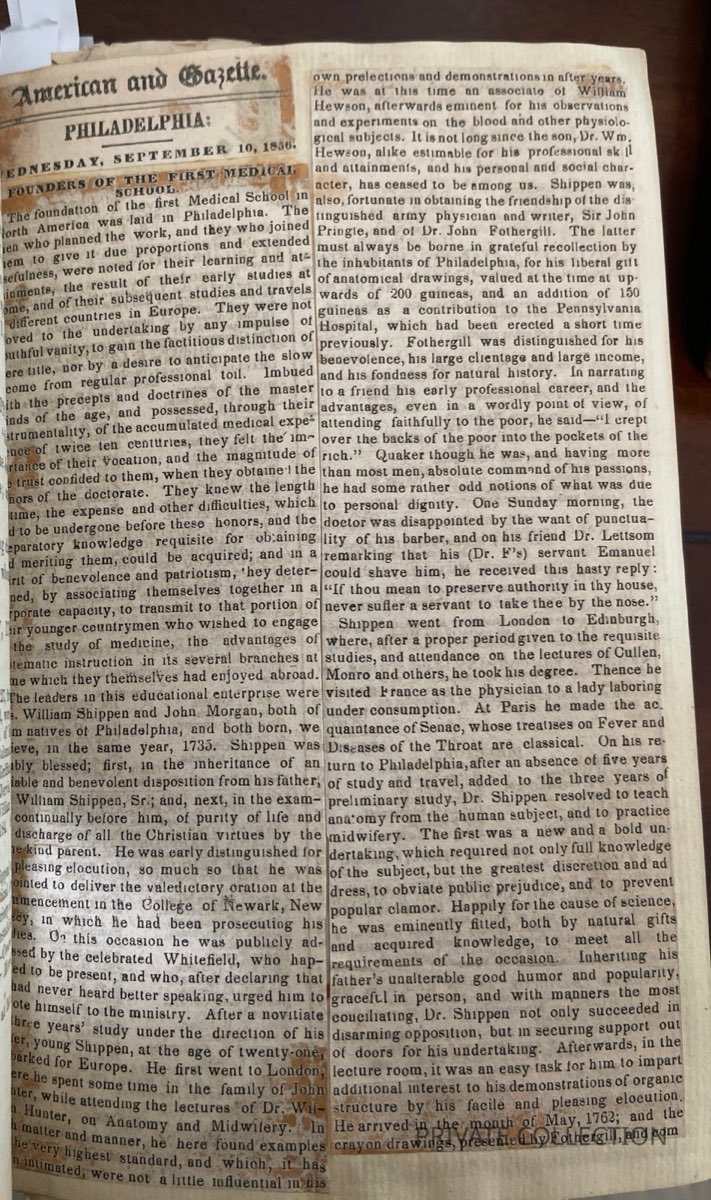
Letters and Papers Relating Chiefly to the Provincial History of Pennsylvania
Balch's collection of documents on the provincial history of Pennsylvania, in a working copy — annotated for use — with Franklin printing bound in. The historian's tools.
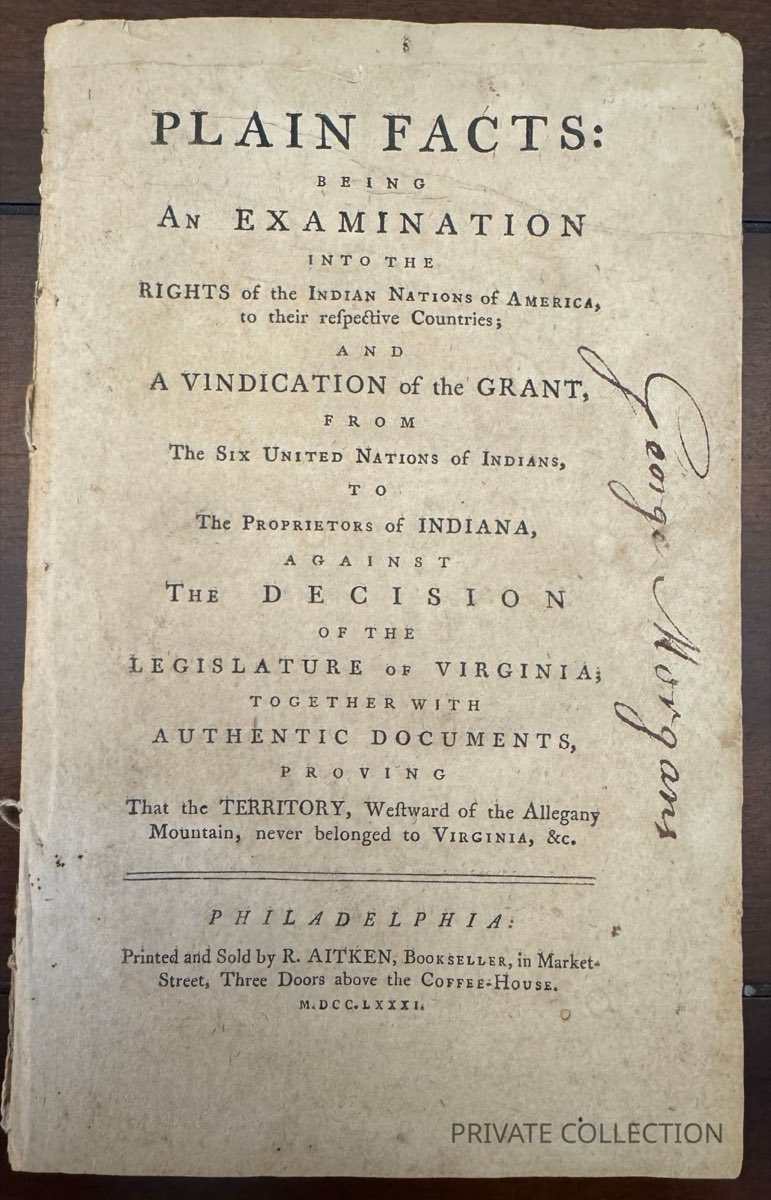
Plain Facts: Being an Examination into the Rights of the Indian Nations of America to Their Respective Countries
Wharton's argument for the validity of Indian deeds — written to defend the Vandalia claim south of the Ohio, which Wharton, William Trent, Croghan, and both Franklins had pursued since the traders' losses of Pontiac's War. 'The ablest treatise on the tenure of the Indian claim to the title of lands occupied by them, ever written' (Field). The collection holds two copies; the other is below.
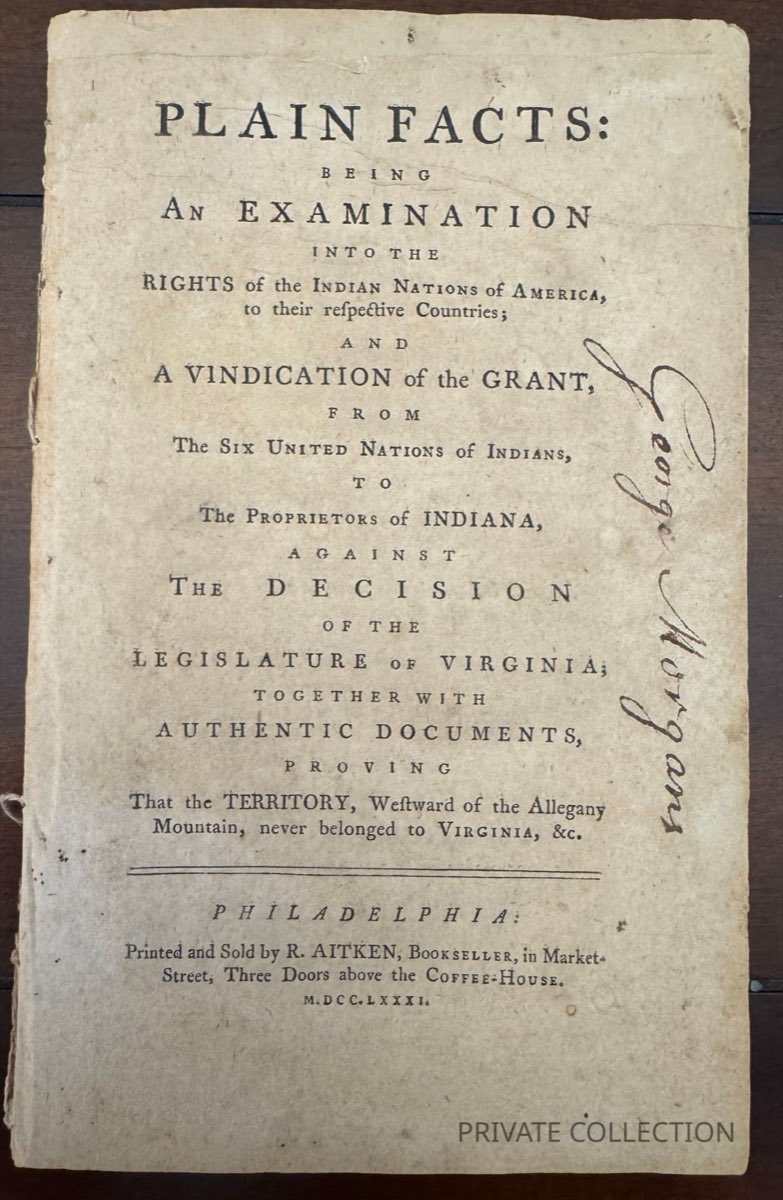
Plain Facts: Being an Examination into the Rights of the Indian Nations of America — George Morgan's Copy
The second copy, with the title signature of George Morgan — Wharton's partner in the Indiana Company, Indian agent at Fort Pitt, and the man who did most to hold the frontier for Congress during the war — and the signature of Robert Goodloe Harper, who would defend Cobbett against Rush in 1799 (Catalog V). The Indiana Company's own copy of its own argument.
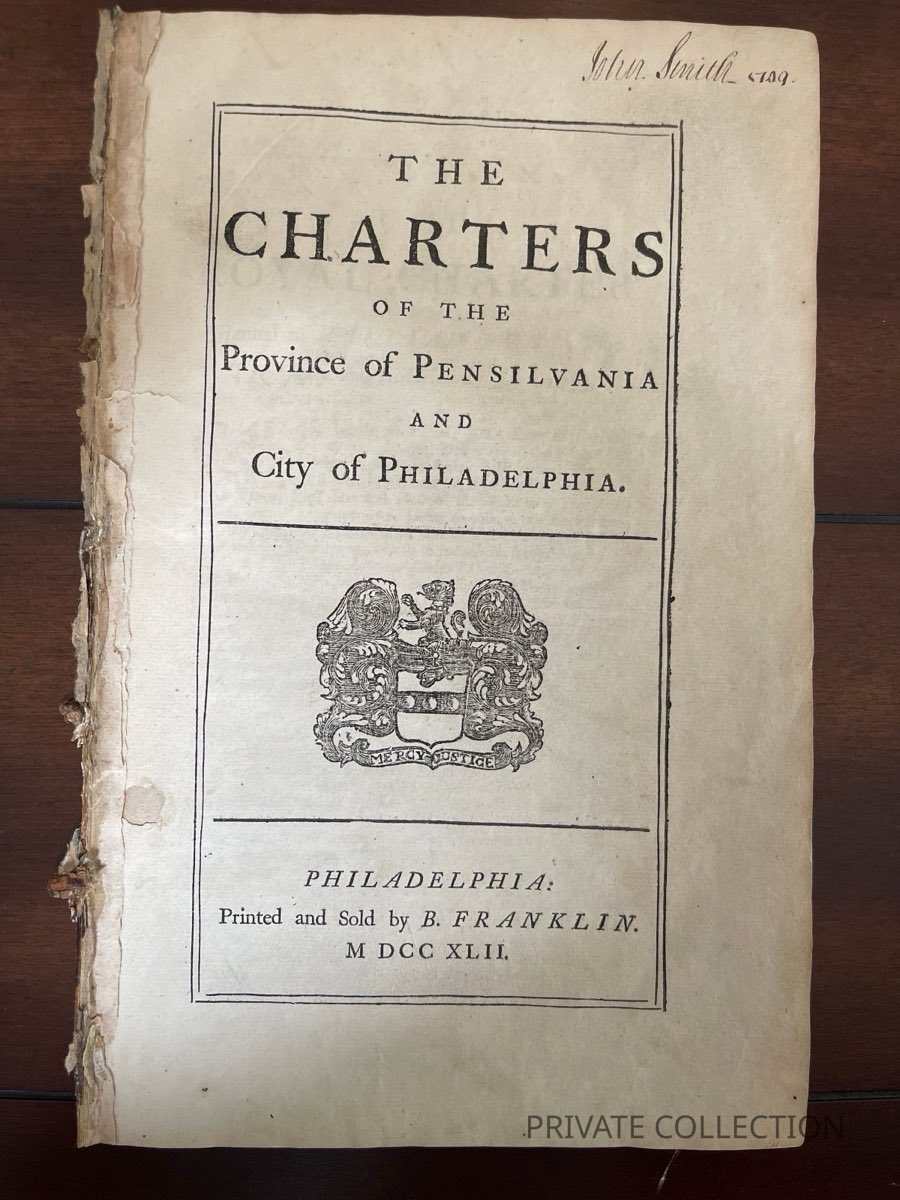
The Charters of the Province of Pensilvania and City of Philadelphia — Second Copy
A second, disbound copy of Franklin's folio printing of the charters — the constitution the Assembly of 1764 was fighting to have replaced. The bound copy with Poulson's provenance is in Catalog I.