
Franklin's Stove
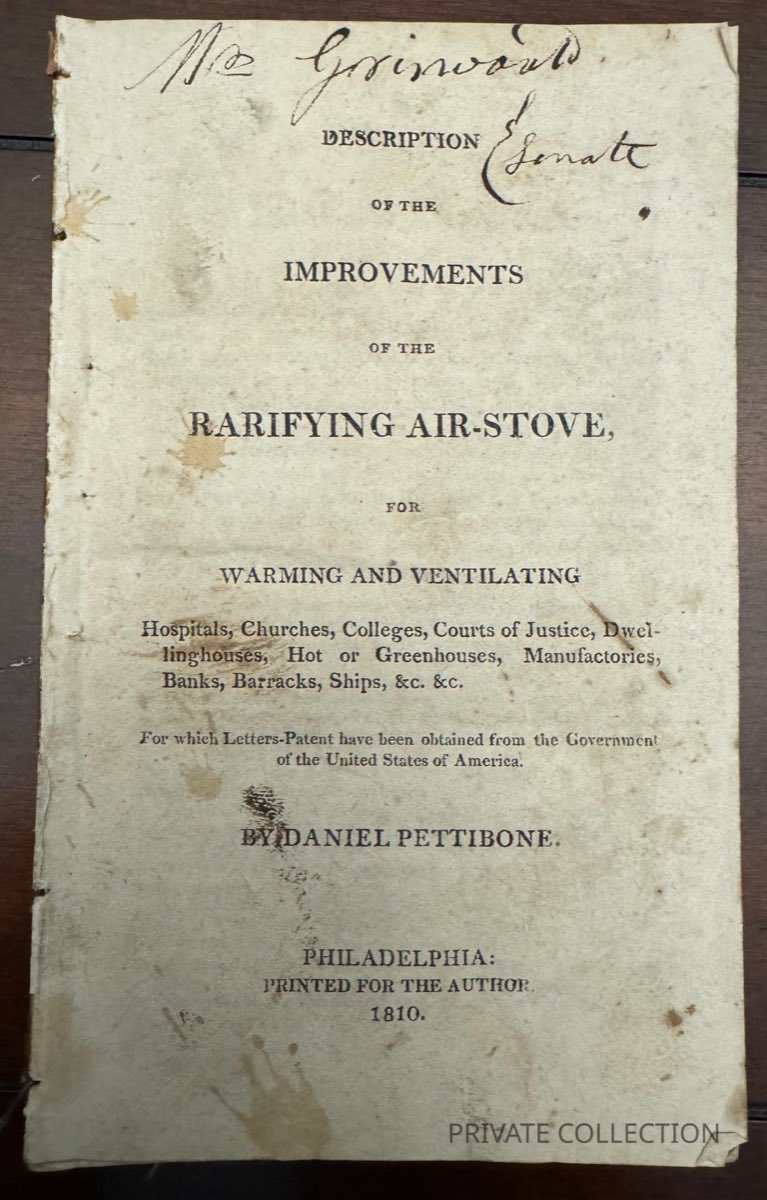
Franklin's stove was the most practical of his inventions and the one that stayed in use longest. The collection follows it in two rare printings: James Sharp's bilingual Exposé of 1785, in which a London ironmonger explains the 'grilles à feu pensilvaniennes' to French buyers with his own improvements and three plates (WorldCat locates six copies), and Daniel Pettibone's Rarifying Air-Stove of 1810, which carried the design into the ventilated heating of hospitals and colleges — the very institutions Franklin had founded and Rush served.
Rush, who thought bad air the cause of most fevers, had every reason to read the second. Between them the two pamphlets are the stove's whole career, from a Philadelphia parlour to a hospital ward.
Description of the Improvements of theRarifying Air-Stove, forWarming andVentilating Hospitals,Churches, Colleges, Dwellinghouses,Hot or Greenhouses,
Franklin's other great practical invention was the stove, and this pamphlet — with the collection's French account of the grilles à feu pensilvaniennes — follows the Pennsylvania fireplace from Franklin's 1744 design to the ventilated hospital heating of the next century. Pettibone addressed his improvements to the very institutions, hospitals and colleges, that Franklin had founded.
The object and its photographs
Catalog III, The Electrical Philosophy · Catalog VI, The College and the Stove