Public Service
BENJAMIN Franklin was sixty years old when Rush arrived in Philadelphia from Edinburgh in 1769 — sixty years old, the most famous scientist in the world, the colonial agent who had spent years in London arguing the American case before Parliament, the postmaster general, the author of Poor Richard's Almanac, the founder of the American Philosophical Society, the man who had flown a kite in a thunderstorm and proved that lightning was electricity. He was also, as Walter Isaacson notes in Benjamin Franklin: An American Life (2003), "the first American" in the sense of being the first major figure who was recognizably shaped by the values and experiences that would come to characterize the American character: pragmatic, self-made, civic-minded, suspicious of inherited authority.
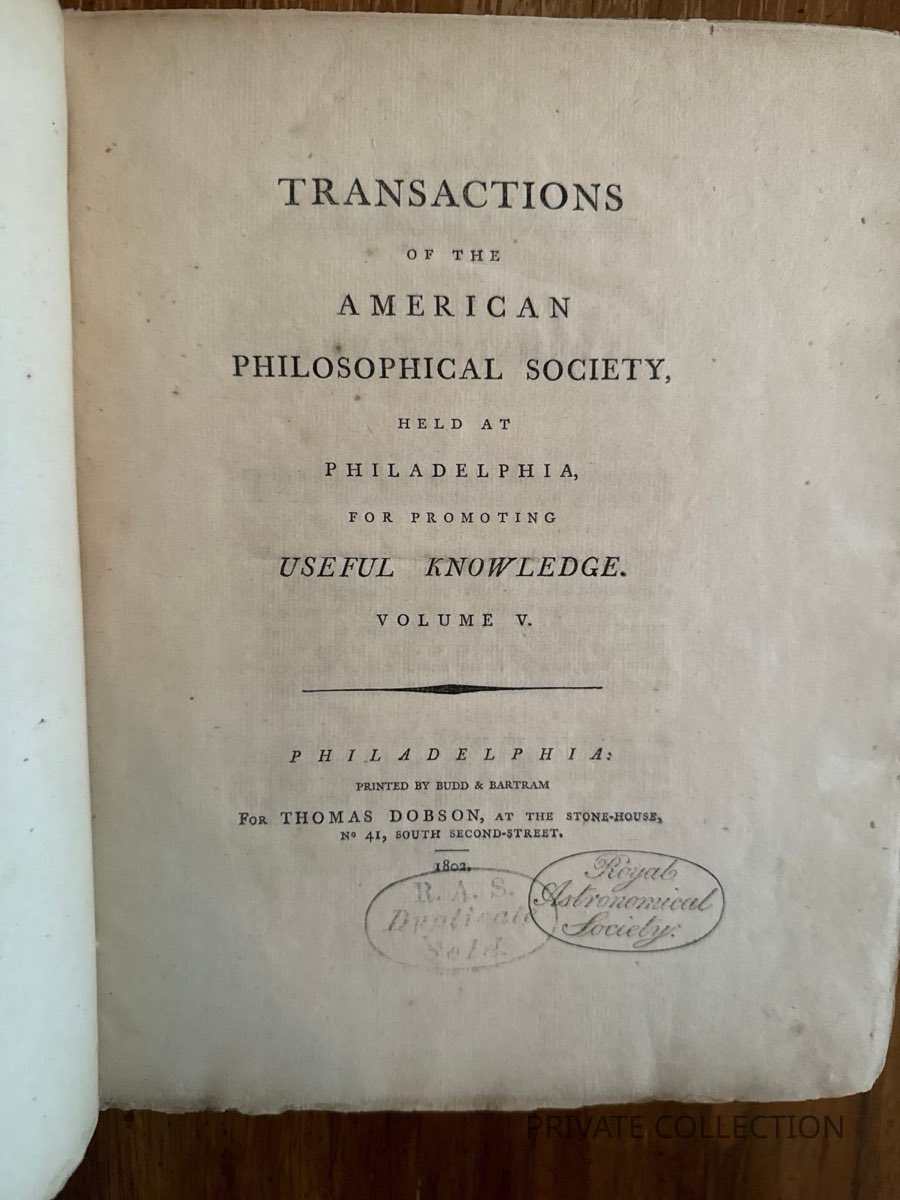
Rush admired Franklin with an intensity that bordered on reverence, and he was not alone: the Philadelphia intellectual community of the 1770s and 1780s organized itself substantially around Franklin's example and patronage. The American Philosophical Society, founded by Franklin in 1743 and revived under his active presidency after 1785, was the institutional center of that community. The Pennsylvania Hospital, the Library Company, the Philadelphia Contributionship for the Insurance of Houses from Loss by Fire — each of these civic institutions bore Franklin's fingerprints, and each of them was also a stage on which Rush performed his own civic commitments.
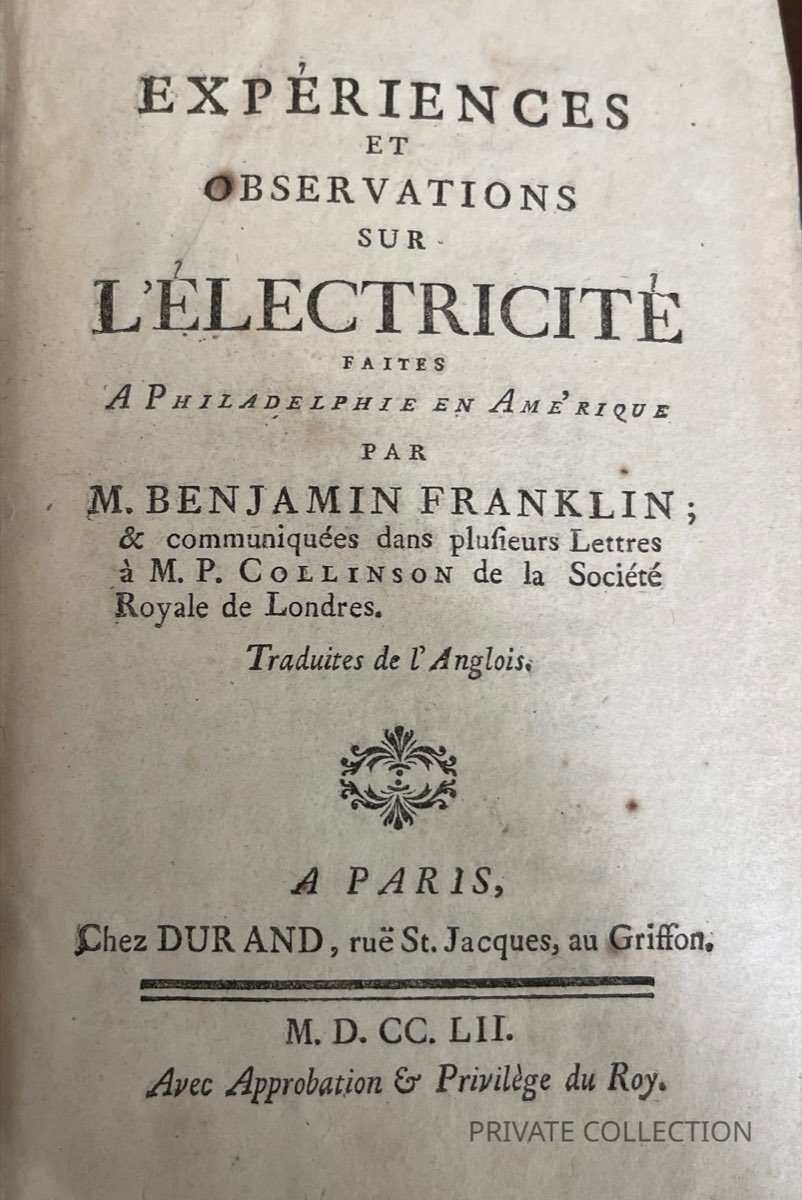
But it was Franklin's scientific work — specifically his electrical experiments — that placed him at the center of the eighteenth century's most important intellectual transformation. The Enlightenment's conviction that nature was knowable, that natural forces could be understood and controlled, that the gap between the terrifying and the manageable could be closed by systematic inquiry and experiment: this conviction found its most dramatic vindication in Franklin's demonstration that lightning was electrical and could be controlled by a pointed rod. Gordon Wood, in The Americanization of Benjamin Franklin (2004), argues that Franklin's electrical work transformed him from a colonial printer into an international philosopher — and that this transformation was the precondition for everything else he did.
11 objects in Public Service
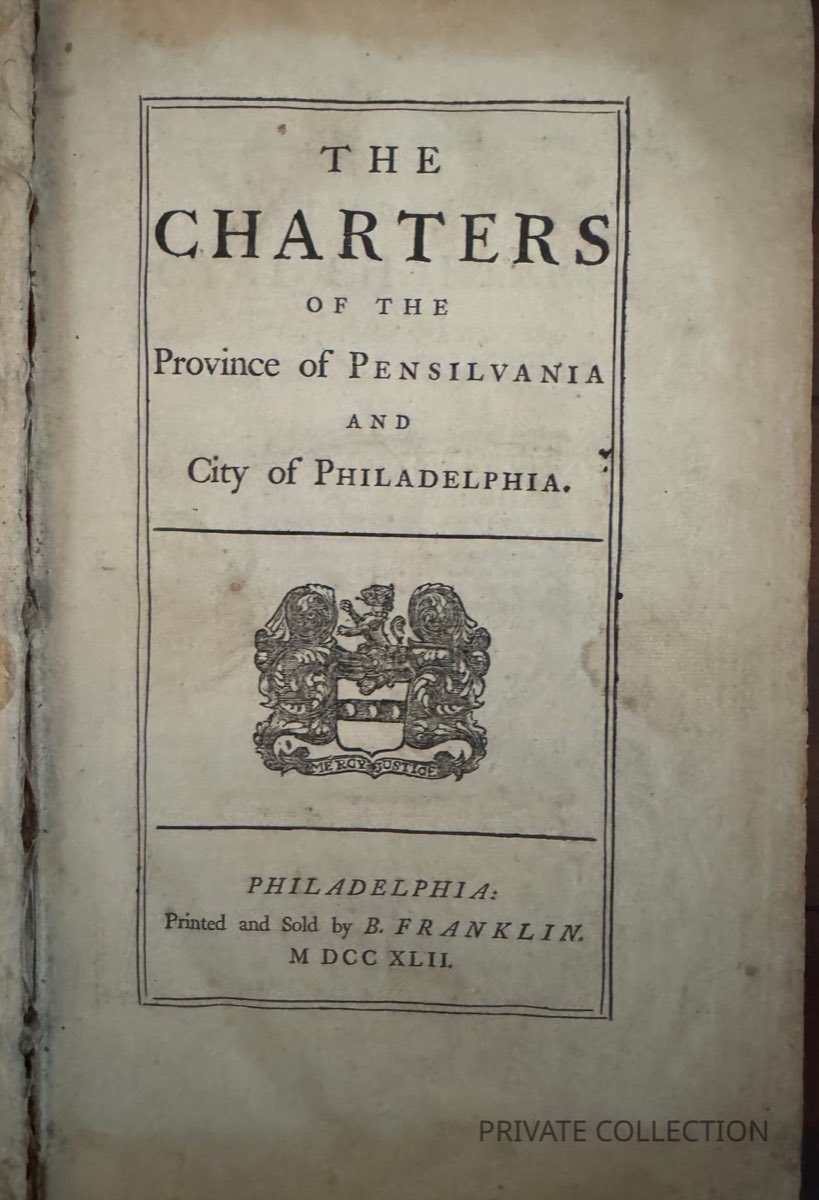
(Franklin) -The Charters of the Province of Pensilvania and City of Philadelphia
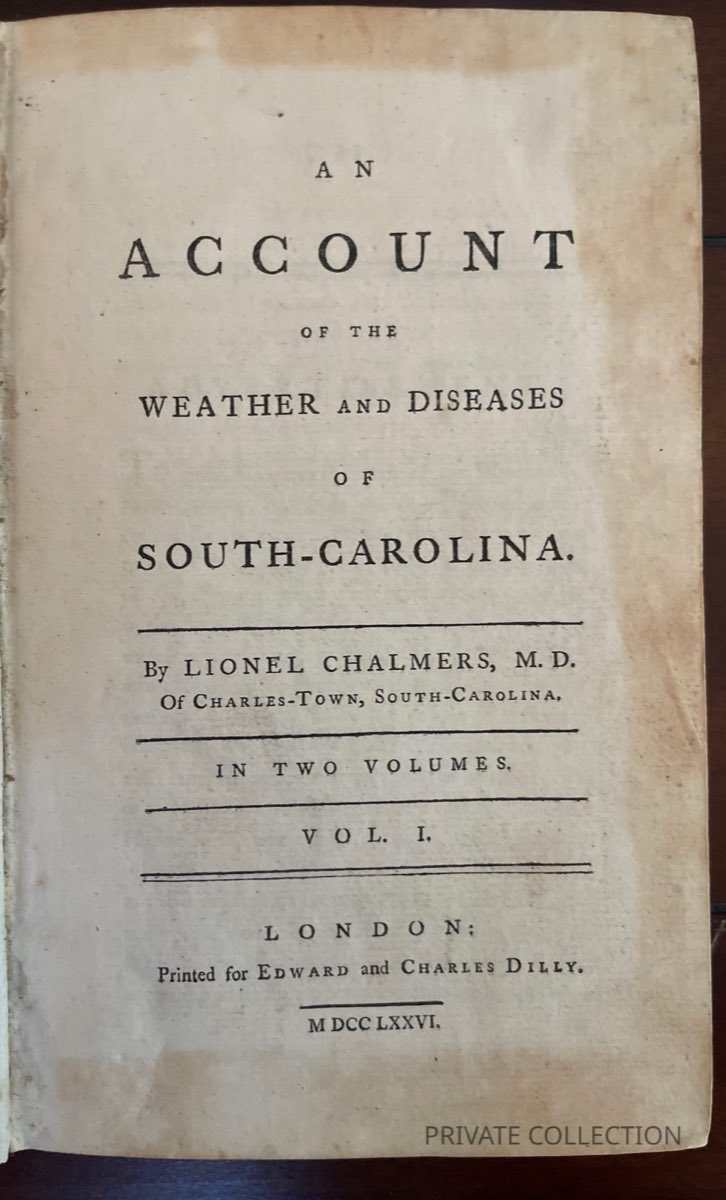
An Account of the Weather and Diseases of South-Carolina
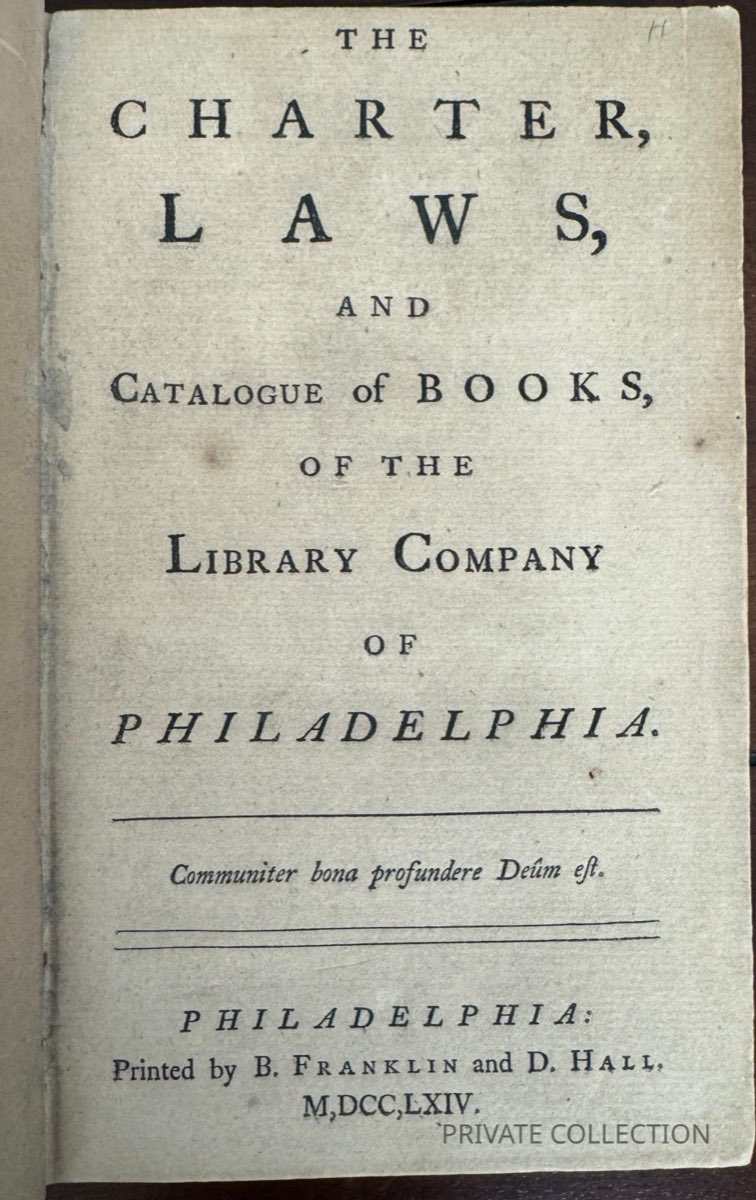
Charter, Laws, and Catalog of Book of the Library Company of Philadelphia
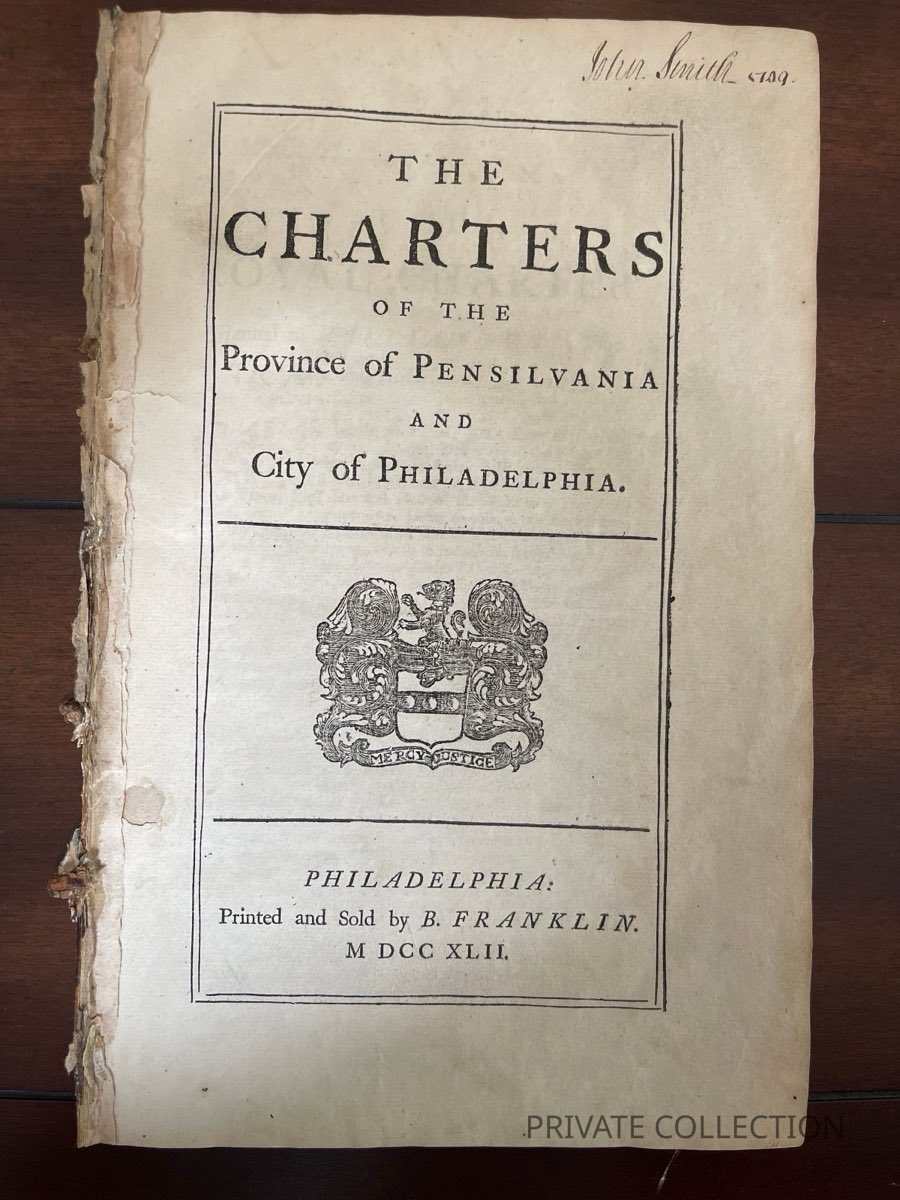
The Charters of the Province of Pensilvania (sic) and City of Philadelphia
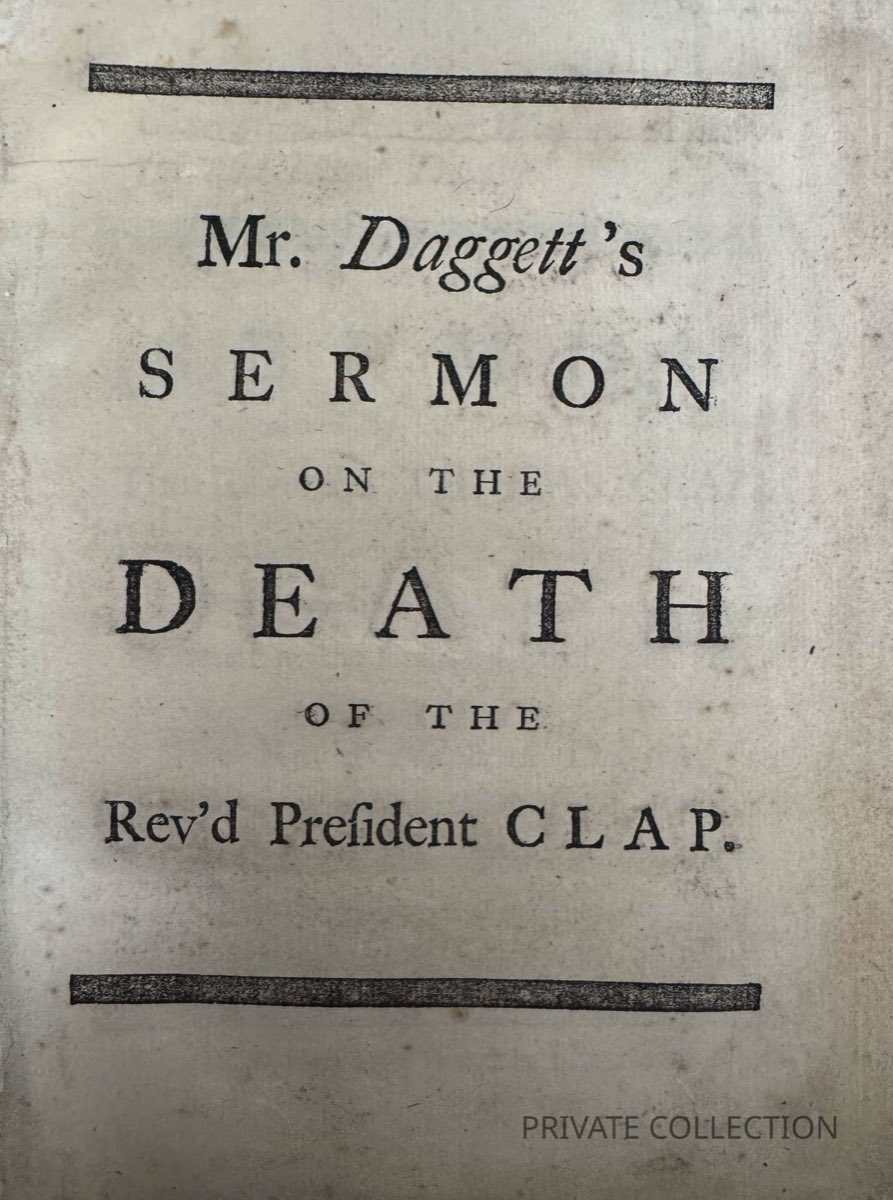
DAGGETT, Naphtali. The Faithful Serving of God and Our Generation, the Only Way to a Peaceful and Happy Death
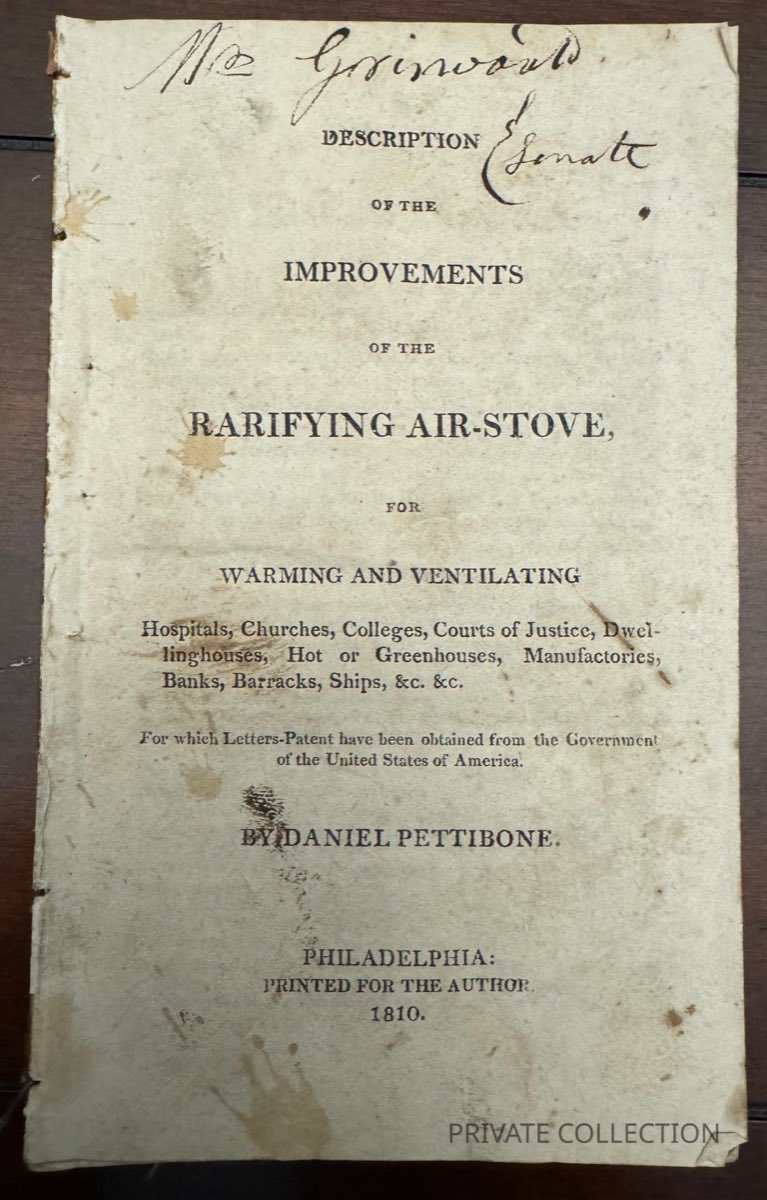
Description of the Improvements of theRarifying Air-Stove, forWarming andVentilating Hospitals,Churches, Colleges, Dwellinghouses,Hot or Greenhouses,
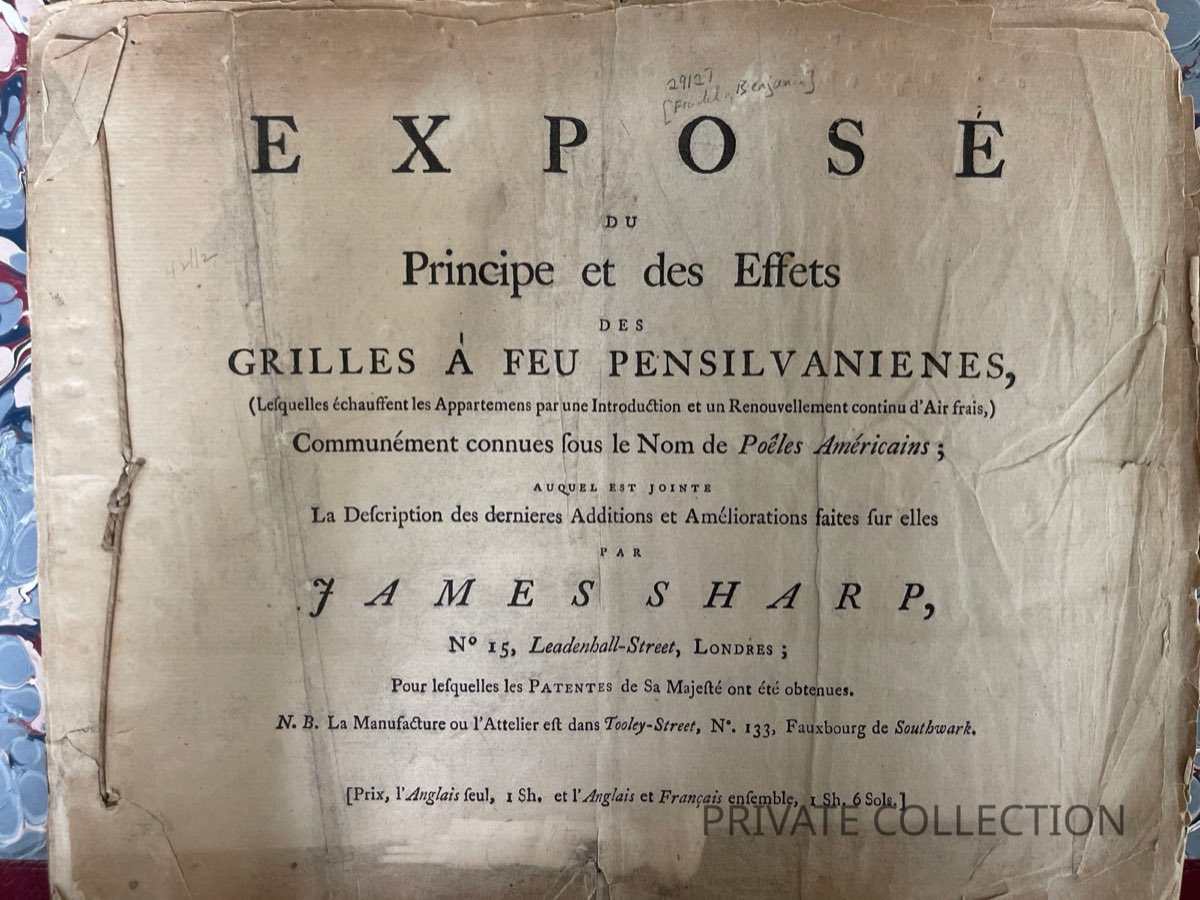
Exposse du Principe et des Effetc des Grilled à Feu Pensilvanienes
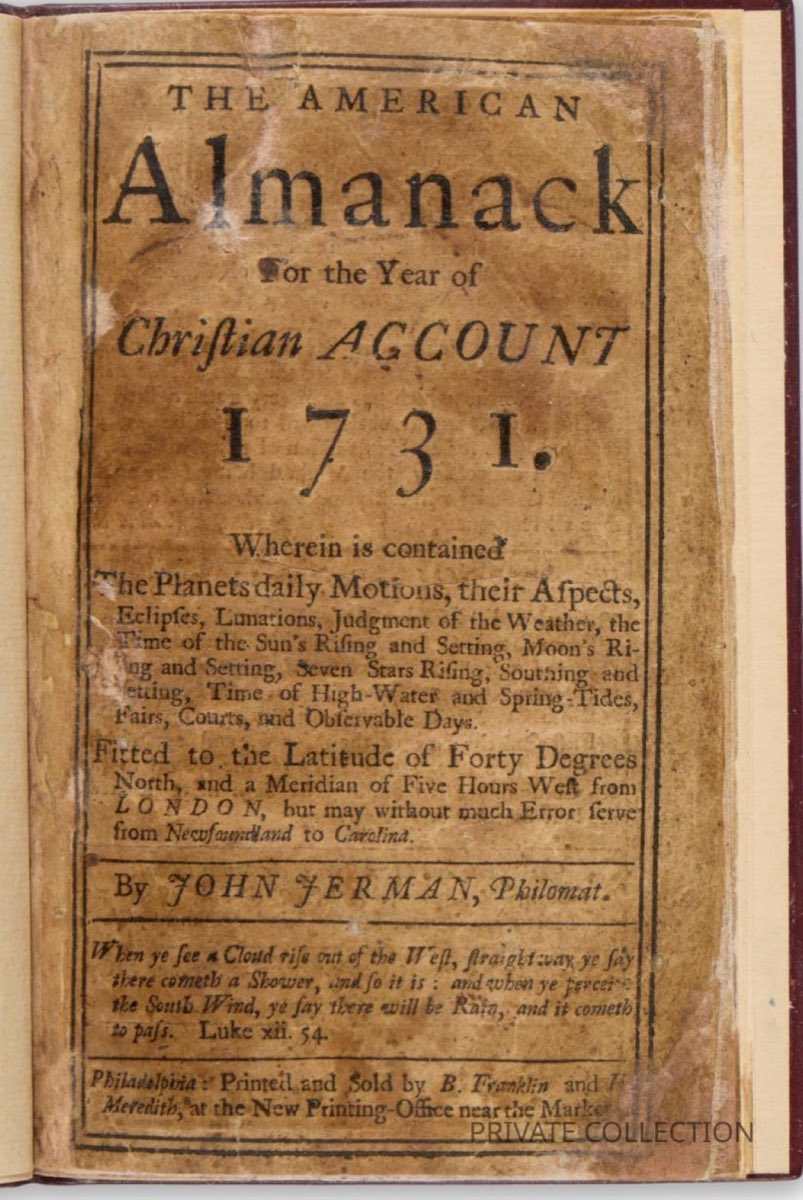
John Jerman | The American Almanack ... for 1731 — the only known copy in private hands
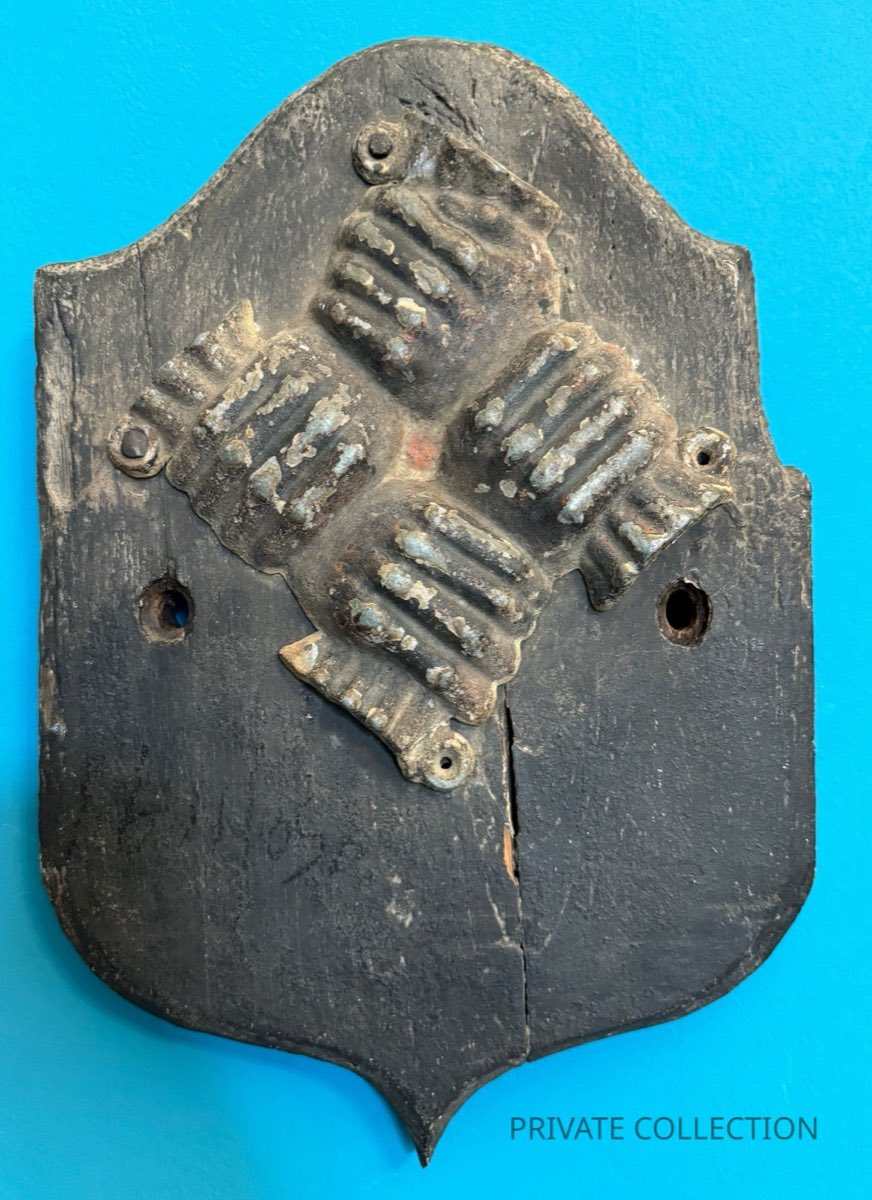
Philadelphia Contributionship Fire Mark
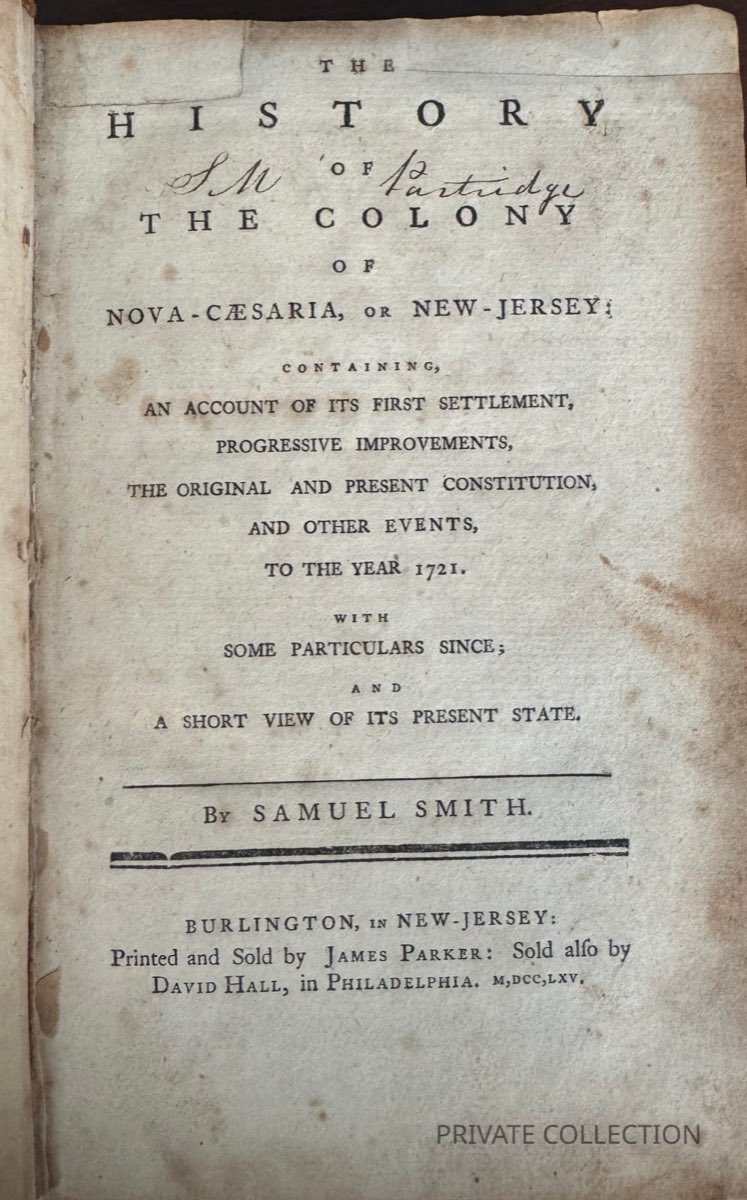
SMITH, SAMUEL. The History of the Colony of Nova-Caesaria